Peripheral magnetic theta burst stimulation to muscles can effectively reduce spasticity: a randomized controlled trial
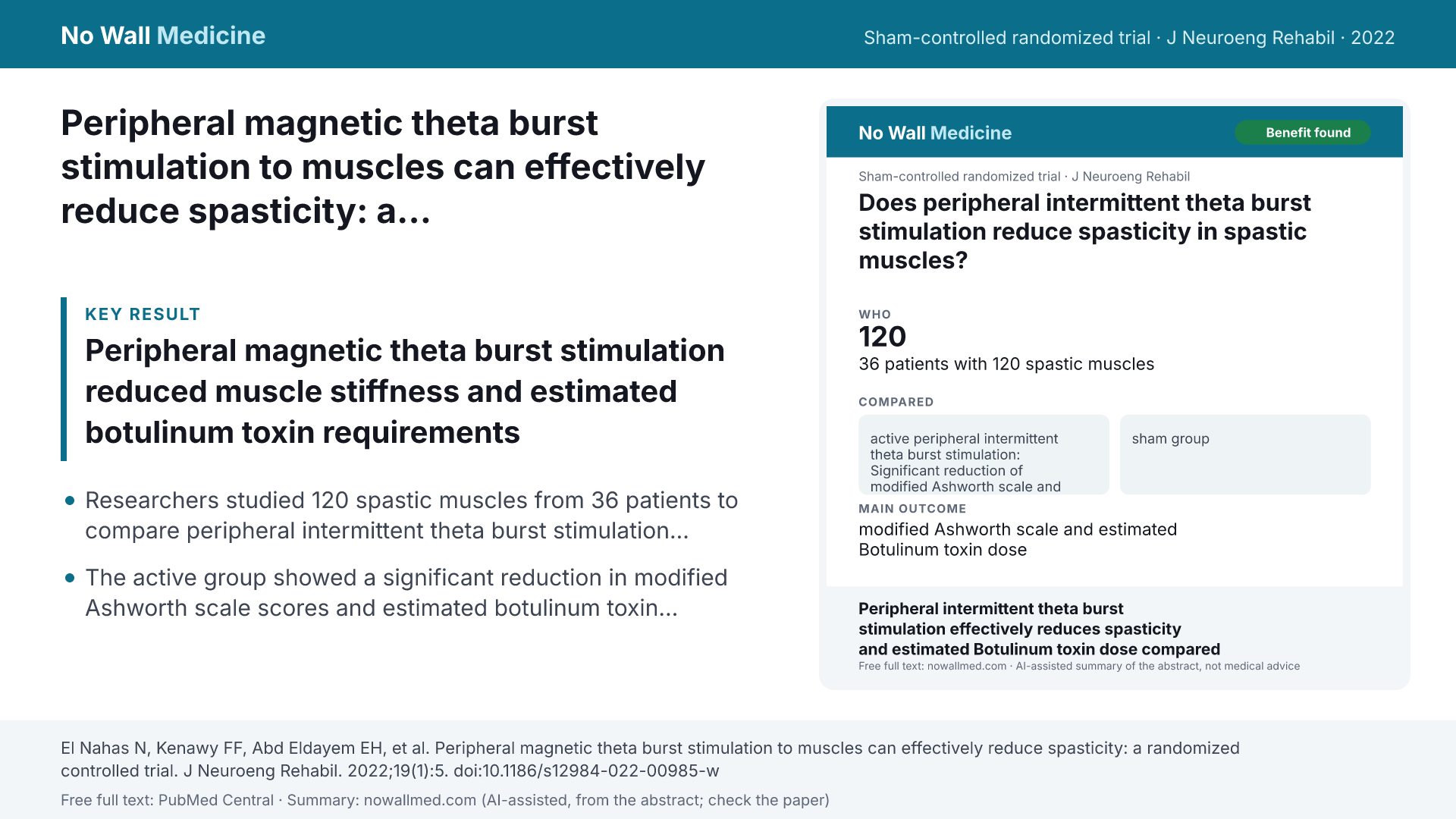
Key result: Peripheral magnetic theta burst stimulation reduced muscle stiffness and estimated botulinum toxin requirements
Sham-controlled randomized trialBenefit found
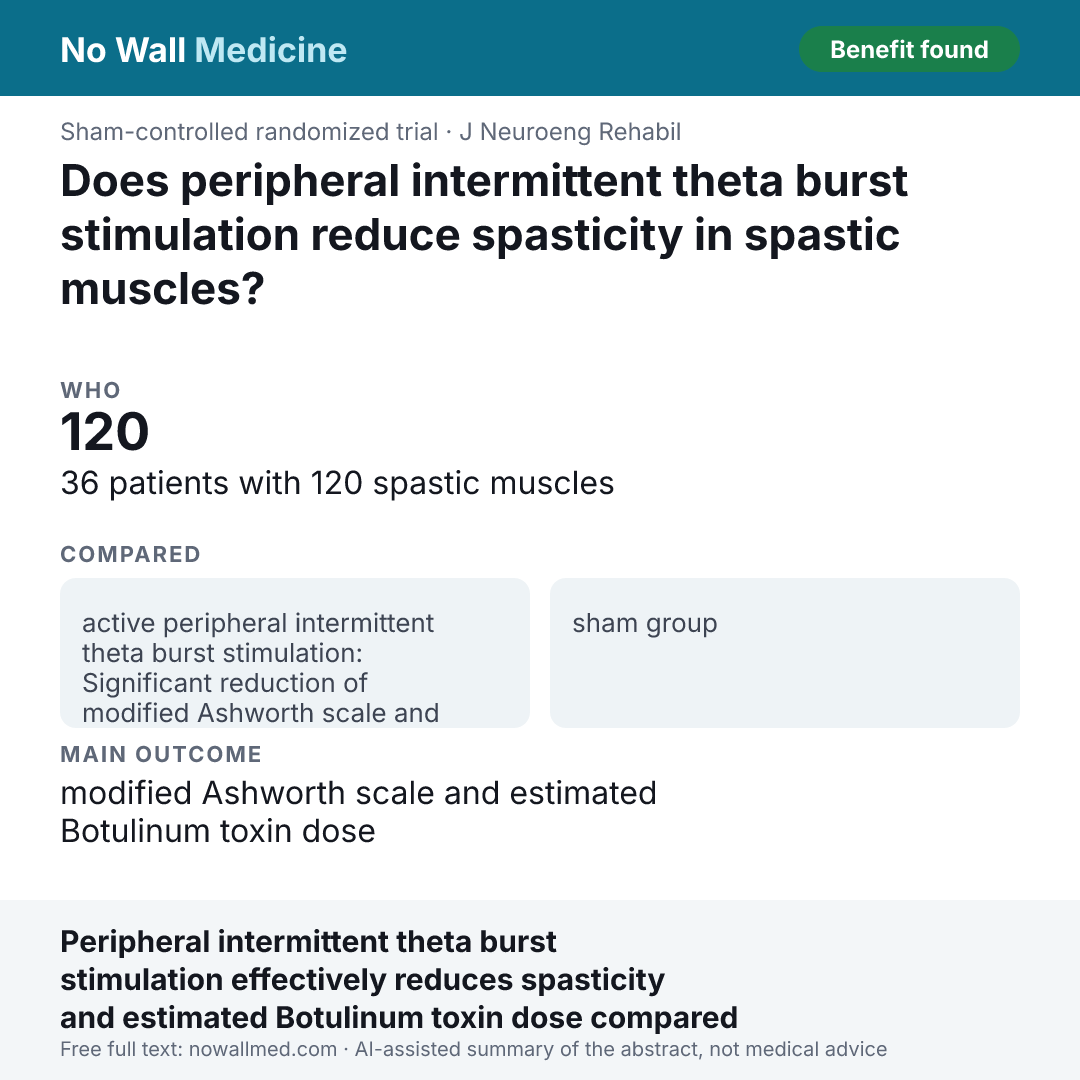
Does peripheral intermittent theta burst stimulation reduce spasticity in spastic muscles?
Who
120
36 patients with 120 spastic muscles
Compared
active peripheral intermittent theta burst stimulation: Significant reduction of modified Ashworth scale and estimated Botulinum toxin dose
sham group
Main outcome
modified Ashworth scale and estimated Botulinum toxin dose
Bottom line: Peripheral intermittent theta burst stimulation effectively reduces spasticity and estimated Botulinum toxin dose compared to sham.
J Neuroeng Rehabil · 2022-01-16 · Save PNG
Key points
- Researchers studied 120 spastic muscles from 36 patients to compare peripheral intermittent theta burst stimulation against a sham treatment.
- The active group showed a significant reduction in modified Ashworth scale scores and estimated botulinum toxin doses compared to the sham group (p < 0.001).
- Reductions in the modified Ashworth scale, a measure of muscle stiffness, were significant in both upper limb and lower limb subgroups.
Why it matters: Therapeutic options for managing spasticity, which is muscle stiffness caused by neurological diseases, are currently limited.
Discussion prompts
- Would these patients look like yours? Who was left out?
- Is the main outcome one that matters to patients?
- Is the difference large enough to change what you do?
Cite: El Nahas N, Kenawy FF, Abd Eldayem EH, et al. Peripheral magnetic theta burst stimulation to muscles can effectively reduce spasticity: a randomized controlled trial. J Neuroeng Rehabil. 2022;19(1):5. doi:10.1186/s12984-022-00985-w
Free full text: PubMed Central · Summary and visual abstract: nowallmed.com/a/peripheral-magnetic-theta-burst-stimulation-to-muscles-can-1kjzrm2/ (AI-assisted from the abstract; check the paper before relying on it).