Reanalysis of randomized trial shows personalized embryo transfer reduced birth rates
Personalized embryo transfer reduces success rates because endometrial receptivity analysis fails to accurately identify the window of implantation
Reanalysis of a randomized controlled trialHarm found
Does endometrial receptivity analysis guided personalized embryo transfer improve birth rates?
Who
Patients undergoing embryo transfer
Compared
Personalized embryo transfer
Standard embryo transfer
Main outcome
Birth rates
Bottom line: Personalized embryo transfer based on endometrial receptivity analysis actually reduced birth rates.
Limitation: The study is a reanalysis of previously published data.
Hum Reprod · 2023-04-29Download image
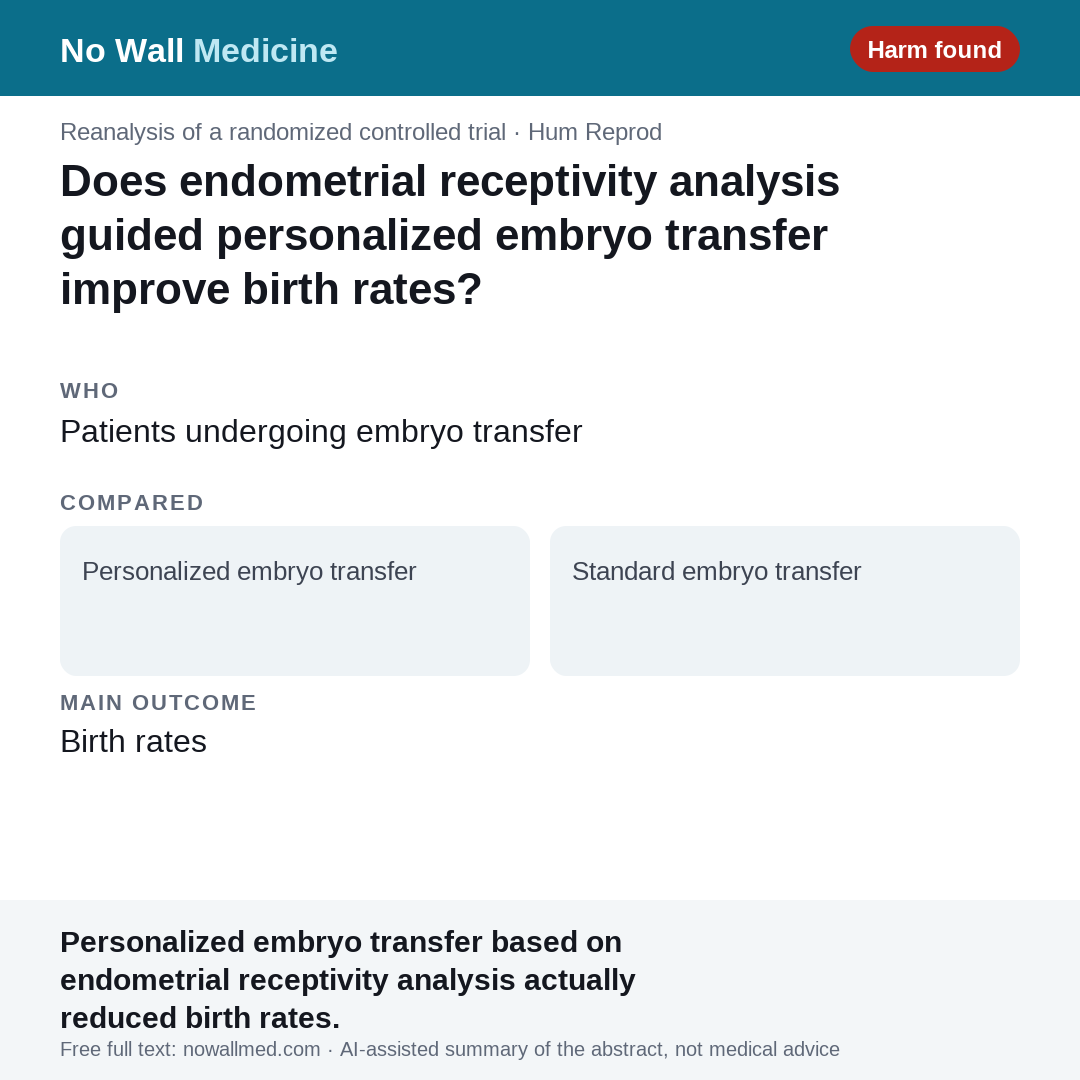
Clinical question: Does endometrial receptivity analysis guided personalized embryo transfer improve birth rates?
Why it matters: It was unknown if the endometrial receptivity analysis test accurately identifies the window of implantation to improve pregnancy outcomes.
Key points
- Researchers reanalyzed data from a randomized controlled trial comparing personalized embryo transfer guided by endometrial receptivity analysis to standard transfer methods.
- The reanalysis found that the endometrial receptivity analysis failed to accurately identify the window of implantation, which is the optimal time for an embryo to attach to the uterus.
- The results showed that personalized embryo transfer based on this analysis actually reduced birth rates.
Headline and key points written with AI from the paper’s abstract, with every number checked against it. Read the paper before relying on them.
Was this summary helpful?
Subject terms
Cite this article
Richter KS, Richter ML. Personalized embryo transfer reduces success rates because endometrial receptivity analysis fails to accurately identify the window of implantation. Hum Reprod. 2023. doi:10.1093/humrep/dead083
Spotted a mistake? Suggest a correction
Top studies every Monday
The week’s key trials and guidelines in your specialties, plus any topics you follow. By email, free.
Get the weekly digest