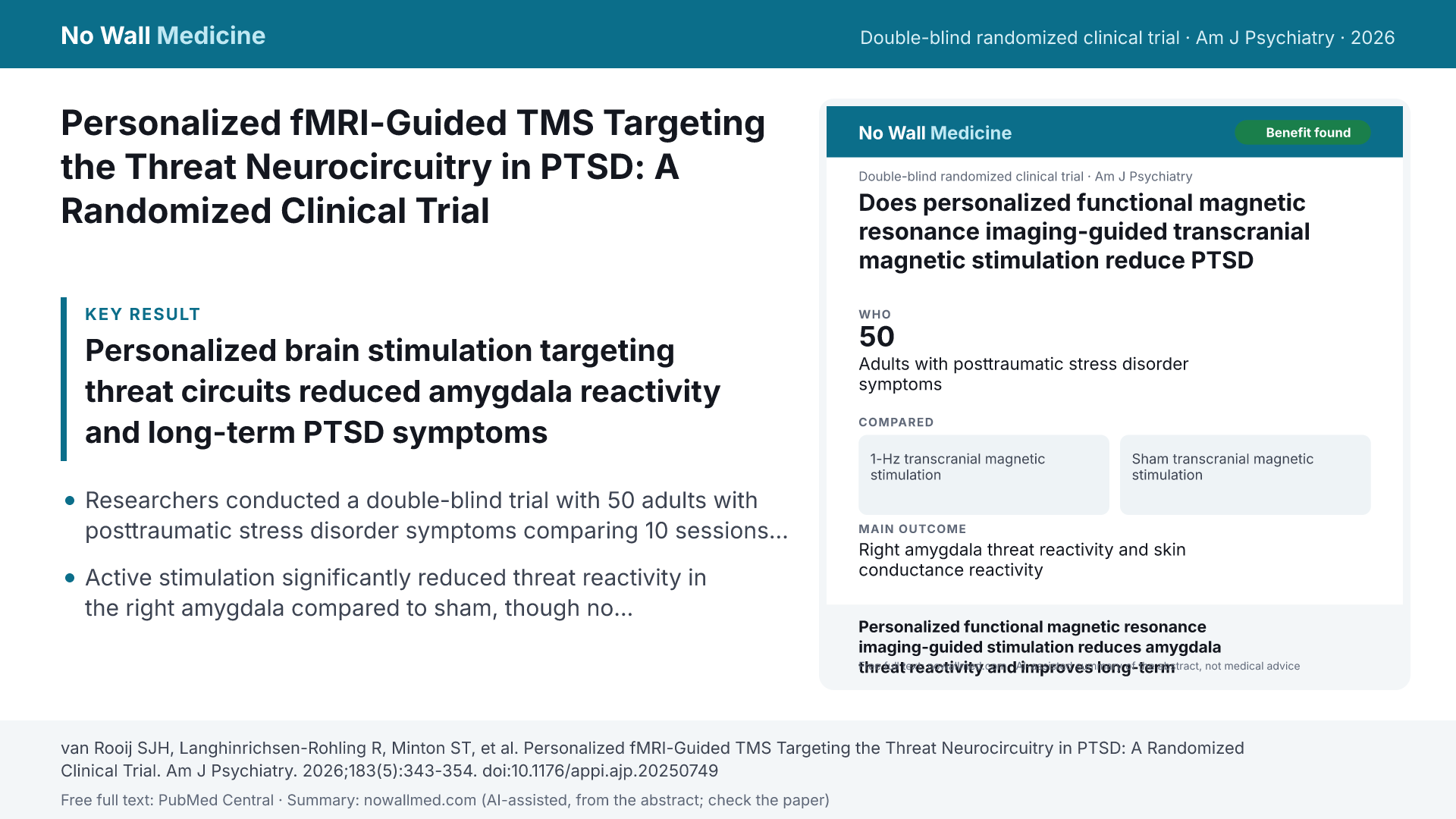
Personalized brain stimulation targeting threat circuits reduced amygdala reactivity and long-term PTSD symptoms
Personalized fMRI-Guided TMS Targeting the Threat Neurocircuitry in PTSD: A Randomized Clinical Trial
Double-blind randomized clinical trialBenefit found
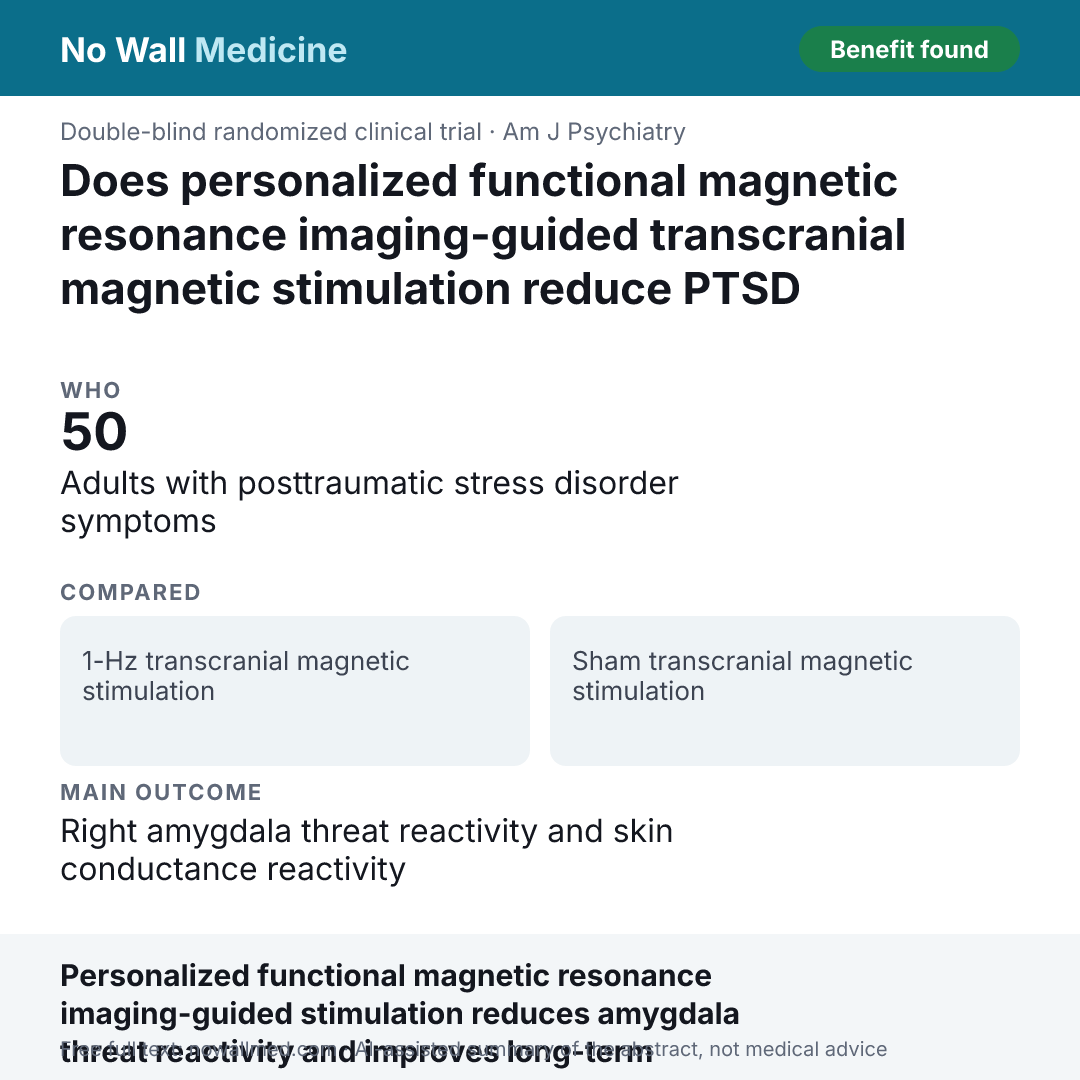
Does personalized functional magnetic resonance imaging-guided transcranial magnetic stimulation reduce PTSD symptoms?
Who
50
Adults with posttraumatic stress disorder symptoms
Compared
1-Hz transcranial magnetic stimulation
Sham transcranial magnetic stimulation
Main outcome
Right amygdala threat reactivity and skin conductance reactivity
Bottom line: Personalized functional magnetic resonance imaging-guided stimulation reduces amygdala threat reactivity and improves long-term symptoms.
Am J Psychiatry · 2026-04-02 · Save PNG
Clinical question: Does personalized functional magnetic resonance imaging-guided transcranial magnetic stimulation reduce PTSD symptoms?
Why it matters: A mechanistic understanding is needed to personalize treatment and improve response rates for posttraumatic stress disorder due to varied clinical results with brain stimulation.
Key points
- Researchers conducted a double-blind trial with 50 adults with posttraumatic stress disorder symptoms comparing 10 sessions of active transcranial magnetic stimulation to a sham treatment.
- Active stimulation significantly reduced threat reactivity in the right amygdala compared to sham, though no significant effect was seen on skin conductance reactivity.
- While both groups showed initial symptom reduction, active stimulation significantly reduced hyperarousal and total PTSD symptoms at a follow-up assessment between 3 and 6 months.
Headline and key points written with AI from the paper’s abstract, with every number checked against it. Read the paper before relying on them.
Was this summary helpful?
Subject terms
Headline, design, result, key points, caveat and citation as plain text.
Cite this article
van Rooij SJH, Langhinrichsen-Rohling R, Minton ST, et al. Personalized fMRI-Guided TMS Targeting the Threat Neurocircuitry in PTSD: A Randomized Clinical Trial. Am J Psychiatry. 2026;183(5):343-354. doi:10.1176/appi.ajp.20250749
Spotted a mistake? Suggest a correction