Personalized Prediction of Response to Smartphone-Delivered Meditation Training: Randomized Controlled Trial
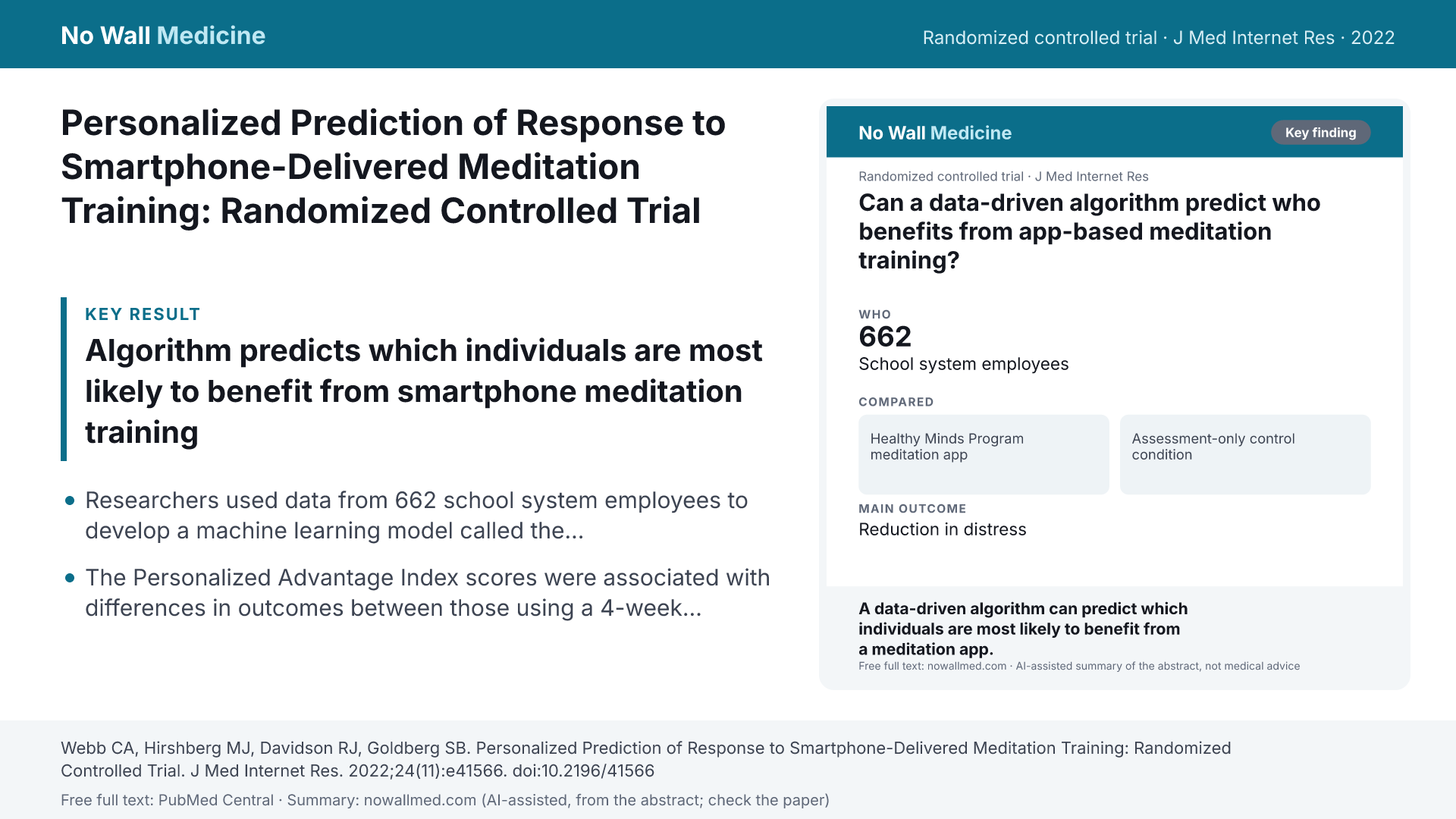
Key result: Algorithm predicts which individuals are most likely to benefit from smartphone meditation training
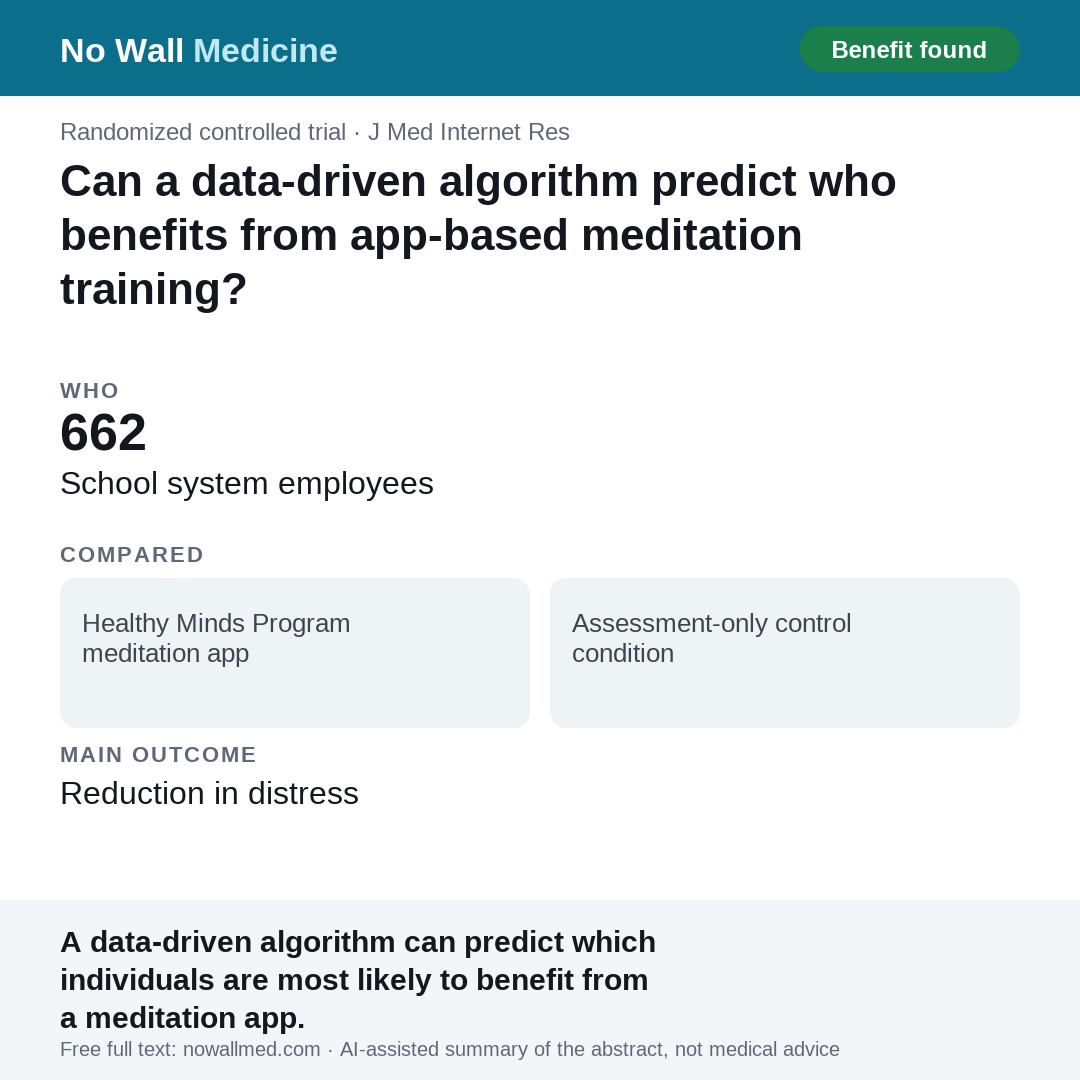
Randomized controlled trialBenefit found
Can a data-driven algorithm predict who benefits from app-based meditation training?
Who
662
School system employees
Compared
Healthy Minds Program meditation app
Assessment-only control condition
Main outcome
Reduction in distress
Bottom line: A data-driven algorithm can predict which individuals are most likely to benefit from a meditation app.
J Med Internet Res · 2022-11-08Download image
Key points
- Researchers used data from 662 school system employees to develop a machine learning model called the Personalized Advantage Index to predict distress reduction.
- The Personalized Advantage Index scores were associated with differences in outcomes between those using a 4-week meditation app and a control group.
- A regression model using repetitive negative thinking, which is frequent intrusive or unwanted thoughts, as the only baseline predictor performed similarly well.
Why it matters: It is unknown which specific individuals are best suited to benefit from using meditation apps for mental health.
Discussion prompts
- Would these patients look like yours? Who was left out?
- Is the main outcome one that matters to patients?
- Is the difference large enough to change what you do?
Cite: Webb CA, Hirshberg MJ, Davidson RJ, Goldberg SB. Personalized Prediction of Response to Smartphone-Delivered Meditation Training: Randomized Controlled Trial. J Med Internet Res. 2022. doi:10.2196/41566
Free full text: PubMed Central · Summary and visual abstract: nowallmed.com/a/personalized-prediction-of-response-to-smartphone-delivered-ms7dul/ (AI-assisted from the abstract; check the paper before relying on it).