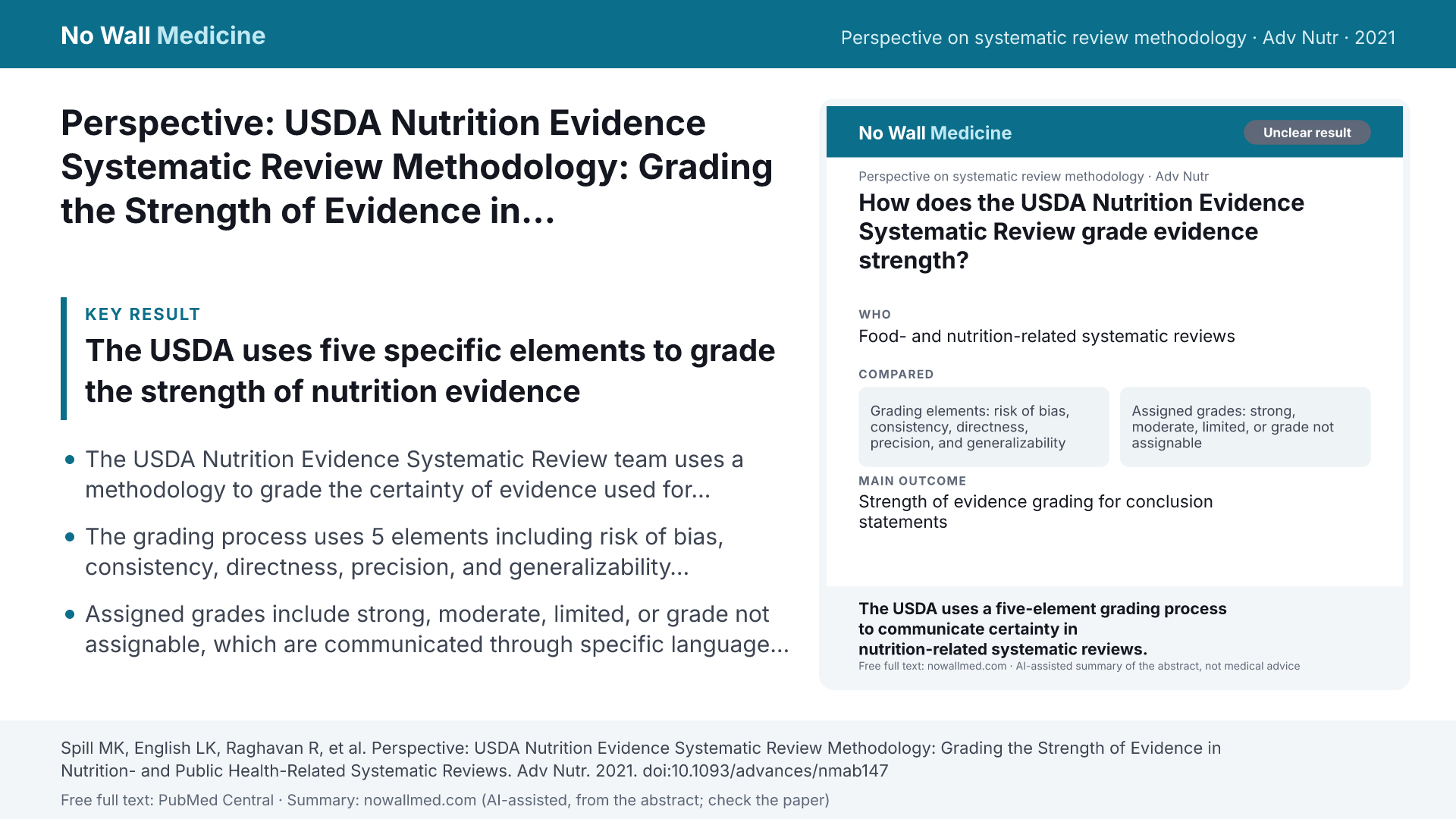
The USDA uses five specific elements to grade the strength of nutrition evidence
Perspective: USDA Nutrition Evidence Systematic Review Methodology: Grading the Strength of Evidence in Nutrition- and Public Health-Related Systematic Reviews
Perspective on systematic review methodologyUnclear result
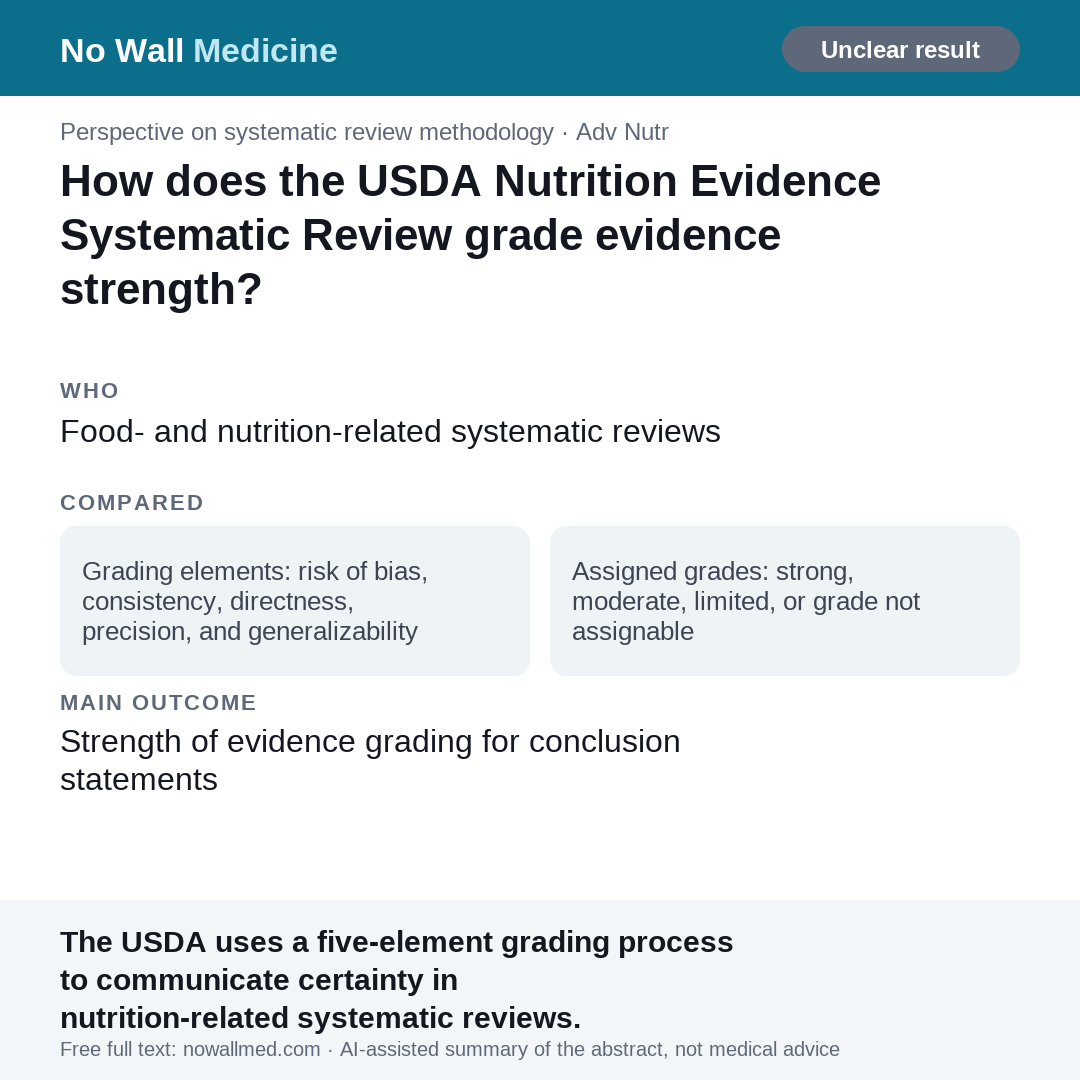
How does the USDA Nutrition Evidence Systematic Review grade evidence strength?
Who
Food- and nutrition-related systematic reviews
Compared
Grading elements: risk of bias, consistency, directness, precision, and generalizability
Assigned grades: strong, moderate, limited, or grade not assignable
Main outcome
Strength of evidence grading for conclusion statements
Bottom line: The USDA uses a five-element grading process to communicate certainty in nutrition-related systematic reviews.
Funded by: United States Department of Agriculture
Adv Nutr · 2021-12-18Download image
Clinical question: How does the USDA Nutrition Evidence Systematic Review grade evidence strength?
Why it matters: It is critical for end users to understand the level of certainty in conclusions when using systematic reviews to make nutrition and public health decisions.
Key points
- The USDA Nutrition Evidence Systematic Review team uses a methodology to grade the certainty of evidence used for Federal nutrition guidelines.
- The grading process uses 5 elements including risk of bias, consistency, directness, precision, and generalizability to assign one of 4 grades.
- Assigned grades include strong, moderate, limited, or grade not assignable, which are communicated through specific language in conclusion statements.
Headline and key points written with AI from the paper’s abstract, with every number checked against it. Read the paper before relying on them.
Was this summary helpful?
Subject terms
Cite this article
Spill MK, English LK, Raghavan R, et al. Perspective: USDA Nutrition Evidence Systematic Review Methodology: Grading the Strength of Evidence in Nutrition- and Public Health-Related Systematic Reviews. Adv Nutr. 2021. doi:10.1093/advances/nmab147
Spotted a mistake? Suggest a correction