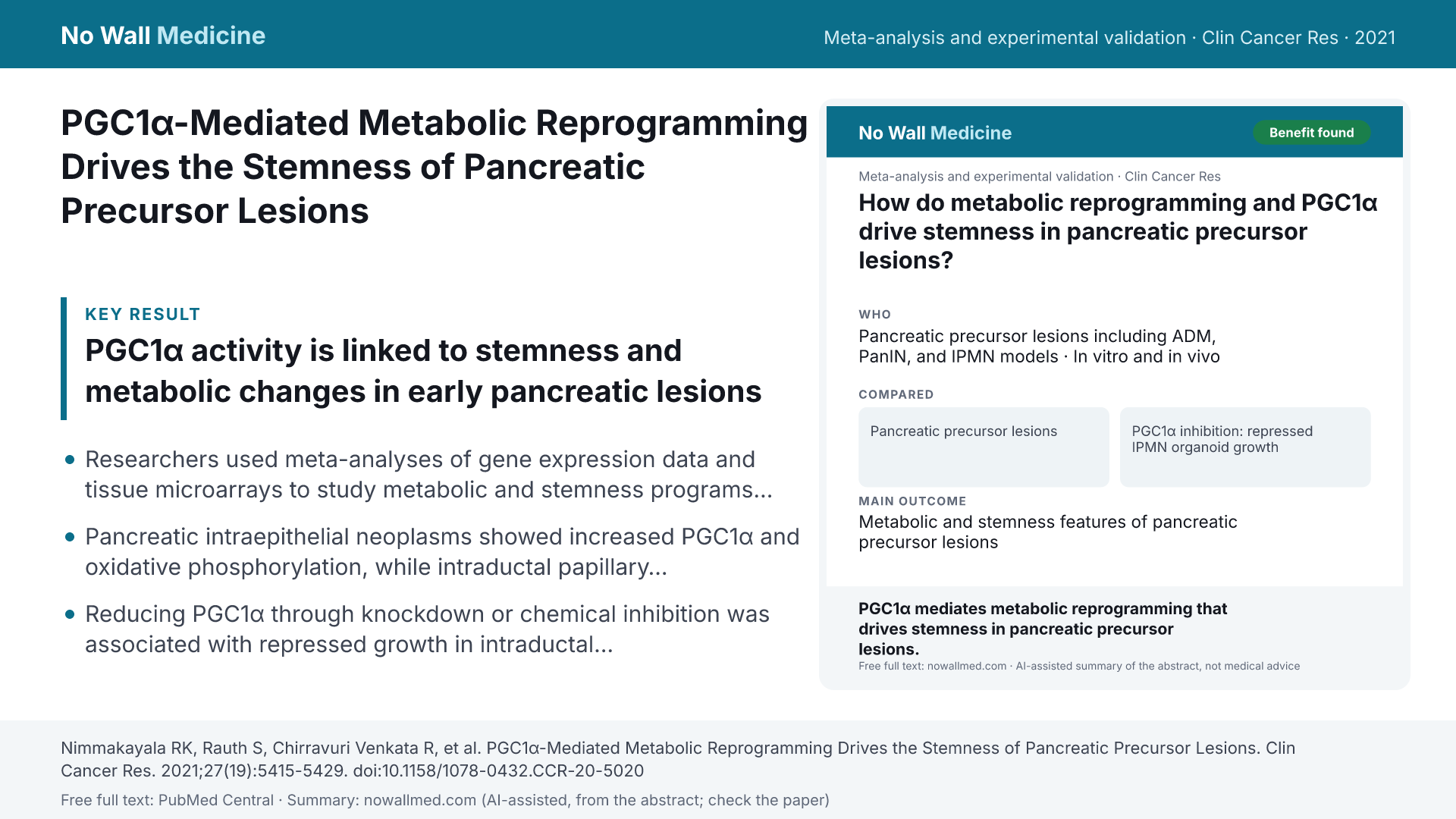
PGC1α activity is linked to stemness and metabolic changes in early pancreatic lesions
PGC1α-Mediated Metabolic Reprogramming Drives the Stemness of Pancreatic Precursor Lesions
Meta-analysis and experimental validationBenefit found
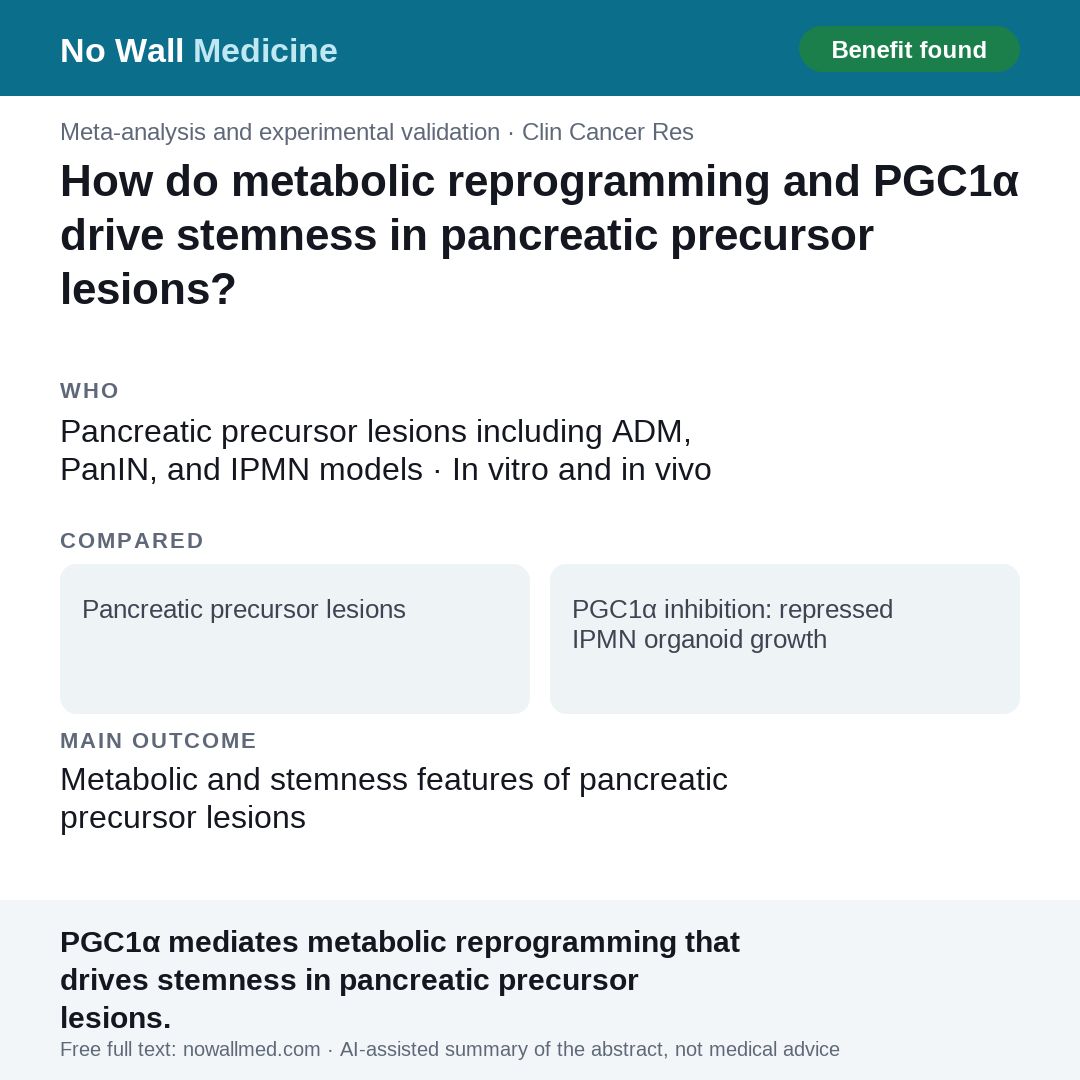
How do metabolic reprogramming and PGC1α drive stemness in pancreatic precursor lesions?
Who
Pancreatic precursor lesions including ADM, PanIN, and IPMN models · In vitro and in vivo models
Compared
Pancreatic precursor lesions
PGC1α inhibition: repressed IPMN organoid growth
Main outcome
Metabolic and stemness features of pancreatic precursor lesions
Bottom line: PGC1α mediates metabolic reprogramming that drives stemness in pancreatic precursor lesions.
Clin Cancer Res · 2021-06-27Download image
Clinical question: How do metabolic reprogramming and PGC1α drive stemness in pancreatic precursor lesions?
Why it matters: The metabolic and stemness programs of pancreatic precursor lesions, which are early events in pancreatic cancer development, have not been thoroughly explored.
Key points
- Researchers used meta-analyses of gene expression data and tissue microarrays to study metabolic and stemness programs in pancreatic precursor lesions.
- Pancreatic intraepithelial neoplasms showed increased PGC1α and oxidative phosphorylation, while intraductal papillary mucinous neoplasms showed elevated PGC1α and fatty acid beta-oxidation.
- Reducing PGC1α through knockdown or chemical inhibition was associated with repressed growth in intraductal papillary mucinous neoplasm organoids.
Headline and key points written with AI from the paper’s abstract, with every number checked against it. Read the paper before relying on them.
Was this summary helpful?
Subject terms
Cite this article
Nimmakayala RK, Rauth S, Chirravuri Venkata R, Marimuthu S, Nallasamy P, Vengoji R. PGC1α-Mediated Metabolic Reprogramming Drives the Stemness of Pancreatic Precursor Lesions. Clin Cancer Res. 2021. doi:10.1158/1078-0432.CCR-20-5020
Spotted a mistake? Suggest a correction
Top studies every Monday
The week’s key trials and guidelines in your specialties, plus any topics you follow. By email, free.
Get the weekly digest