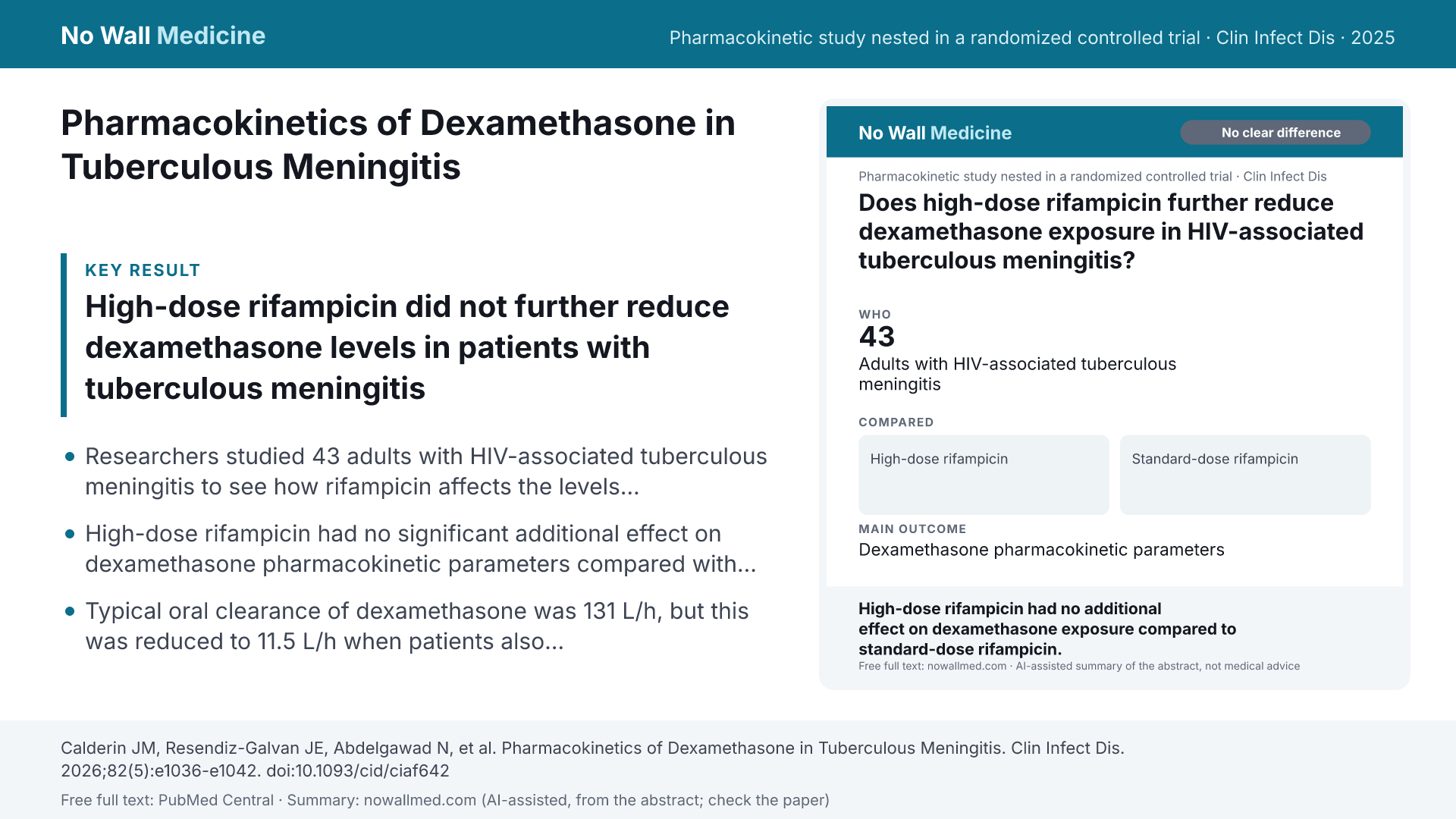
High-dose rifampicin did not further reduce dexamethasone levels in patients with tuberculous meningitis
Pharmacokinetics of Dexamethasone in Tuberculous Meningitis
Pharmacokinetic study nested in a randomized controlled trialNo clear difference
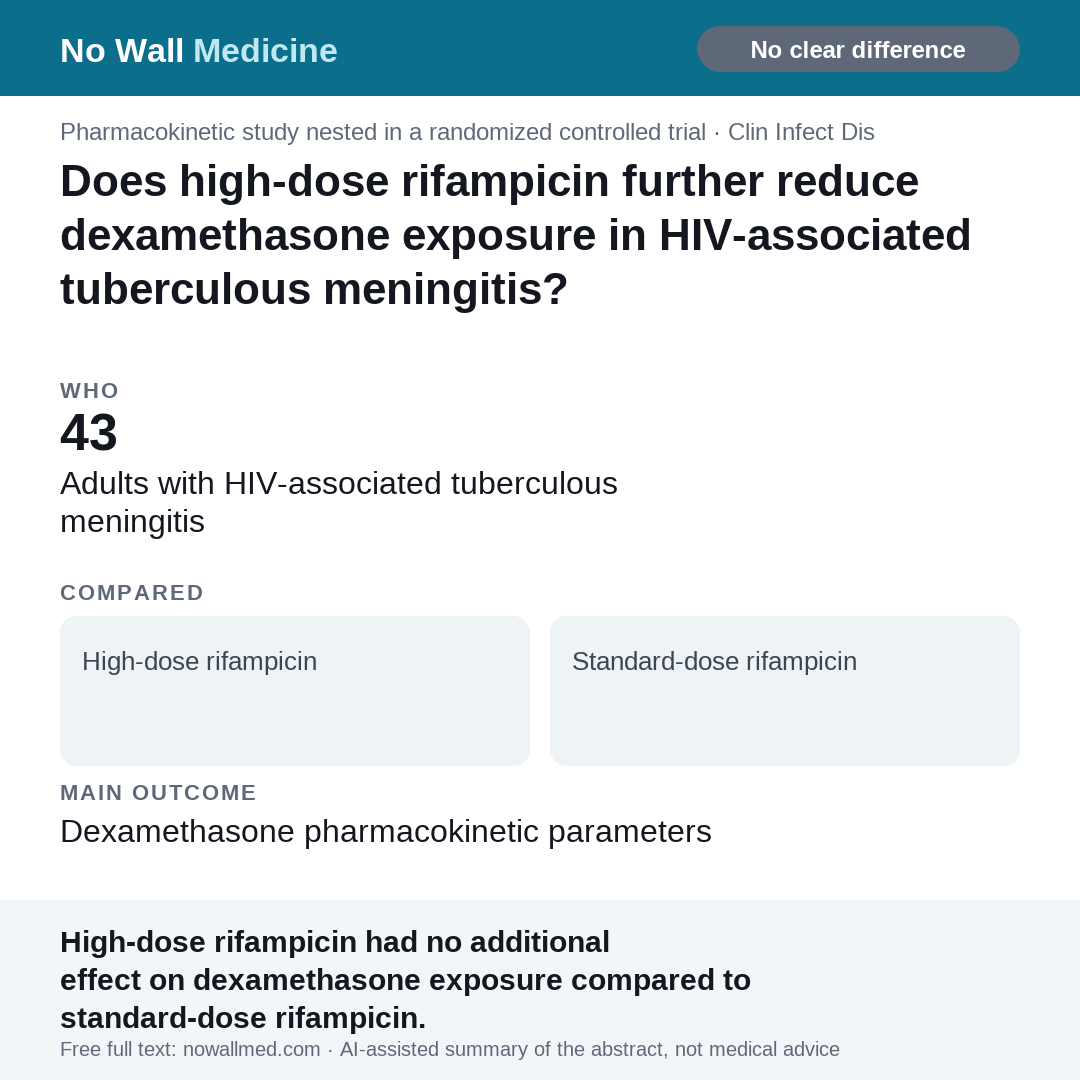
Does high-dose rifampicin further reduce dexamethasone exposure in HIV-associated tuberculous meningitis?
Who
43
Adults with HIV-associated tuberculous meningitis
Compared
High-dose rifampicin
Standard-dose rifampicin
Main outcome
Dexamethasone pharmacokinetic parameters
Bottom line: High-dose rifampicin had no additional effect on dexamethasone exposure compared to standard-dose rifampicin.
Clin Infect Dis · 2025-12-18Download image
Clinical question: Does high-dose rifampicin further reduce dexamethasone exposure in HIV-associated tuberculous meningitis?
Why it matters: It was expected that co-administration with rifampicin would reduce dexamethasone exposure, potentially more so with higher doses currently being evaluated in clinical trials.
Key points
- Researchers studied 43 adults with HIV-associated tuberculous meningitis to see how rifampicin affects the levels of dexamethasone, a steroid used for treatment.
- High-dose rifampicin had no significant additional effect on dexamethasone pharmacokinetic parameters compared with the standard-dose rifampicin.
- Typical oral clearance of dexamethasone was 131 L/h, but this was reduced to 11.5 L/h when patients also took lopinavir/ritonavir.
Headline and key points written with AI from the paper’s abstract, with every number checked against it. Read the paper before relying on them.
Was this summary helpful?
Subject terms
Cite this article
Calderin JM, Resendiz-Galvan JE, Abdelgawad N, et al. Pharmacokinetics of Dexamethasone in Tuberculous Meningitis. Clin Infect Dis. 2025. doi:10.1093/cid/ciaf642
Spotted a mistake? Suggest a correction