Pharmacologic interventions for Kawasaki disease in children: A network meta-analysis of 56 randomized controlled trials
Key result: Combination therapies may shorten fever duration and reduce coronary artery lesions in Kawasaki disease
Key points
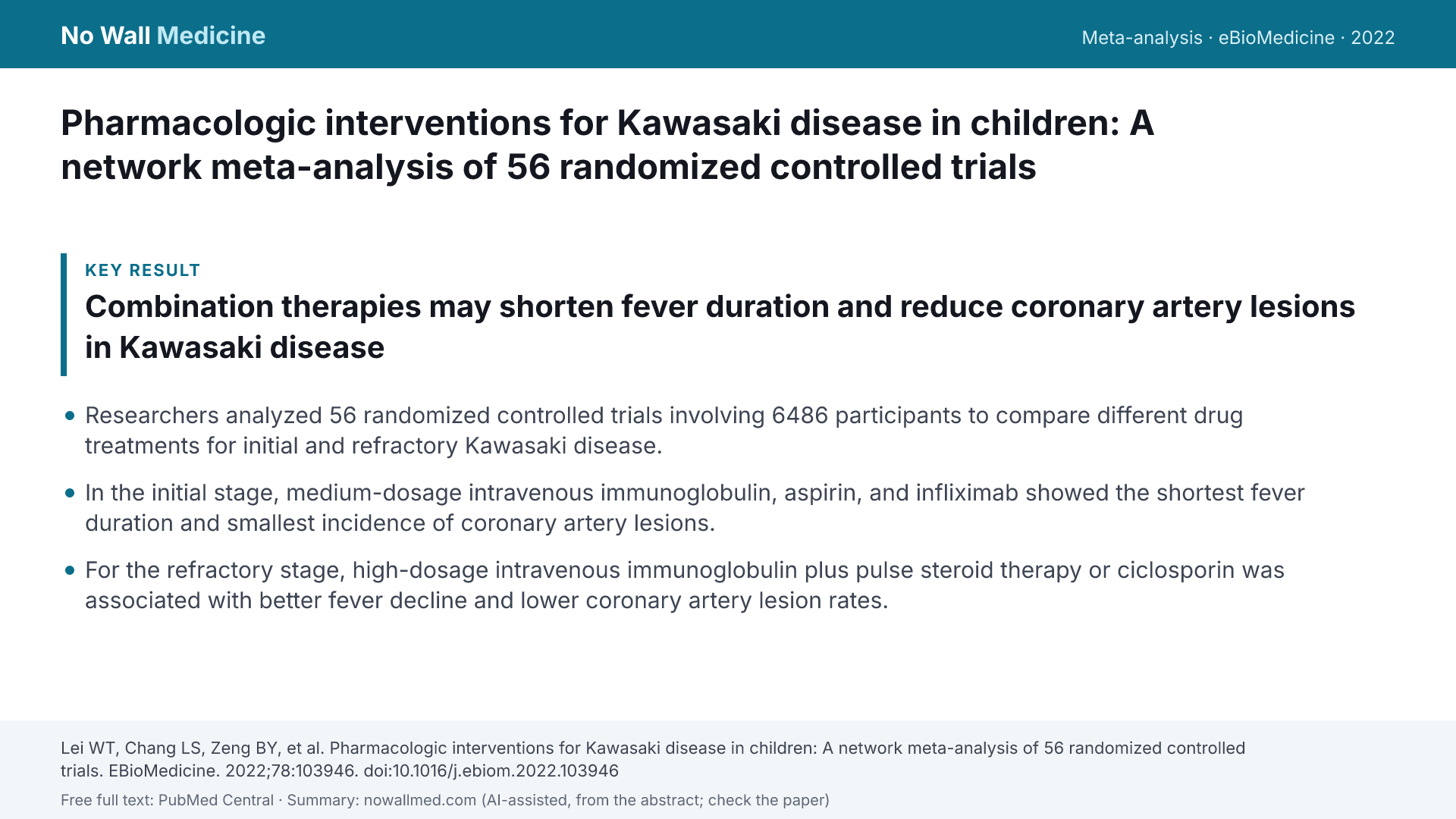
- Researchers analyzed 56 randomized controlled trials involving 6486 participants to compare different drug treatments for initial and refractory Kawasaki disease.
- In the initial stage, medium-dosage intravenous immunoglobulin, aspirin, and infliximab showed the shortest fever duration and smallest incidence of coronary artery lesions.
- For the refractory stage, high-dosage intravenous immunoglobulin plus pulse steroid therapy or ciclosporin was associated with better fever decline and lower coronary artery lesion rates.
Why it matters: The effectiveness of different adjunctive therapies added to standard treatment for Kawasaki disease remains controversial.
Discussion prompts
- Would these patients look like yours? Who was left out?
- Is the main outcome one that matters to patients?
- Is the difference large enough to change what you do?
Cite: Lei WT, Chang LS, Zeng BY, et al. Pharmacologic interventions for Kawasaki disease in children: A network meta-analysis of 56 randomized controlled trials. EBioMedicine. 2022;78:103946. doi:10.1016/j.ebiom.2022.103946
Free full text: PubMed Central · Summary and visual abstract: nowallmed.com/a/pharmacologic-interventions-for-kawasaki-disease-in-children-a-1usllwg/ (AI-assisted from the abstract; check the paper before relying on it).