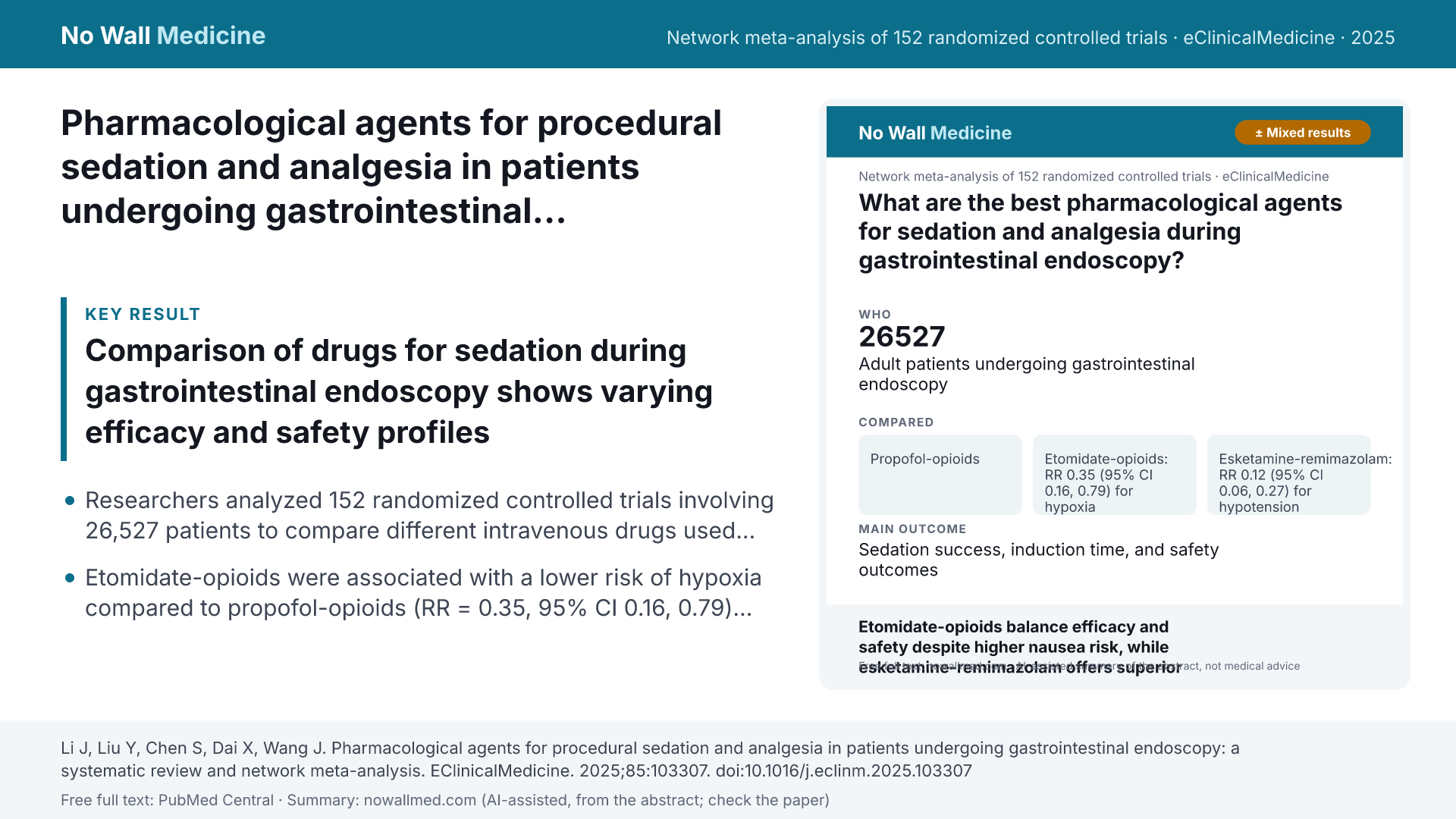
Comparison of drugs for sedation during gastrointestinal endoscopy shows varying efficacy and safety profiles
Pharmacological agents for procedural sedation and analgesia in patients undergoing gastrointestinal endoscopy: a systematic review and network meta-analysis
Network meta-analysis of 152 randomized controlled trialsMixed results
What are the best pharmacological agents for sedation and analgesia during gastrointestinal endoscopy?
Who
26527
Adult patients undergoing gastrointestinal endoscopy
Compared
Propofol-opioids
Etomidate-opioids: RR 0.35 (95% CI 0.16, 0.79) for hypoxia
Esketamine-remimazolam: RR 0.12 (95% CI 0.06, 0.27) for hypotension
Main outcome
Sedation success, induction time, and safety outcomes
Result: RR 0.35 (95% CI 0.16, 0.79) for hypoxia; RR 2.61 (95% CI 1.13, 6.07) for postoperative nausea and vomiting
Bottom line: Etomidate-opioids balance efficacy and safety despite higher nausea risk, while esketamine-remimazolam offers superior hemodynamic stability and faster recovery.
eClinicalMedicine · 2025-06-16Download image
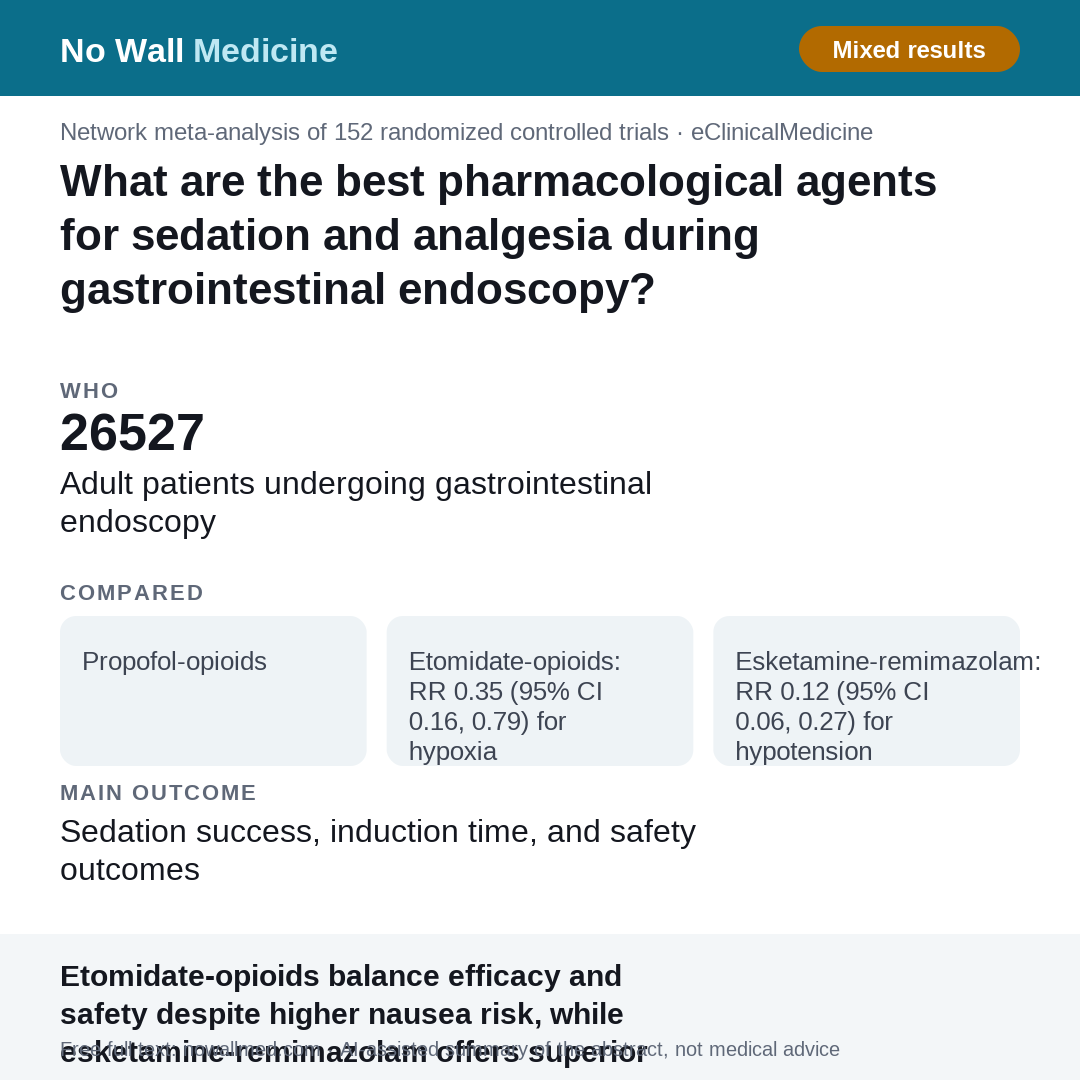
Clinical question: What are the best pharmacological agents for sedation and analgesia during gastrointestinal endoscopy?
Why it matters: The optimal pharmacological agent to balance sedation success and safety during gastrointestinal endoscopy remains uncertain for clinical decision-making.
Key points
- Researchers analyzed 152 randomized controlled trials involving 26,527 patients to compare different intravenous drugs used for sedation and pain relief during endoscopy.
- Etomidate-opioids were associated with a lower risk of hypoxia compared to propofol-opioids (RR = 0.35, 95% CI 0.16, 0.79) but were linked to increased postoperative nausea and vomiting (RR = 2.61, 95% CI 1.13, 6.07).
- Esketamine-remimazolam was associated with a lower risk of hypotension (RR = 0.12, 95% CI 0.06, 0.27) and bradycardia (RR = 0.19, 95% CI 0.06, 0.55) compared to propofol-opioids.
Headline and key points written with AI from the paper’s abstract, with every number checked against it. Read the paper before relying on them.
Was this summary helpful?
Cite this article
Li J, Liu Y, Chen S, Dai X, Wang J. Pharmacological agents for procedural sedation and analgesia in patients undergoing gastrointestinal endoscopy: a systematic review and network meta-analysis. eClinicalMedicine. 2025. doi:10.1016/j.eclinm.2025.103307
Spotted a mistake? Suggest a correction