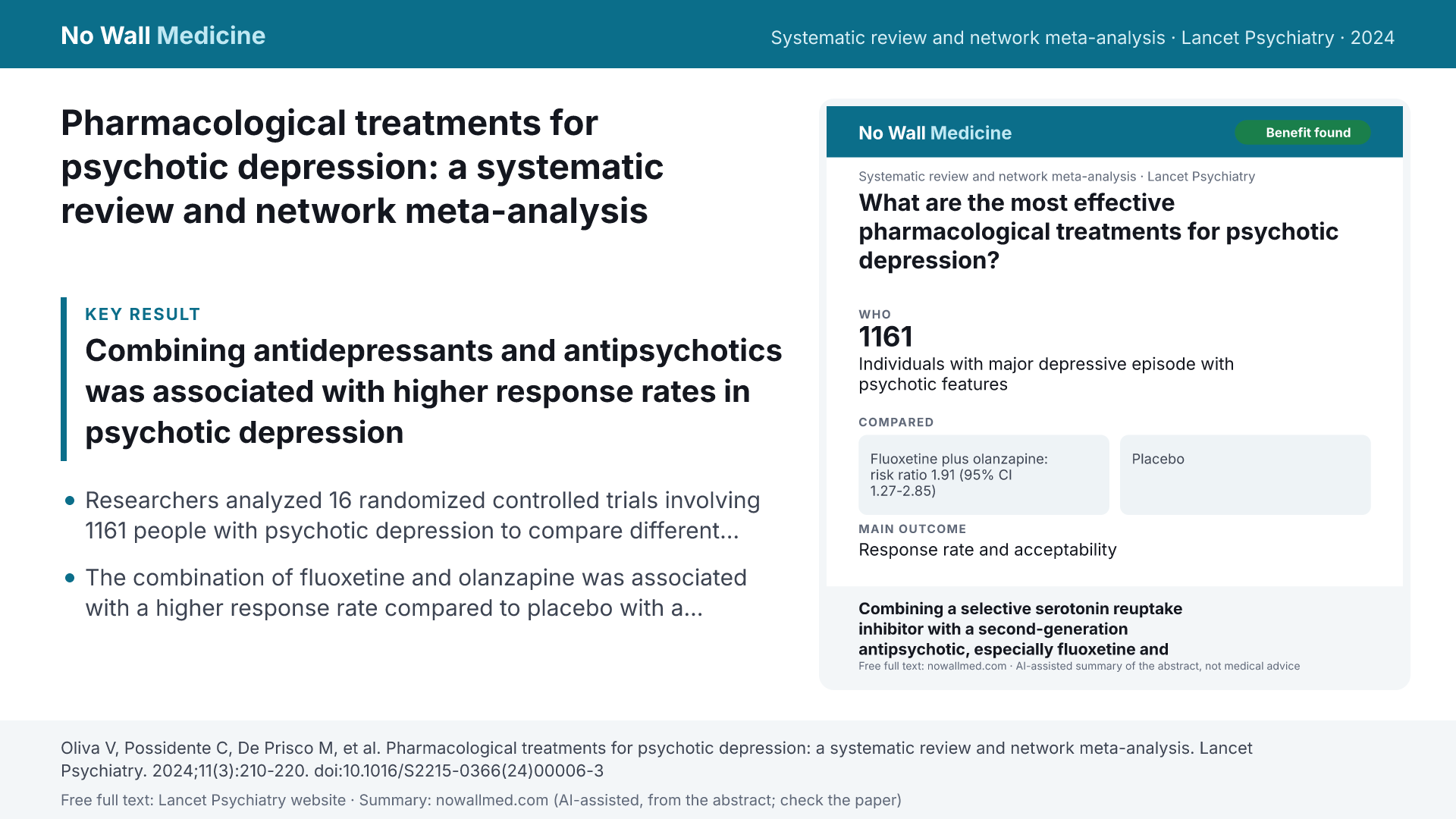
Combining antidepressants and antipsychotics was associated with higher response rates in psychotic depression
Pharmacological treatments for psychotic depression: a systematic review and network meta-analysis
Systematic review and network meta-analysisBenefit found
What are the most effective pharmacological treatments for psychotic depression?
Who
1161
Individuals with major depressive episode with psychotic features
Compared
Fluoxetine plus olanzapine: risk ratio 1.91 (95% CI 1.27-2.85)
Placebo
Main outcome
Response rate and acceptability
Result: risk ratio 1.91 (95% CI 1.27-2.85)
Bottom line: Combining a selective serotonin reuptake inhibitor with a second-generation antipsychotic, especially fluoxetine and olanzapine, may be optimal for psychotic depression.
Limitation: the conclusions should be interpreted cautiously
Lancet Psychiatry · 2024-02-16Download image
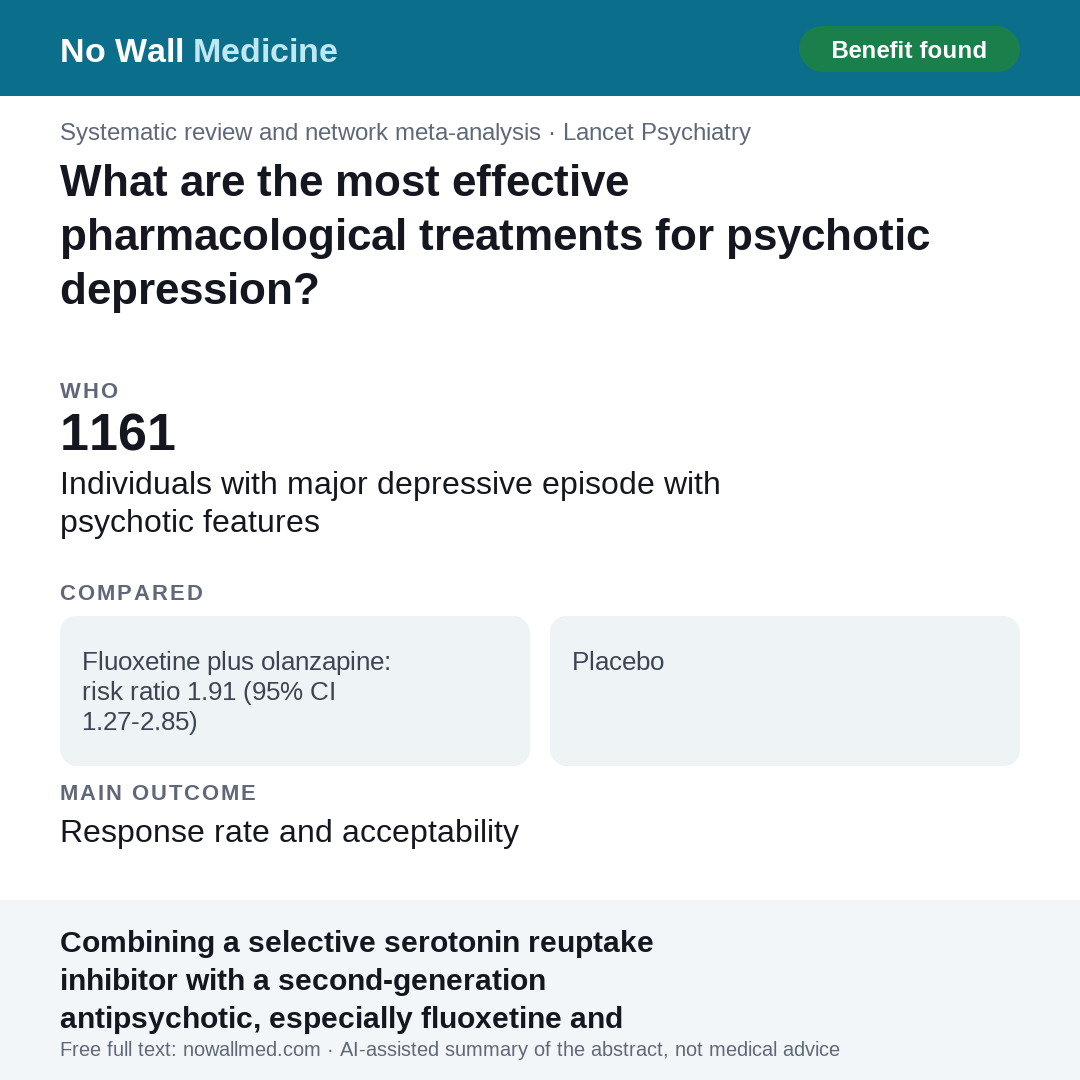
Clinical question: What are the most effective pharmacological treatments for psychotic depression?
Why it matters: There are currently no clinical recommendations based on the efficacy of specific drugs for treating psychotic depression.
Key points
- Researchers analyzed 16 randomized controlled trials involving 1161 people with psychotic depression to compare different drug treatments.
- The combination of fluoxetine and olanzapine was associated with a higher response rate compared to placebo with a risk ratio of 1.91.
- Antipsychotic plus antidepressant combinations consistently showed higher response rates than using only one type of medication in head-to-head comparisons.
Headline and key points written with AI from the paper’s abstract, with every number checked against it. Read the paper before relying on them.
Was this summary helpful?
Subject terms
Cite this article
Oliva V, Possidente C, De Prisco M, et al. Pharmacological treatments for psychotic depression: a systematic review and network meta-analysis. Lancet Psychiatry. 2024. doi:10.1016/S2215-0366(24)00006-3
Spotted a mistake? Suggest a correction