Liraglutide treatment was associated with greater changes in blood metabolites than glimepiride in diabetes patients
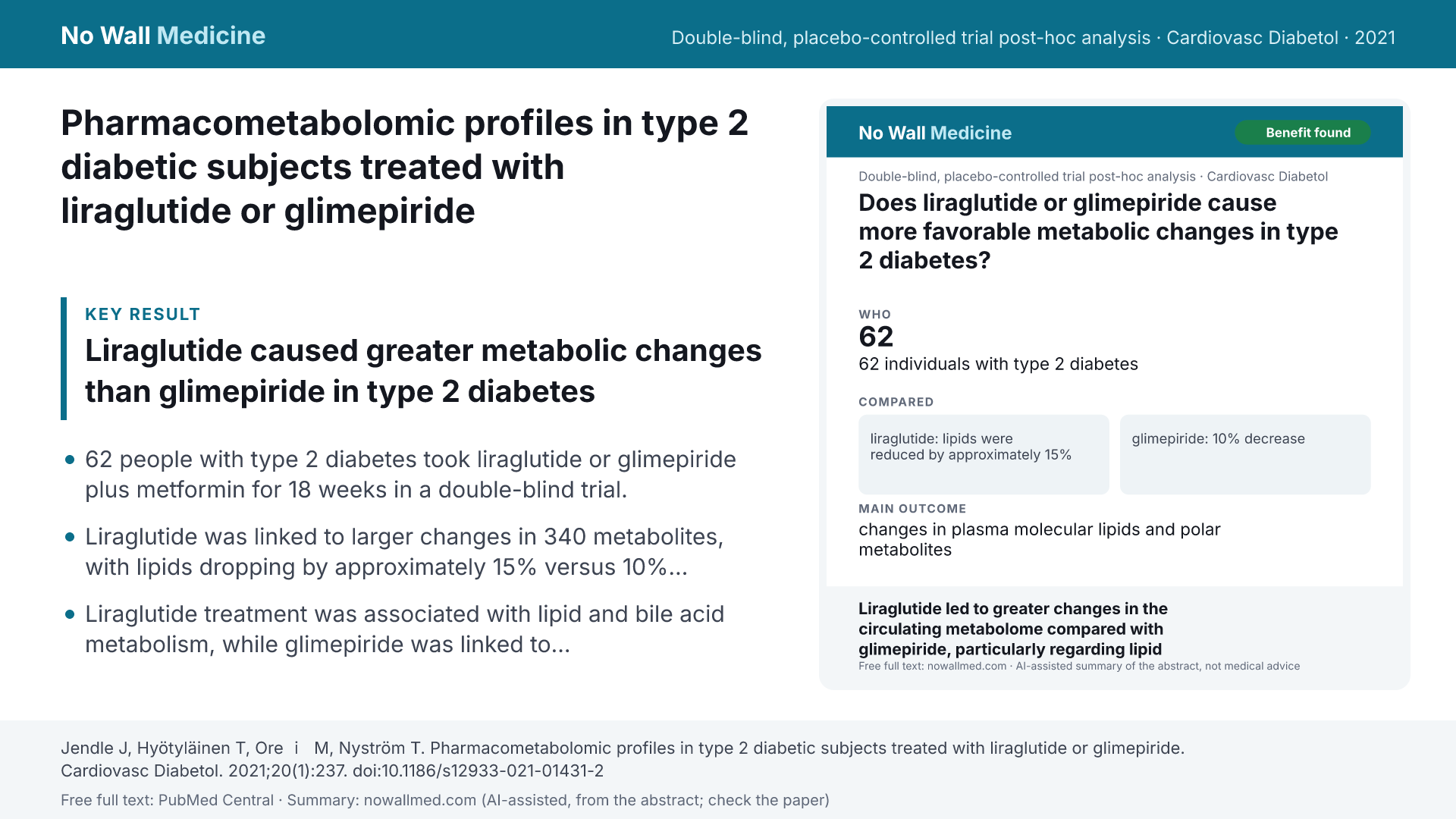
Pharmacometabolomic profiles in type 2 diabetic subjects treated with liraglutide or glimepiride
Double-blind, placebo-controlled trial post-hoc analysisBenefit found
Does liraglutide or glimepiride cause more favorable metabolic changes in type 2 diabetes?
Who
62
62 individuals with type 2 diabetes
Compared
liraglutide: lipids were reduced by approximately 15%
glimepiride: 10% decrease
Main outcome
changes in plasma molecular lipids and polar metabolites
Bottom line: Liraglutide led to greater changes in the circulating metabolome compared with glimepiride, particularly regarding lipid metabolism.
Cardiovasc Diabetol · 2021-12-17Download image
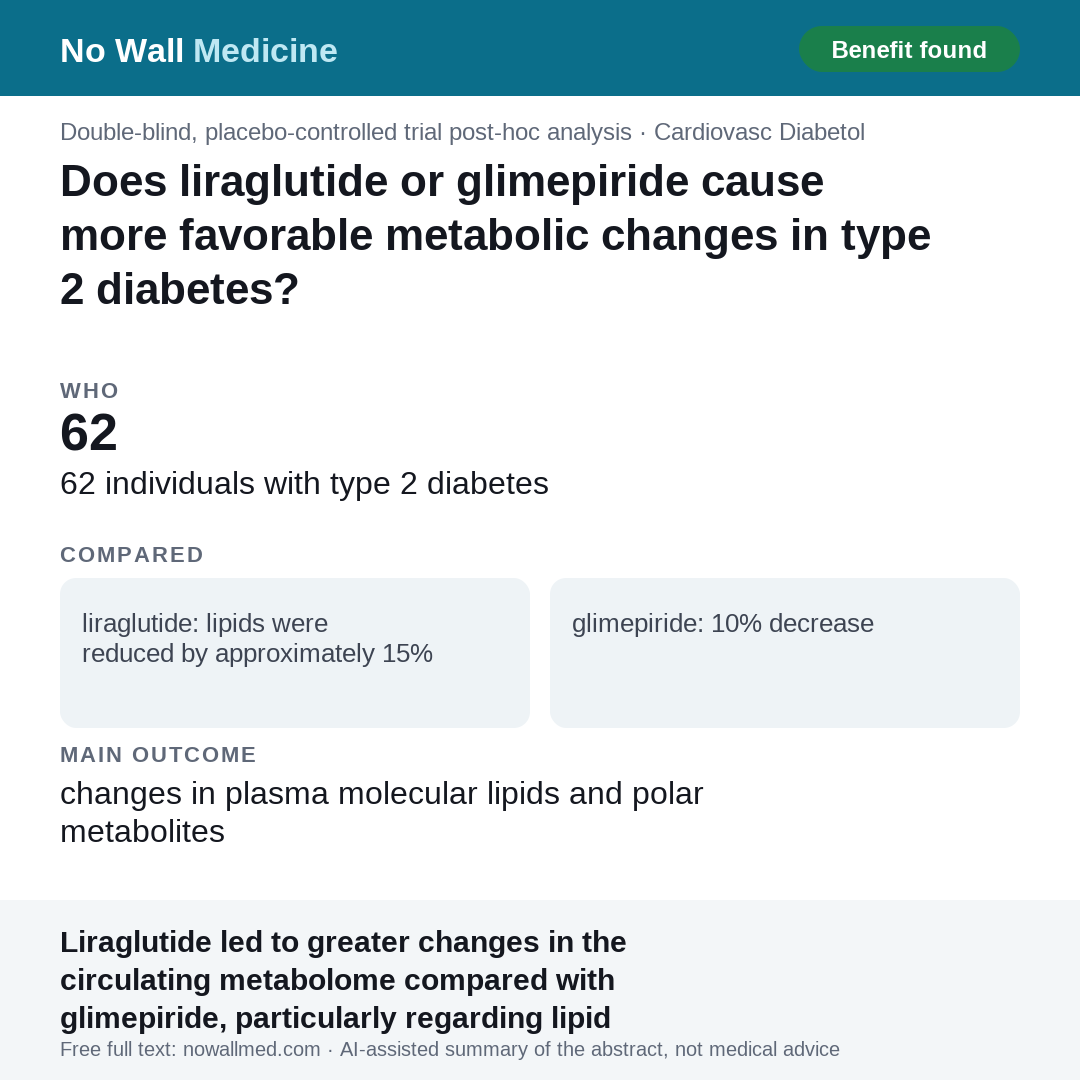
Clinical question: Does liraglutide or glimepiride cause more favorable metabolic changes in type 2 diabetes?
Why it matters: The biological mechanisms behind how glucagon-like peptide-1 receptor agonists reduce cardiovascular disease risk and potentially treat fatty liver disease are not fully understood.
Key points
- Researchers analyzed 62 individuals with type 2 diabetes treated with either liraglutide or glimepiride alongside metformin for 18 weeks.
- Liraglutide treatment was associated with a 15% reduction in lipids from baseline, compared to a 10% decrease in the glimepiride group.
- Liraglutide was associated with changes in lipid, bile acid, and glucose metabolism, while glimepiride was associated with tryptophan, carbohydrate, and glycerophospholipid metabolism.
Headline and key points written with AI from the paper’s abstract, with every number checked against it. Read the paper before relying on them.
Was this summary helpful?
Subject terms
Cite this article
Jendle J, Hyötyläinen T, Orešič M, Nyström T. Pharmacometabolomic profiles in type 2 diabetic subjects treated with liraglutide or glimepiride. Cardiovasc Diabetol. 2021. doi:10.1186/s12933-021-01431-2
Spotted a mistake? Suggest a correction