Phenylephrine infusion was associated with lower pulmonary edema rates during hysteroscopic myomectomy
Phenylephrine-induced blood pressure elevation reduces pulmonary edema and distention fluid absorption in hysteroscopic myomectomy: a randomized controlled trial
Randomized controlled trialBenefit found
Does phenylephrine-induced blood pressure elevation reduce pulmonary edema and fluid absorption during hysteroscopic myomectomy?
Who
44
Patients scheduled for hysteroscopic myomectomy
Compared
18.2%Phenylephrine infusion
54.6%Normal saline infusion
Main outcome
Incidence of pulmonary edema assessed by lung ultrasound
Result: RR = 0.33, 95% CI (0.13-0.81)
Bottom line: Phenylephrine administration during hysteroscopic myomectomy effectively reduces pulmonary edema and distention fluid absorption by increasing mean arterial pressure.
Int J Surg · 2025-11-01Download image
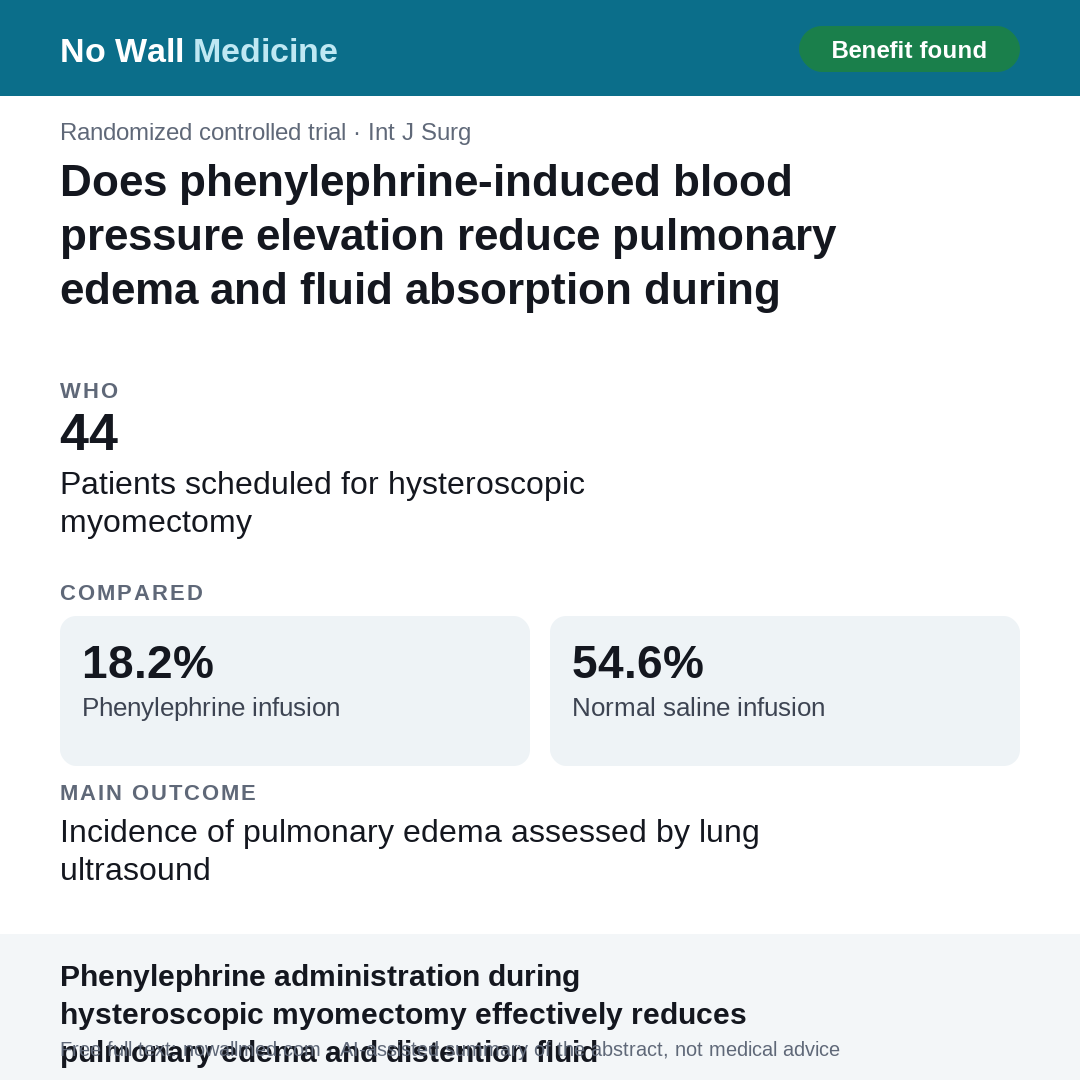
Clinical question: Does phenylephrine-induced blood pressure elevation reduce pulmonary edema and fluid absorption during hysteroscopic myomectomy?
Why it matters: Fluid overload and subsequent pulmonary edema are significant complications during hysteroscopic myomectomy for treating submucosal leiomyomas.
Key points
- Researchers conducted a randomized controlled trial with 44 patients undergoing hysteroscopic myomectomy, comparing phenylephrine infusion to normal saline infusion.
- The phenylephrine group had a lower incidence of pulmonary edema, which is fluid buildup in the lungs, at 18.2% compared to 54.6% in the control group.
- Phenylephrine use was also associated with lower lung ultrasound B-line scores, lower thoracic fluid content, and decreased use of the diuretic furosemide.
Headline and key points written with AI from the paper’s abstract, with every number checked against it. Read the paper before relying on them.
Topics
Cite this article
Chen J, Zhang H, Liu X, Shi Y, Huang S, Jiao J. Phenylephrine-induced blood pressure elevation reduces pulmonary edema and distention fluid absorption in hysteroscopic myomectomy: a randomized controlled trial. Int J Surg. 2025. doi:10.1097/JS9.0000000000003505
Spotted a mistake? Suggest a correction