Phosphate Concentrations and Modifying Factors in Healthy Children From 12 to 24 Months of Age
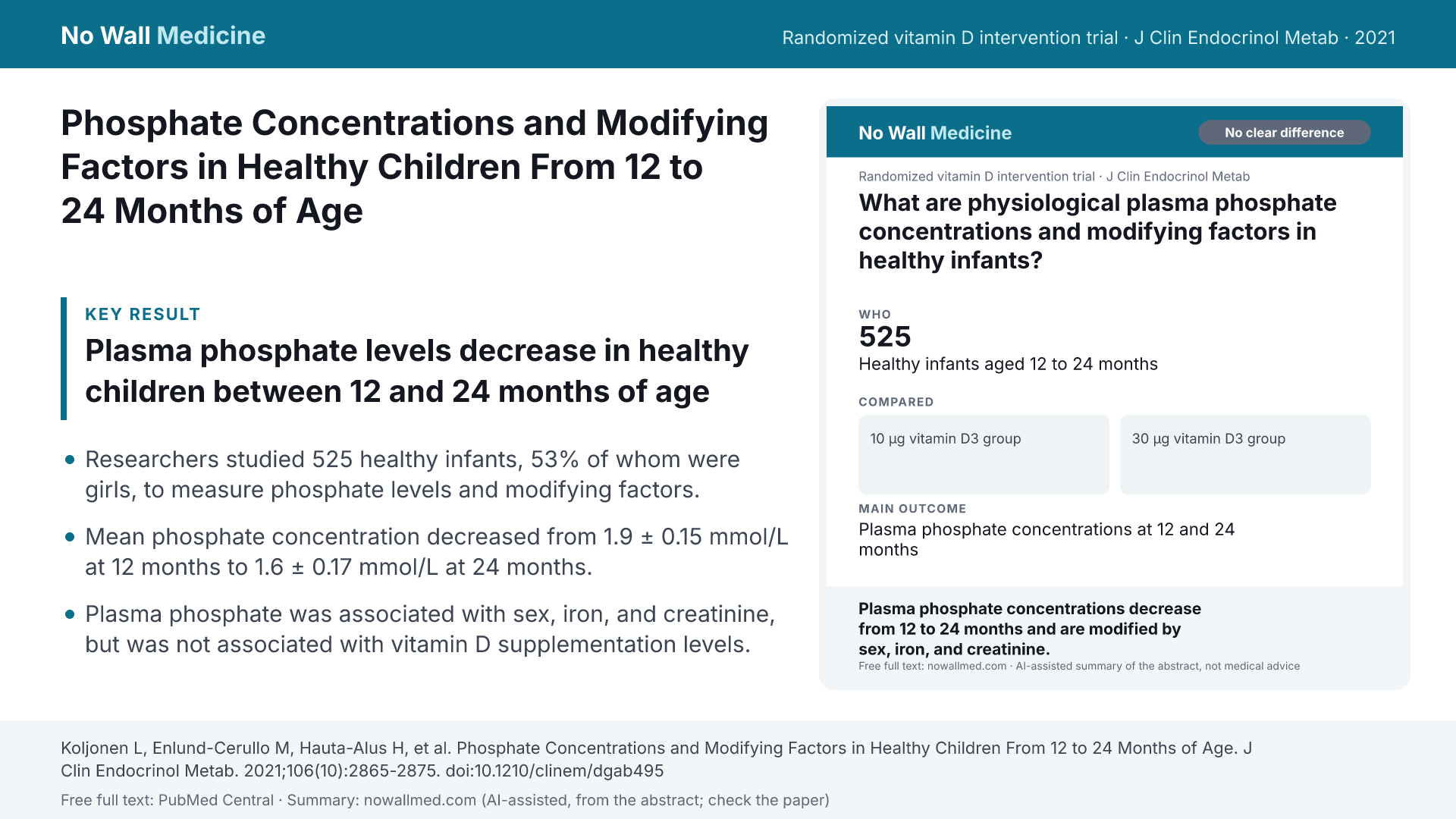
Key result: Plasma phosphate levels decrease in healthy children between 12 and 24 months of age
Randomized vitamin D intervention trialNo clear difference
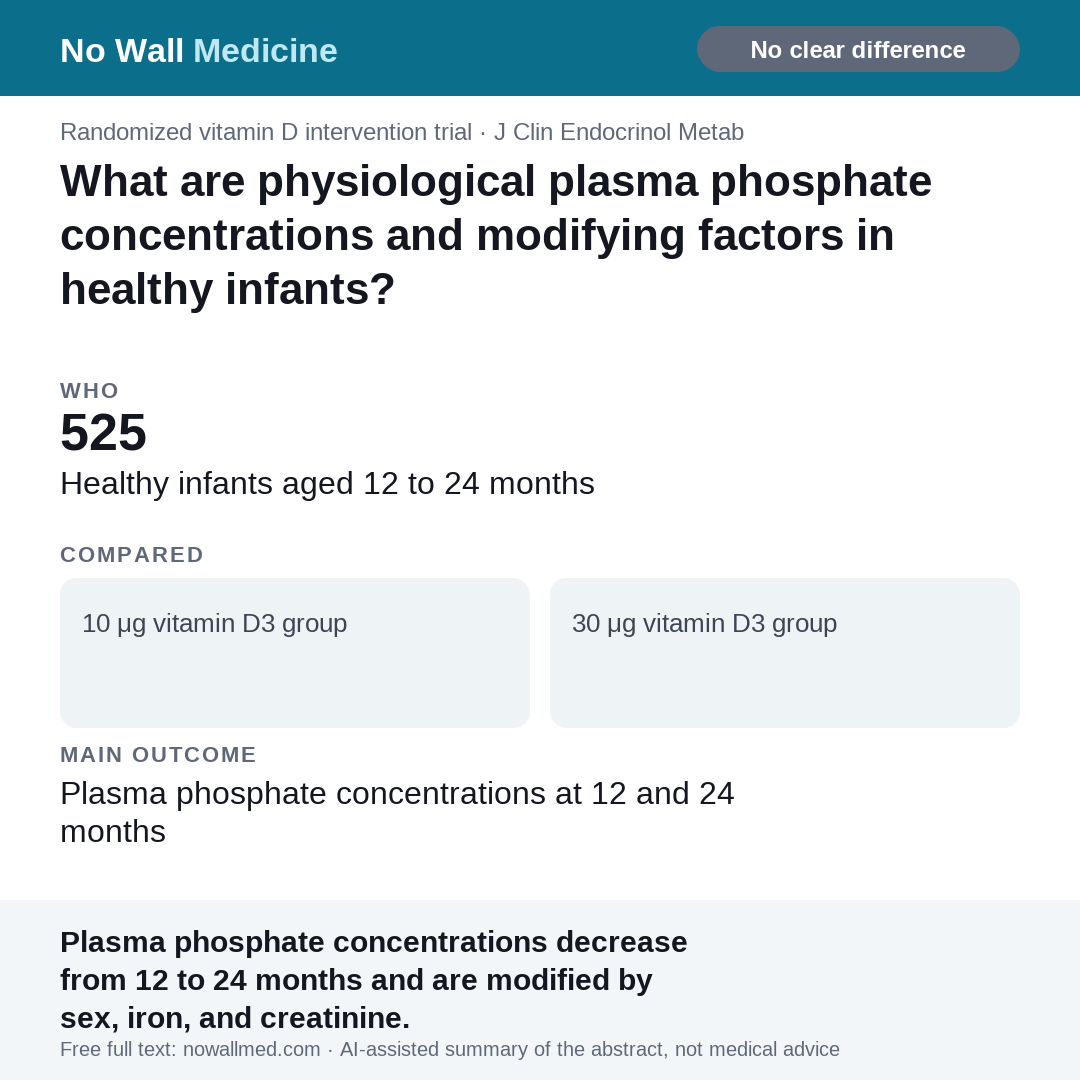
What are physiological plasma phosphate concentrations and modifying factors in healthy infants?
Who
525
Healthy infants aged 12 to 24 months
Compared
10 μg vitamin D3 group
30 μg vitamin D3 group
Main outcome
Plasma phosphate concentrations at 12 and 24 months
Bottom line: Plasma phosphate concentrations decrease from 12 to 24 months and are modified by sex, iron, and creatinine.
J Clin Endocrinol Metab · 2021-07-03Download image
Key points
- Researchers studied 525 healthy infants, 53% of whom were girls, to measure phosphate levels and modifying factors.
- Mean phosphate concentration decreased from 1.9 ± 0.15 mmol/L at 12 months to 1.6 ± 0.17 mmol/L at 24 months.
- Plasma phosphate was associated with sex, iron, and creatinine, but was not associated with vitamin D supplementation levels.
Why it matters: The physiological phosphate concentration and the factors that modify it in healthy infants during early childhood are inadequately characterized.
Discussion prompts
- Would these patients look like yours? Who was left out?
- Is the main outcome one that matters to patients?
- Is the difference large enough to change what you do?
Cite: Koljonen L, Enlund-Cerullo M, Hauta-Alus H, et al. Phosphate Concentrations and Modifying Factors in Healthy Children From 12 to 24 Months of Age. J Clin Endocrinol Metab. 2021. doi:10.1210/clinem/dgab495
Free full text: PubMed Central · Summary and visual abstract: nowallmed.com/a/phosphate-concentrations-and-modifying-factors-in-healthy-children-bpqvks/ (AI-assisted from the abstract; check the paper before relying on it).