Physiological effects of awake prone position in acute hypoxemic respiratory failure
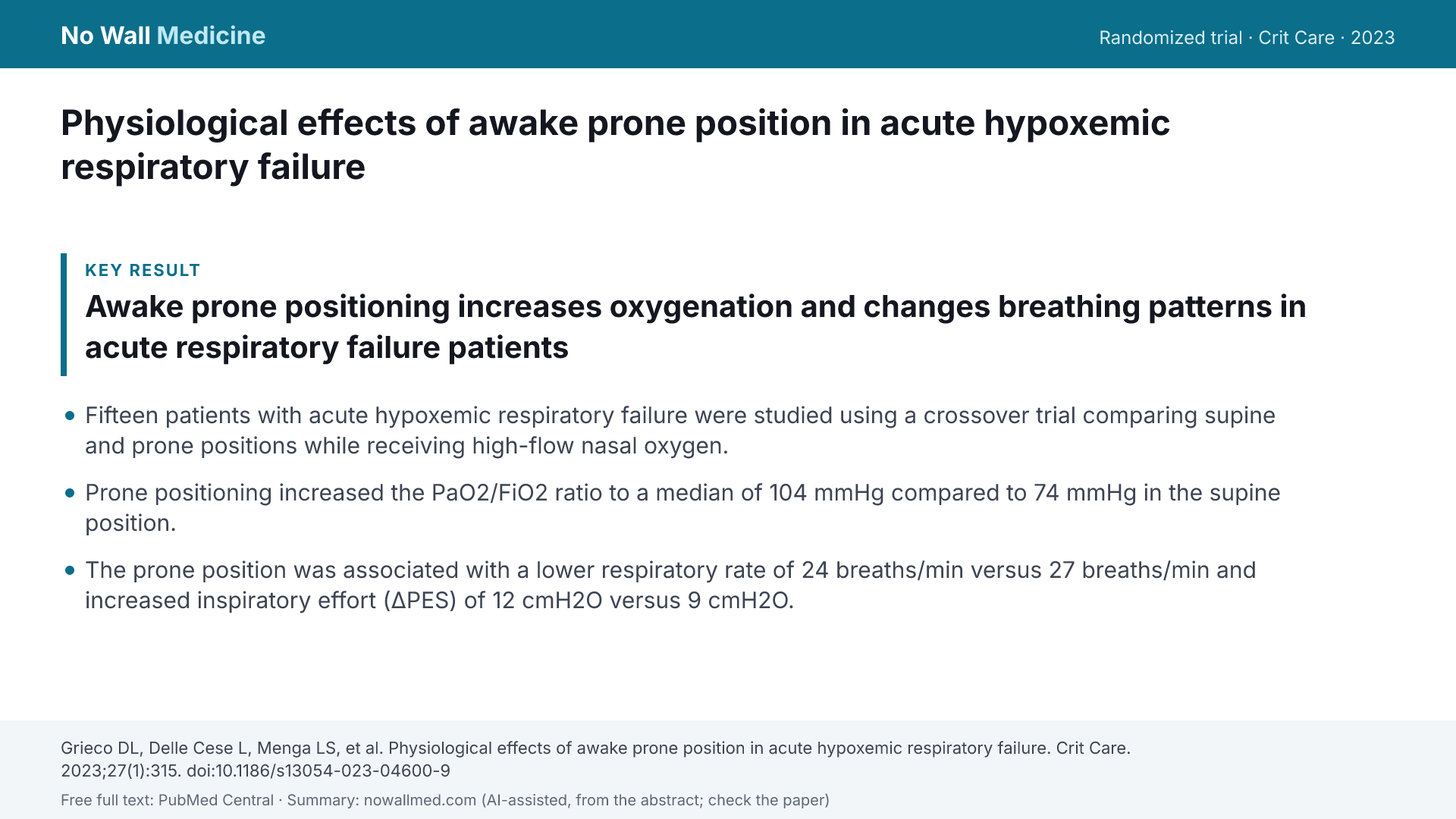
Key result: Awake prone positioning increases oxygenation and changes breathing patterns in acute respiratory failure patients
Key points
- Fifteen patients with acute hypoxemic respiratory failure were studied using a crossover trial comparing supine and prone positions while receiving high-flow nasal oxygen.
- Prone positioning increased the PaO2/FiO2 ratio to a median of 104 mmHg compared to 74 mmHg in the supine position.
- The prone position was associated with a lower respiratory rate of 24 breaths/min versus 27 breaths/min and increased inspiratory effort (ΔPES) of 12 cmH2O versus 9 cmH2O.
Discussion prompts
- Would these patients look like yours? Who was left out?
- Is the main outcome one that matters to patients?
- Is the difference large enough to change what you do?
Cite: Grieco DL, Delle Cese L, Menga LS, et al. Physiological effects of awake prone position in acute hypoxemic respiratory failure. Crit Care. 2023;27(1):315. doi:10.1186/s13054-023-04600-9
Free full text: PubMed Central · Summary and visual abstract: nowallmed.com/a/physiological-effects-of-awake-prone-position-in-acute-hypoxemic-whyolu/ (AI-assisted from the abstract; check the paper before relying on it).