High-flow nasal cannula reduced respiratory effort during intense exercise
Physiological effects of high-flow nasal cannula during sustained high-intensity exercise in healthy volunteers: a randomised crossover trial
Randomised crossover trialBenefit found
Does high-flow nasal cannula impact respiratory physiological variables during sustained high-intensity exercise?
Who
14
14 healthy volunteers · single-centre
Compared
High-flow nasal cannula: decreased oesophageal pressure and dyspnoea
Sham-high-flow nasal cannula
Main outcome
change in oesophageal pressure
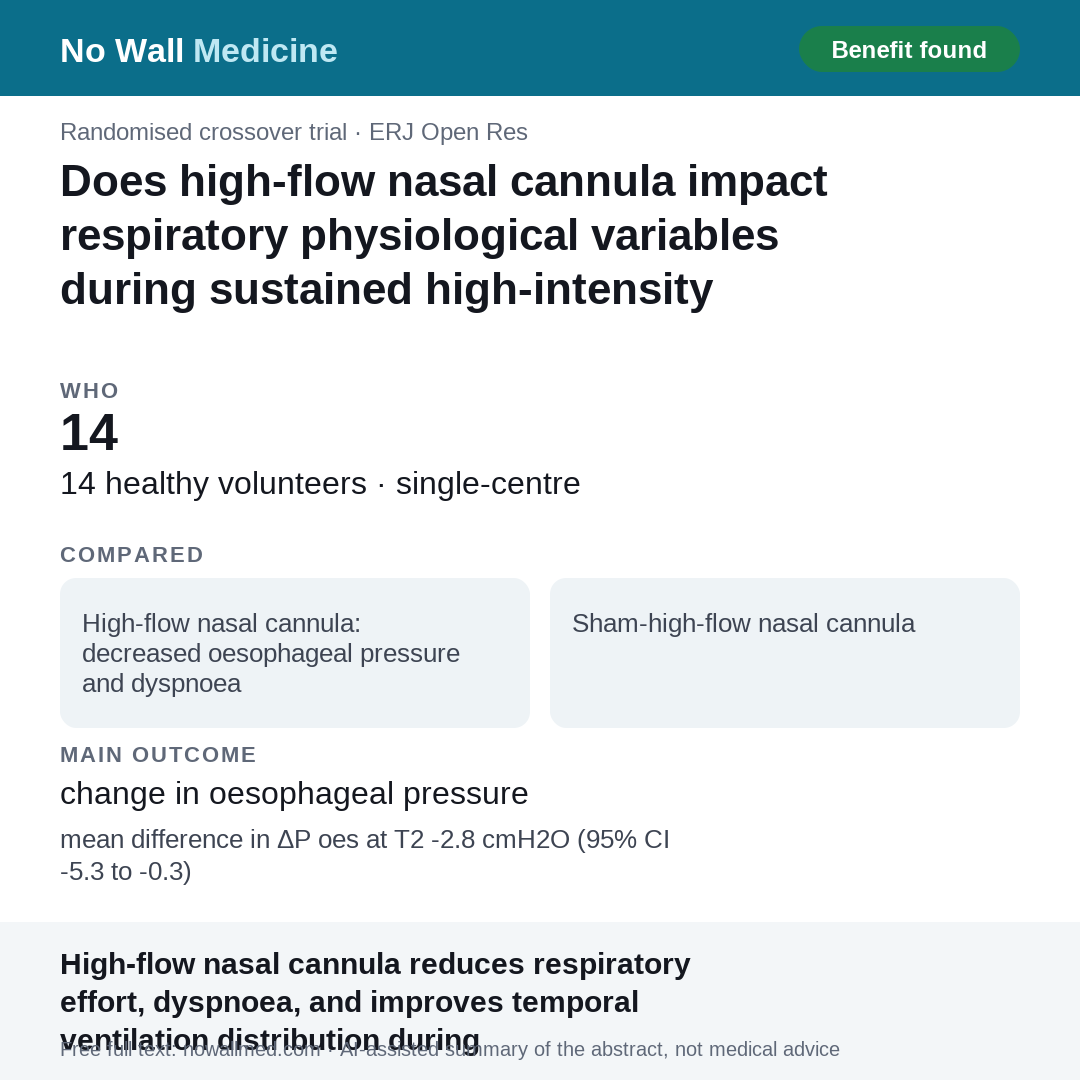
Result: mean difference in ΔP oes at T2 -2.8 cmH2O (95% CI -5.3 to -0.3)
Bottom line: High-flow nasal cannula reduces respiratory effort, dyspnoea, and improves temporal ventilation distribution during high-intensity exercise.
ERJ Open Res · 2025-02-03Download image
Clinical question: Does high-flow nasal cannula impact respiratory physiological variables during sustained high-intensity exercise?
Why it matters: It was unknown whether high-flow nasal cannula impacts respiratory physiological variables during exercise
Key points
- 14 healthy volunteers were studied with high-flow nasal cannula and sham intervention.
- High-flow nasal cannula decreased oesophageal pressure by 2.8 cmH2O at 4 minutes.
- High-flow nasal cannula also decreased dyspnoea in healthy volunteers during exercise.
Limitation the authors note: The study was a single-centre trial with a small sample size
Headline and key points written with AI from the paper’s abstract, with every number checked against it. Read the paper before relying on them.
Was this summary helpful?
Cite this article
Moya-Gallardo E, Garcia-Valdés P, Marambio-Coloma C, Gutierrez-Escobar C, Hernández-Vargas B, Muñoz-Castro C. Physiological effects of high-flow nasal cannula during sustained high-intensity exercise in healthy volunteers: a randomised crossover trial. ERJ Open Res. 2025. doi:10.1183/23120541.00482-2024
Spotted a mistake? Suggest a correction
Top studies every Monday
The week’s key trials and guidelines in your specialties, plus any topics you follow. By email, free.
Get the weekly digest