Combined physiotherapy and nutrition support proved feasible for patients recovering from critical illness
Physiotherapy and optimised enteral nutrition in the post-acute phase of critical illness (PHOENIX): a randomised controlled feasibility trial
Open-label randomised controlled feasibility trialBenefit found
Is combined enhanced physiotherapy and optimised nutrition feasible for adult intensive care survivors?
Who
60
Adult intensive care survivors requiring physiotherapy and dietetic rehabilitation · Two United Kingdom university hospitals
Compared
Enhanced physiotherapy and optimised nutrition: 81% enhanced physiotherapy delivery and 75.2% calorie intake fidelity
Usual care
Main outcome
Recruitment rate, retention at 30 days, and intervention fidelity
Bottom line: Combined enhanced physiotherapy and optimised nutrition is feasible for intensive care survivors following discharge.
Funded by: National Institute for Health and Care Research
eClinicalMedicine · 2026-06-11Download image
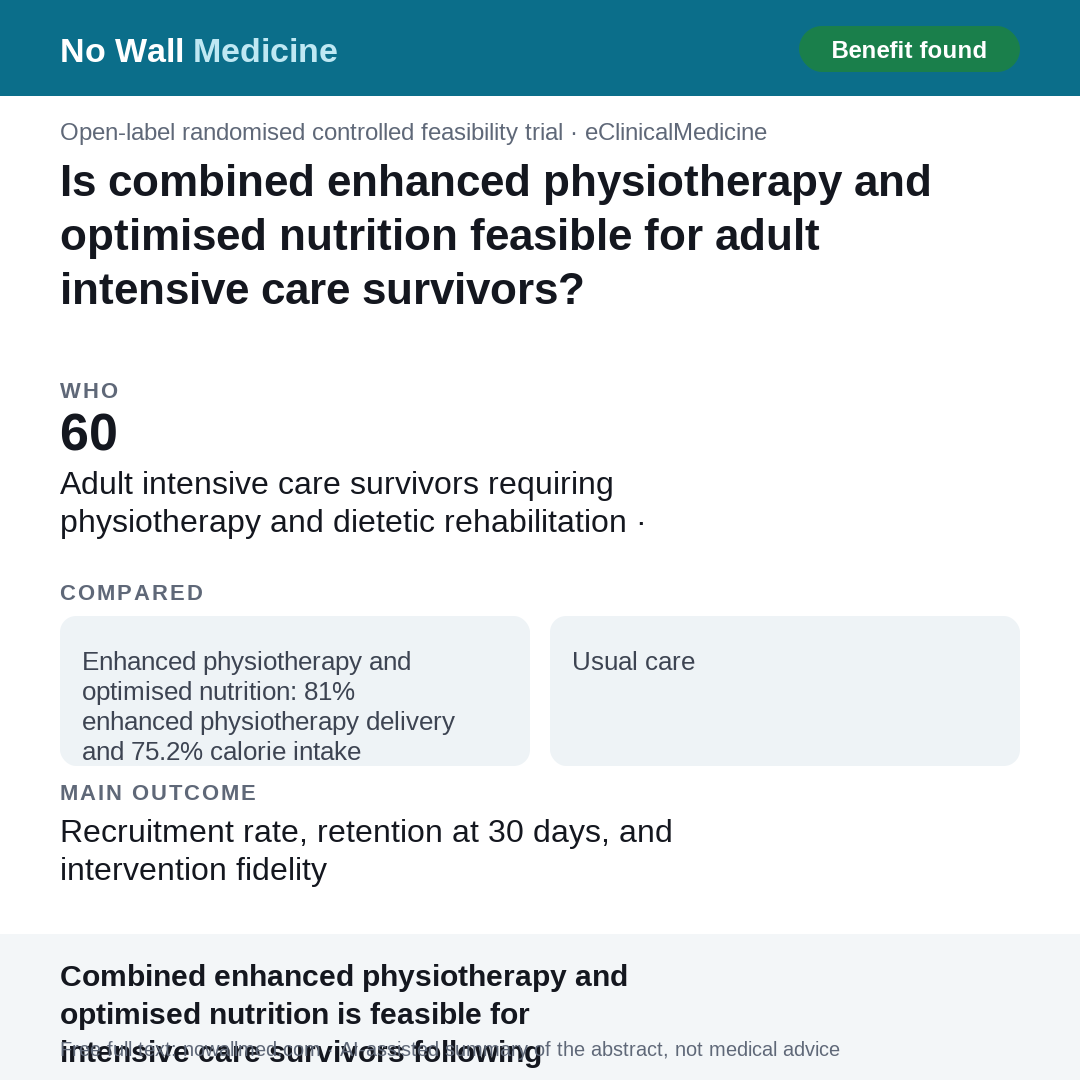
Clinical question: Is combined enhanced physiotherapy and optimised nutrition feasible for adult intensive care survivors?
Why it matters: Rehabilitation and nutritional support after intensive care are often inconsistent, and it is uncertain if combined interventions are feasible in a hospital setting.
Key points
- Researchers studied 60 adult survivors of intensive care who required respiratory support and rehabilitation services at the time of hospital discharge.
- The study found 100% retention at 30 days and that enhanced physiotherapy was delivered on 81% of available days.
- Nutritional targets were met with intake fidelity of 75.2% for calories and 83.7% for protein.
Headline and key points written with AI from the paper’s abstract, with every number checked against it. Read the paper before relying on them.
Cite this article
McWilliams D, Gustafson O, Wyer N, Couper K, Kimani PK, Kandiyali R. Physiotherapy and optimised enteral nutrition in the post-acute phase of critical illness (PHOENIX): a randomised controlled feasibility trial. eClinicalMedicine. 2026. doi:10.1016/j.eclinm.2026.104000
Spotted a mistake? Suggest a correction