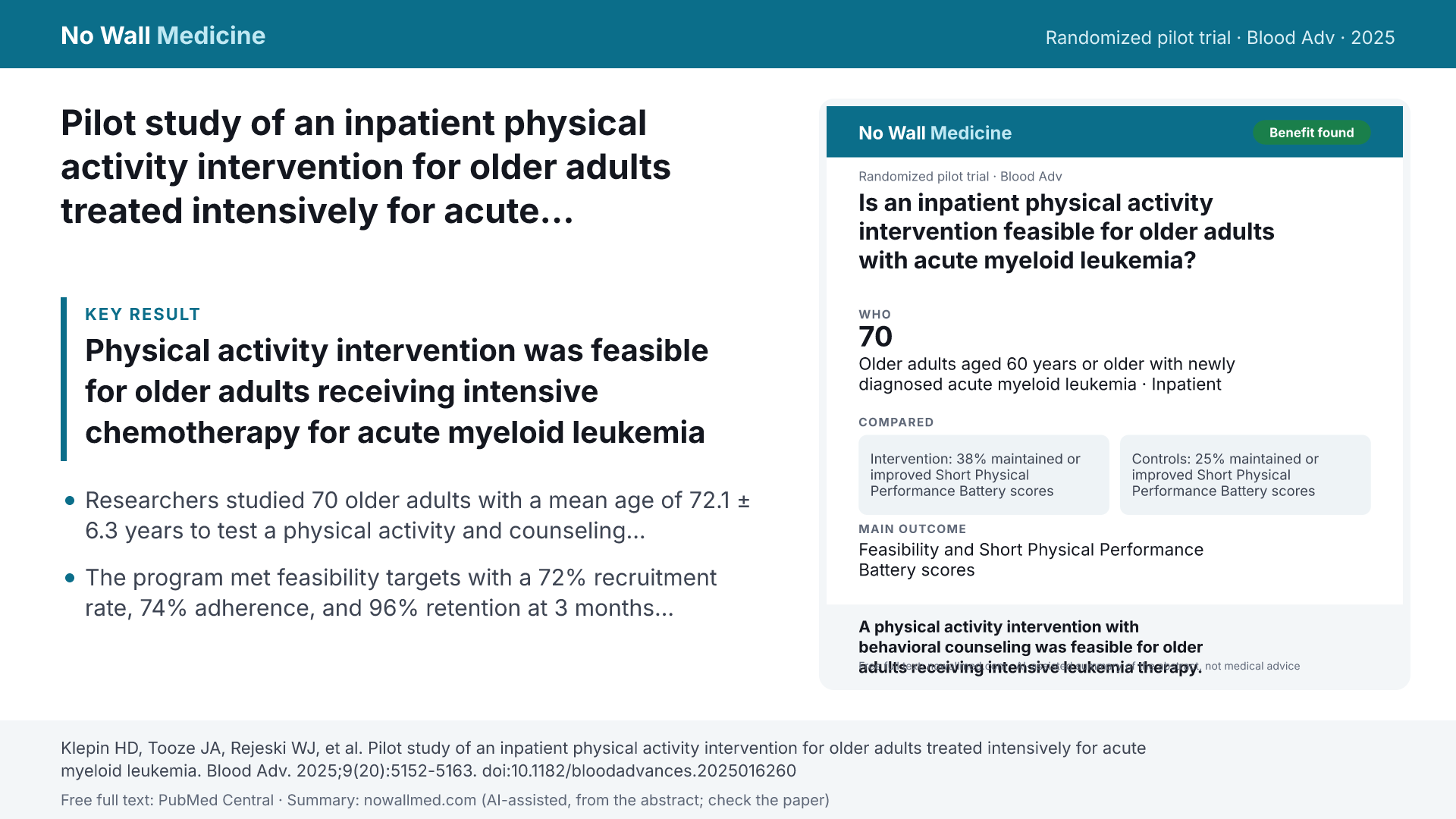
Physical activity intervention was feasible for older adults receiving intensive chemotherapy for acute myeloid leukemia
Pilot study of an inpatient physical activity intervention for older adults treated intensively for acute myeloid leukemia
Randomized pilot trialBenefit found
Is an inpatient physical activity intervention feasible for older adults with acute myeloid leukemia?
Who
70
Older adults aged 60 years or older with newly diagnosed acute myeloid leukemia · Inpatient hospitalization
Compared
Intervention: 38% maintained or improved Short Physical Performance Battery scores
Controls: 25% maintained or improved Short Physical Performance Battery scores
Main outcome
Feasibility and Short Physical Performance Battery scores
Bottom line: A physical activity intervention with behavioral counseling was feasible for older adults receiving intensive leukemia therapy.
Blood Adv · 2025-07-30Download image
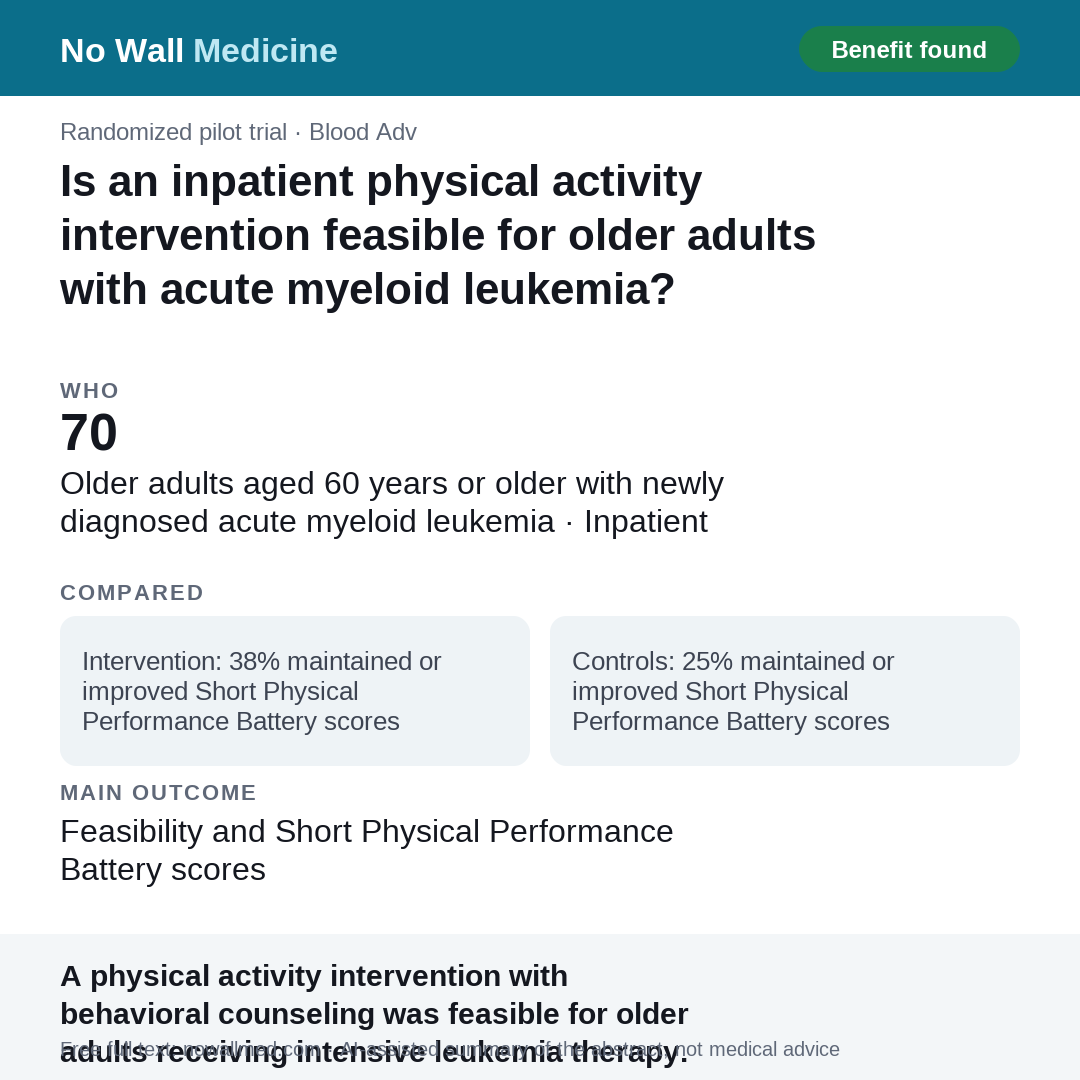
Clinical question: Is an inpatient physical activity intervention feasible for older adults with acute myeloid leukemia?
Why it matters: It is unclear if physical activity interventions can be successfully implemented for older adults undergoing intensive chemotherapy for acute myeloid leukemia.
Key points
- Researchers studied 70 older adults with a mean age of 72.1 ± 6.3 years to test a physical activity and counseling program during leukemia treatment.
- The program met feasibility targets with a 72% recruitment rate, 74% adherence, and 96% retention at 3 months among survivors.
- In exploratory analyses, physical function scores were maintained or improved in 38% of intervention participants versus 25% of controls, but this was not statistically significant.
Headline and key points written with AI from the paper’s abstract, with every number checked against it. Read the paper before relying on them.
Was this summary helpful?
Abstract
Interventions to maintain physical function during treatment may improve outcomes for older adults with acute myeloid leukemia (AML). We tested the feasibility of a randomized physical activity (PA) intervention among older adults (aged ≥60 years) receiving induction chemotherapy for newly diagnosed AML, and estimated the effect on physical function, quality of life (QOL), and symptoms. Intervention participants were offered PA sessions 5 days per week, tailored daily to symptoms during the induction hospitalization, along with weekly behavioral counseling sessions that continued monthly by phone for 6 months. The primary outcome was feasibility (recruitment, retention, and participation). The key secondary outcome of interest was the Short Physical Performance Battery (SPPB). SPPB score was assessed at baseline, weekly during hospitalization, and at 3 and 6 months. Among 96 eligible patients, 70 enrolled (mean age, 72.1 ± 6.3 years [range, 60-88]). Primary feasibility targets were met, with a recruitment rate of 72%, adherence of 74%, and average participation of 3 sessions per week. Among survivors, the retention rates were 96% and 95% at 3 (n = 51/53) and 6 (n = 42/44) months, respectively. In exploratory analyses, SPPB scores were maintained or improved in 38% of intervention participants vs 25% of controls at end of induction (n = 66; P = .21). There were no differences between groups in QOL or symptoms. A PA intervention with behavioral counseling during induction was feasible for older adults receiving intensive therapy for AML. This trial was registered at www.ClinicalTrials.gov as #NCT01519596.
Abstract reproduced under the article’s CC BY NC ND licence.
Subject terms
Cite this article
Klepin HD, Tooze JA, Rejeski WJ, Mihalko S, Pardee TS, Ellis L. Pilot study of an inpatient physical activity intervention for older adults treated intensively for acute myeloid leukemia. Blood Adv. 2025. doi:10.1182/bloodadvances.2025016260
Spotted a mistake? Suggest a correction
Top studies every Monday
The week’s key trials and guidelines in your specialties, plus any topics you follow. By email, free.
Get the weekly digest