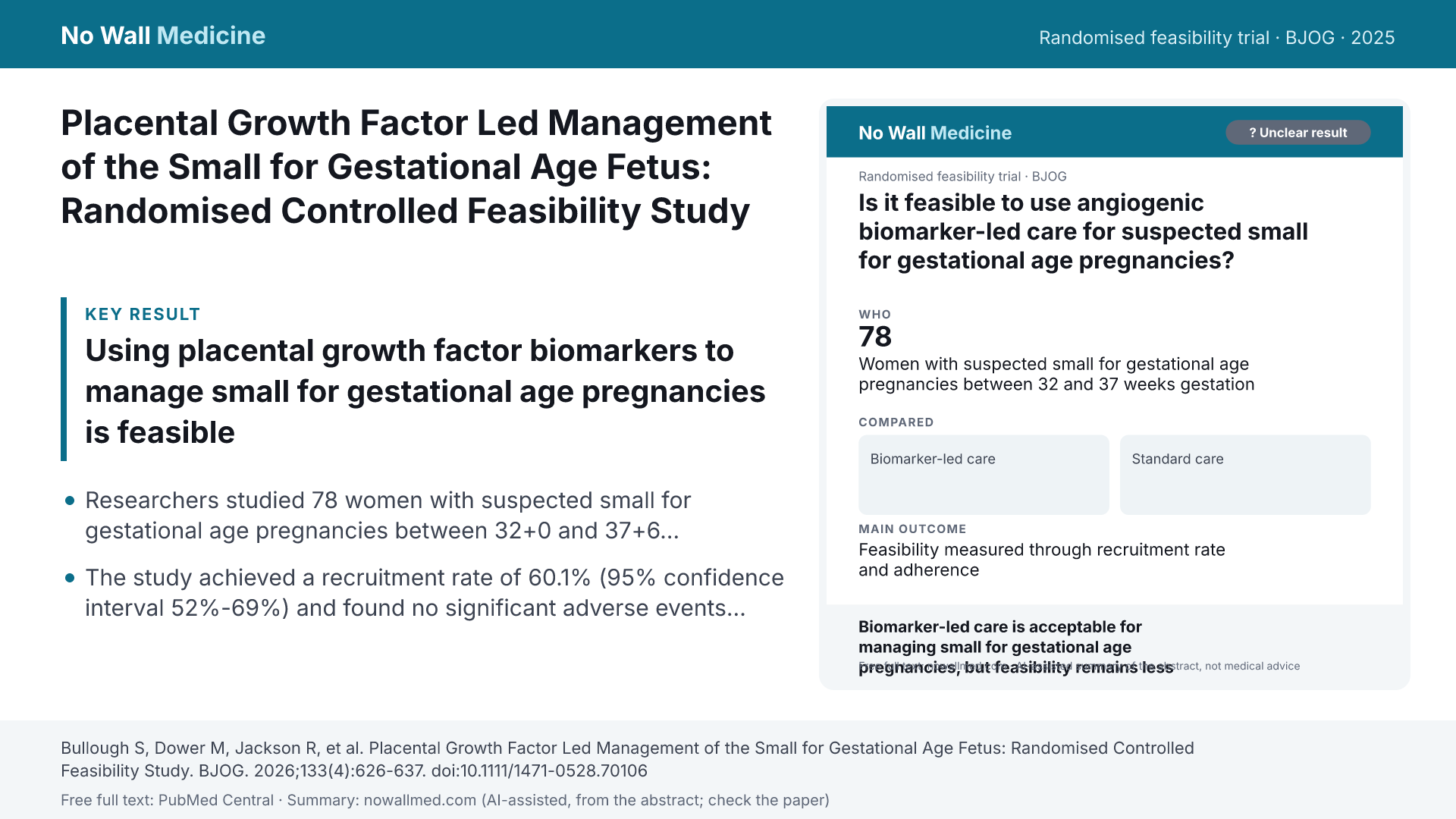
Using placental growth factor biomarkers to manage small for gestational age pregnancies is feasible
Placental Growth Factor Led Management of the Small for Gestational Age Fetus: Randomised Controlled Feasibility Study
Randomised feasibility trialUnclear result
Is it feasible to use angiogenic biomarker-led care for suspected small for gestational age pregnancies?
Who
78
Women with suspected small for gestational age pregnancies between 32 and 37 weeks gestation · Two tertiary maternity hospitals in the United Kingdom
Compared
Biomarker-led care
Standard care
Main outcome
Feasibility measured through recruitment rate and adherence
Result: recruitment rate of 60.1% (95% confidence interval 52%-69%)
Bottom line: Biomarker-led care is acceptable for managing small for gestational age pregnancies, but feasibility remains less certain.
BJOG · 2025-12-12 · Save PNG
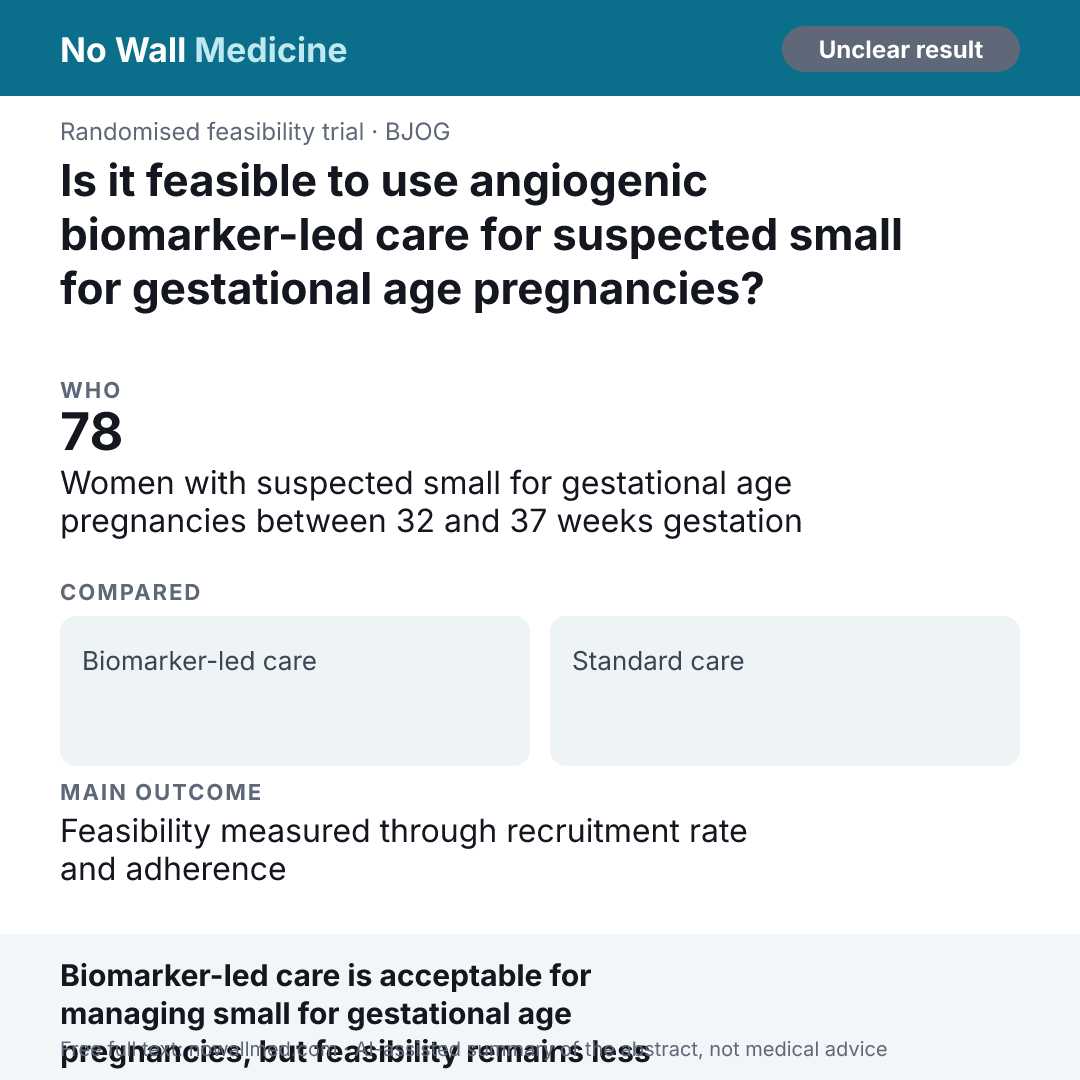
Clinical question: Is it feasible to use angiogenic biomarker-led care for suspected small for gestational age pregnancies?
Why it matters: Doctors need to determine the optimal timing for birth in women with suspected late preterm or term small for gestational age babies.
Key points
- Researchers studied 78 women with suspected small for gestational age pregnancies between 32+0 and 37+6 weeks gestation to test biomarker-led care versus standard care.
- The study achieved a recruitment rate of 60.1% (95% confidence interval 52%-69%) and found no significant adverse events or differences in neonatal outcomes.
- Participants and clinicians viewed the study as acceptable, though they experienced challenges in participation and delivering the study protocol.
Headline and key points written with AI from the paper’s abstract, with every number checked against it. Read the paper before relying on them.
Was this summary helpful?
Subject terms
Headline, design, result, key points, caveat and citation as plain text.
Cite this article
Bullough S, Dower M, Jackson R, et al. Placental Growth Factor Led Management of the Small for Gestational Age Fetus: Randomised Controlled Feasibility Study. BJOG. 2026;133(4):626-637. doi:10.1111/1471-0528.70106
Spotted a mistake? Suggest a correction