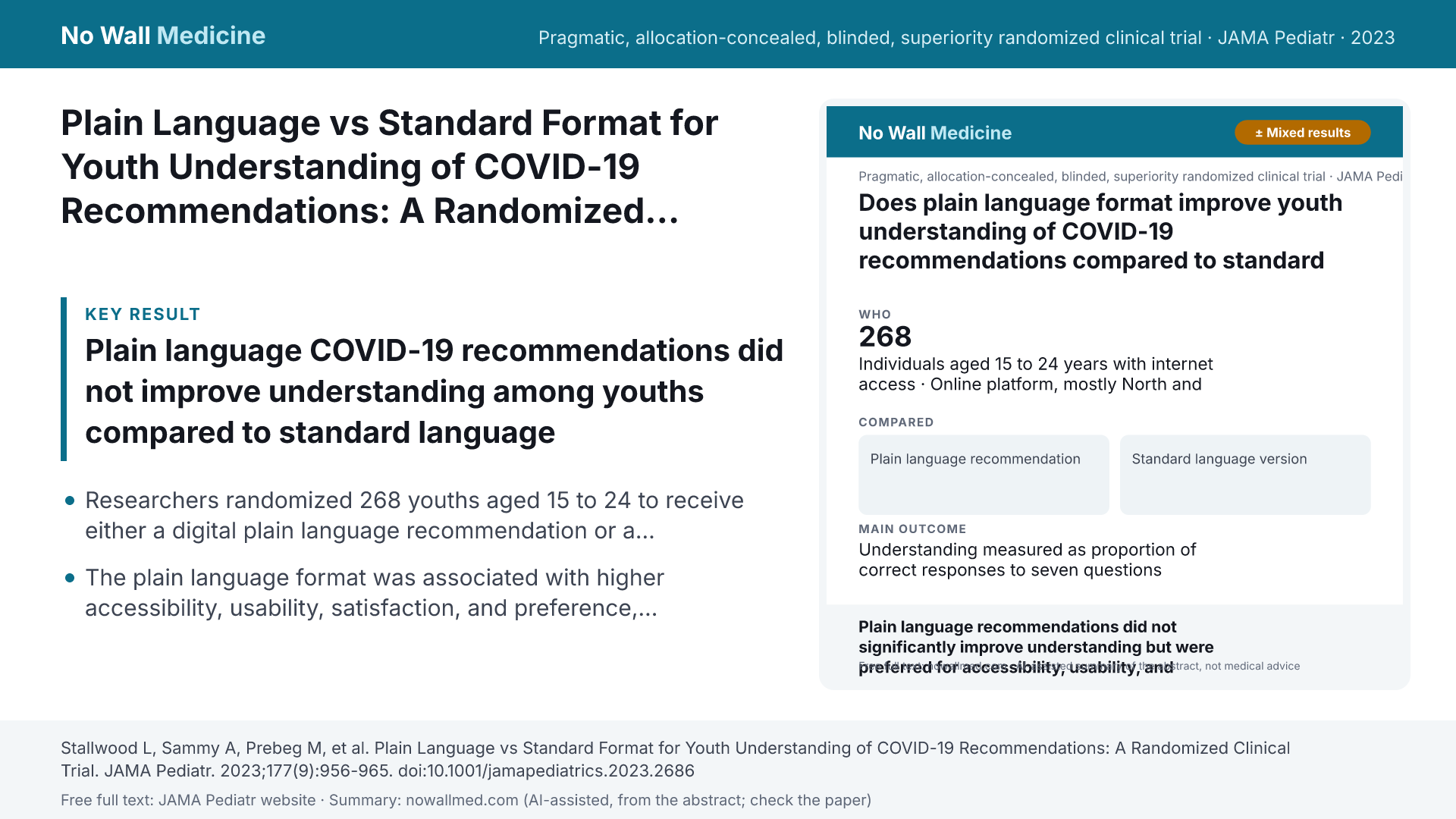
Plain language COVID-19 recommendations did not improve understanding among youths compared to standard language
Plain Language vs Standard Format for Youth Understanding of COVID-19 Recommendations: A Randomized Clinical Trial
Pragmatic, allocation-concealed, blinded, superiority randomized clinical trialMixed results
Does plain language format improve youth understanding of COVID-19 recommendations compared to standard language?
Who
268
Individuals aged 15 to 24 years with internet access · Online platform, mostly North and South America
Compared
Plain language recommendation
Standard language version
Main outcome
Understanding measured as proportion of correct responses to seven questions
Result: mean difference, 5.2%; 95% CI, -1.2% to 11.6%
Bottom line: Plain language recommendations did not significantly improve understanding but were preferred for accessibility, usability, and satisfaction.
JAMA Pediatr · 2023-08-07Download image
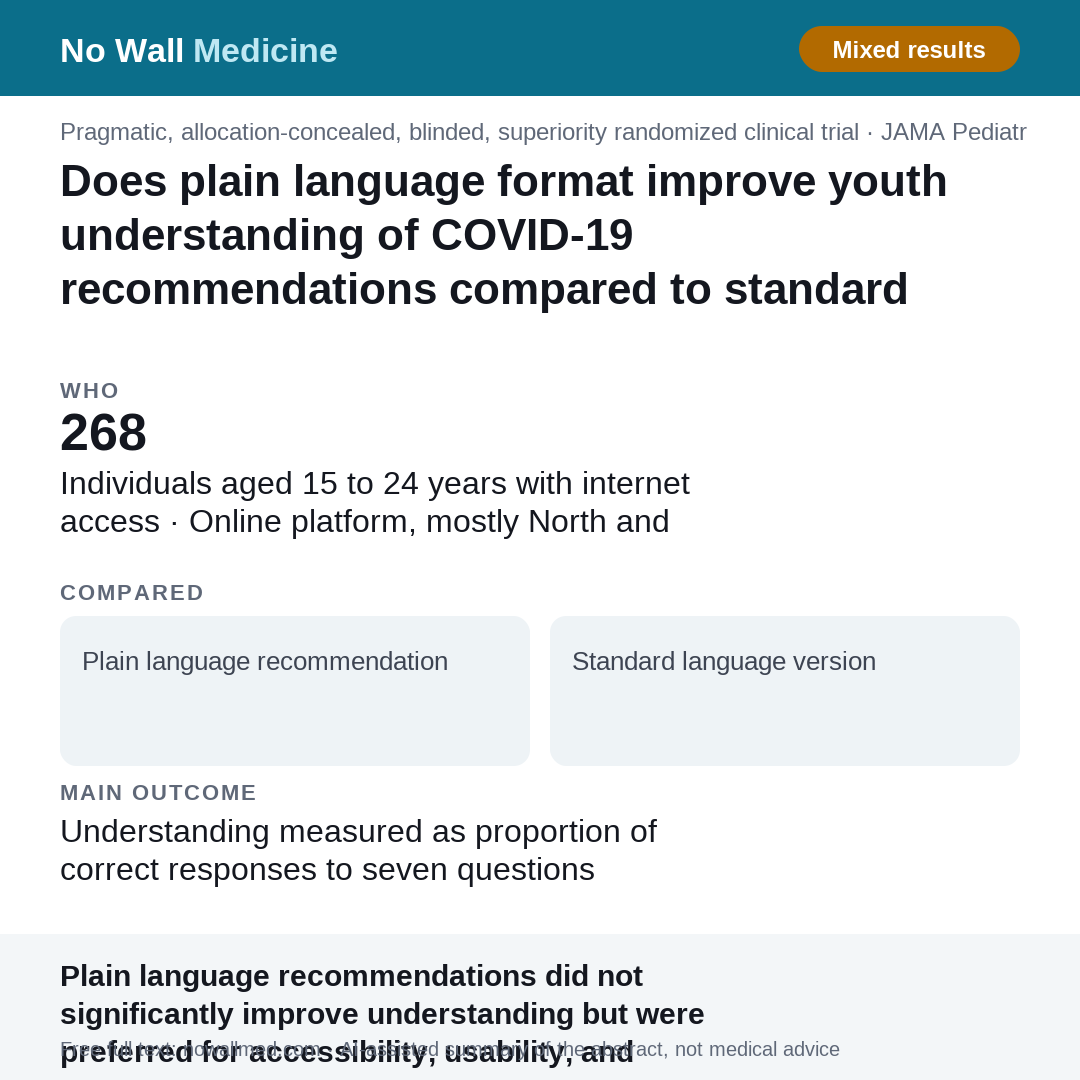
Clinical question: Does plain language format improve youth understanding of COVID-19 recommendations compared to standard language?
Key points
- Researchers randomized 268 youths aged 15 to 24 to receive either a digital plain language recommendation or a standard language version of COVID-19 vaccine information.
- The plain language format was associated with higher accessibility, usability, satisfaction, and preference, but showed no significant difference in understanding scores (mean difference, 5.2%; P = .11).
- No significant difference was found between the two formats regarding intended behavior (mean difference, 0.22; 95% CI, -0.20 to 0.74).
Headline and key points written with AI from the paper’s abstract, with every number checked against it. Read the paper before relying on them.
Was this summary helpful?
Subject terms
Headline, design, result, key points, caveat and citation as plain text.
Cite this article
Stallwood L, Sammy A, Prebeg M, et al. Plain Language vs Standard Format for Youth Understanding of COVID-19 Recommendations: A Randomized Clinical Trial. JAMA Pediatr. 2023;177(9):956-965. doi:10.1001/jamapediatrics.2023.2686
Spotted a mistake? Suggest a correction