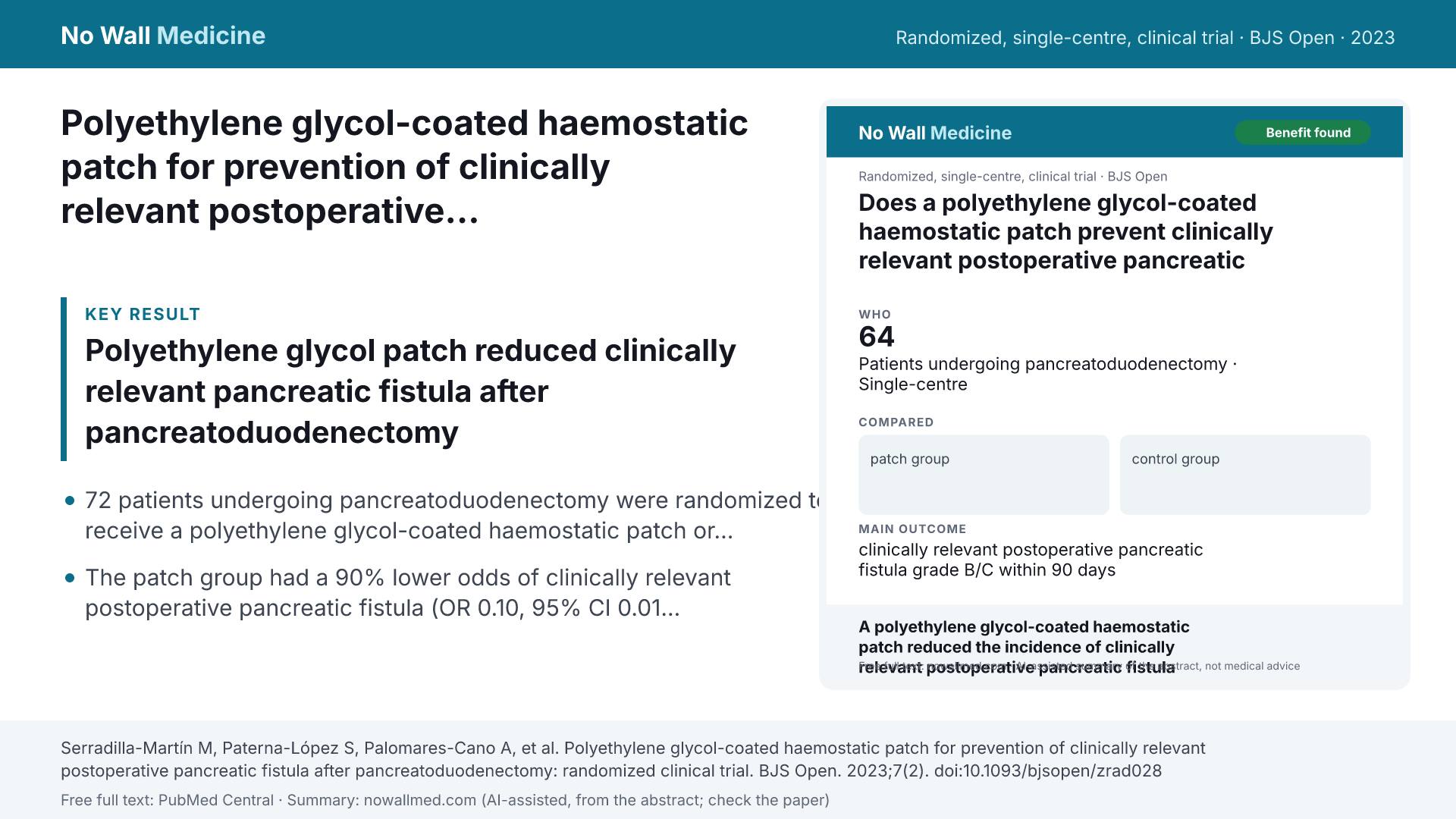
Polyethylene glycol patch reduced clinically relevant pancreatic fistula after pancreatoduodenectomy
Polyethylene glycol-coated haemostatic patch for prevention of clinically relevant postoperative pancreatic fistula after pancreatoduodenectomy: randomized clinical trial
Randomized, single-centre, clinical trialBenefit found
Does a polyethylene glycol-coated haemostatic patch prevent clinically relevant postoperative pancreatic fistula?
Who
64
Patients undergoing pancreatoduodenectomy · Single-centre
Compared
patch group
control group
Main outcome
clinically relevant postoperative pancreatic fistula grade B/C within 90 days
Result: OR 0.10, 95 per cent c.i. 0.01 to 0.89
Bottom line: A polyethylene glycol-coated haemostatic patch reduced the incidence of clinically relevant postoperative pancreatic fistula after pancreatoduodenectomy.
BJS Open · 2023-04-06Download image
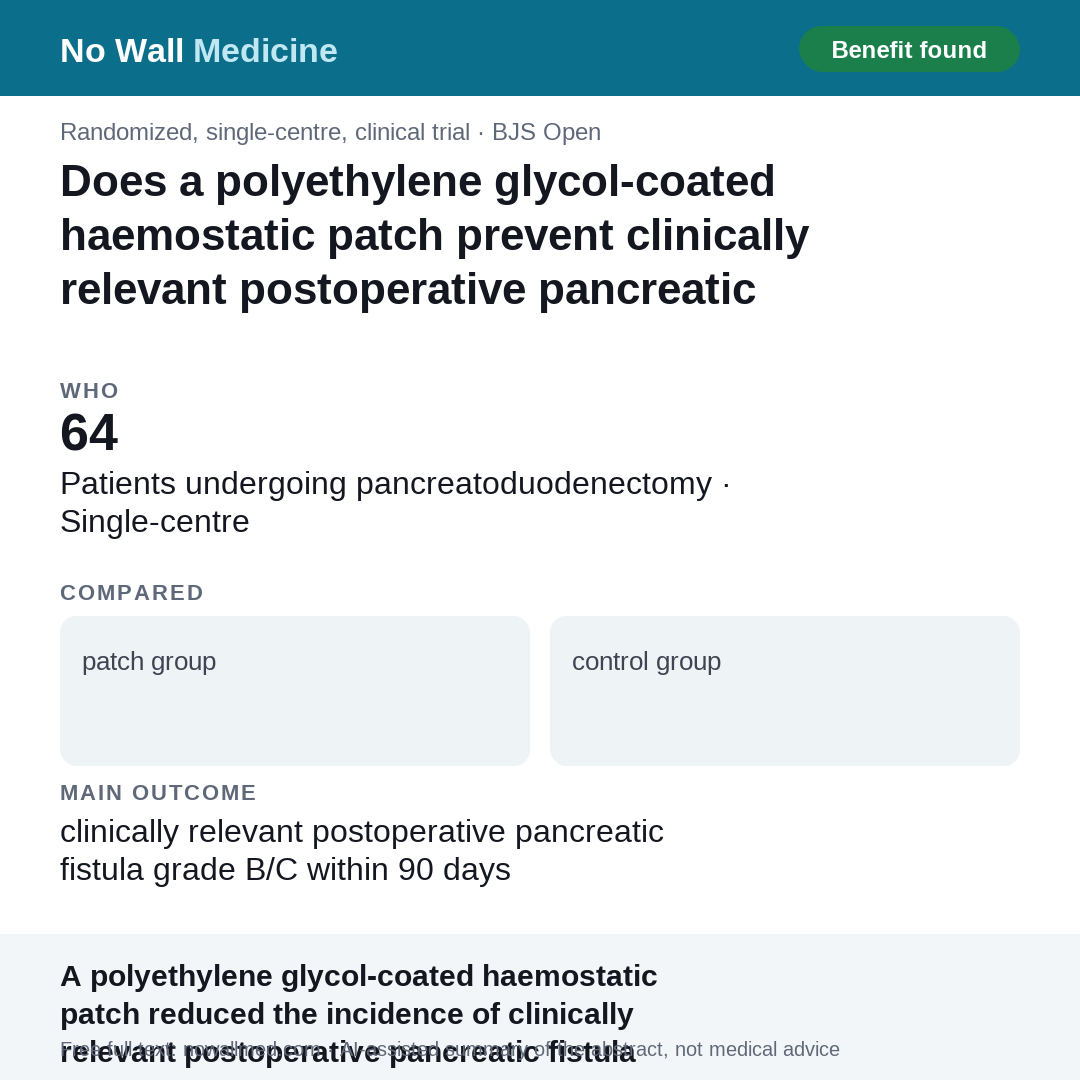
Clinical question: Does a polyethylene glycol-coated haemostatic patch prevent clinically relevant postoperative pancreatic fistula?
Why it matters: Applies to patients undergoing pancreatoduodenectomy; suggests the patch may lower the risk of severe pancreatic fistula.
Key points
- 72 patients undergoing pancreatoduodenectomy were randomized to receive a polyethylene glycol-coated haemostatic patch or no reinforcement.
- The patch group had a 90% lower odds of clinically relevant postoperative pancreatic fistula (OR 0.10, 95% CI 0.01 to 0.89).
- Secondary outcomes like hospital stay and overall complication rates did not significantly differ between the two groups.
Limitation the authors note: The study was conducted at a single centre with 64 patients included in the analyses.
Headline and key points written with AI from the paper’s abstract, with every number checked against it. Read the paper before relying on them.
Was this summary helpful?
Subject terms
Headline, design, result, key points, caveat and citation as plain text.
Cite this article
Serradilla-Martín M, Paterna-López S, Palomares-Cano A, et al. Polyethylene glycol-coated haemostatic patch for prevention of clinically relevant postoperative pancreatic fistula after pancreatoduodenectomy: randomized clinical trial. BJS Open. 2023. doi:10.1093/bjsopen/zrad028
Spotted a mistake? Suggest a correction