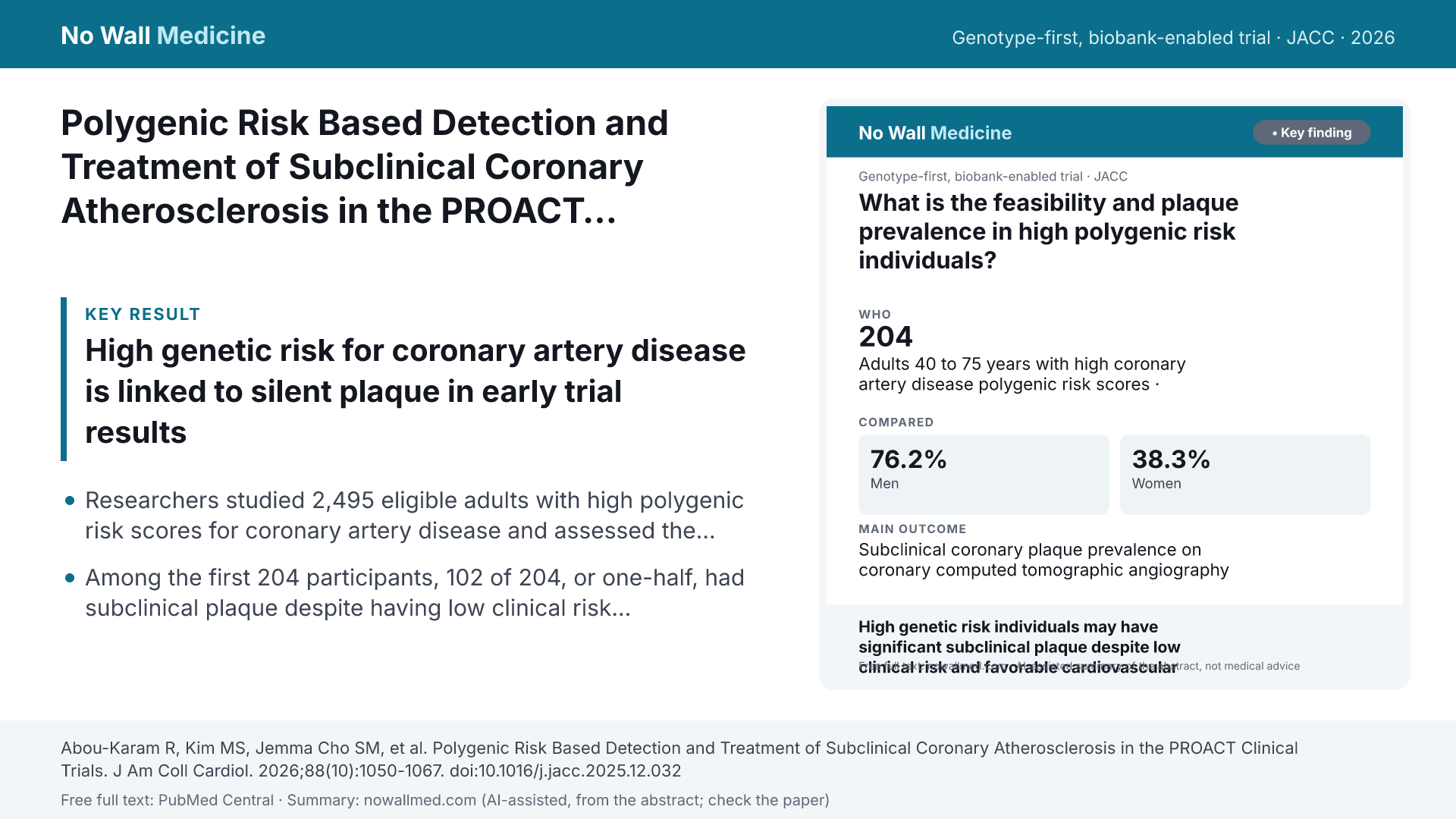
High genetic risk for coronary artery disease is linked to silent plaque in early trial results
Polygenic Risk Based Detection and Treatment of Subclinical Coronary Atherosclerosis in the PROACT Clinical Trials
Genotype-first, biobank-enabled trialKey finding
What is the feasibility and plaque prevalence in high polygenic risk individuals?
Who
204
Adults 40 to 75 years with high coronary artery disease polygenic risk scores · Hospital-based biobank
Compared
76.2%Men
38.3%Women
Main outcome
Subclinical coronary plaque prevalence on coronary computed tomographic angiography
Bottom line: High genetic risk individuals may have significant subclinical plaque despite low clinical risk and favorable cardiovascular health.
JACC · 2026-02-18 · Save PNG
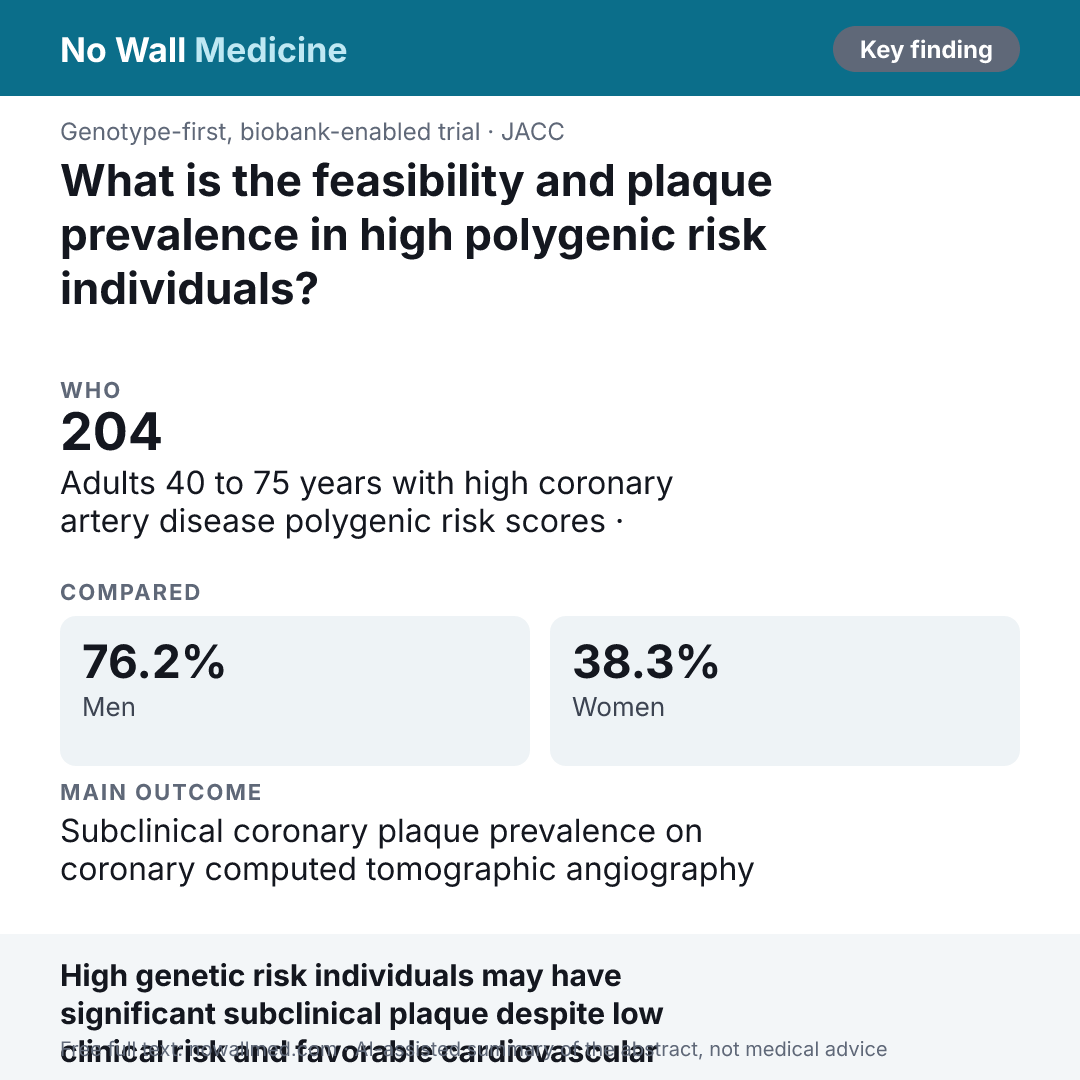
Clinical question: What is the feasibility and plaque prevalence in high polygenic risk individuals?
Why it matters: Individuals with high genetic risk for coronary artery disease may fly under the radar of contemporary clinical practice and remain undetected by standard assessments.
Key points
- Researchers studied 2,495 eligible adults with high polygenic risk scores for coronary artery disease and assessed the first 204 participants using coronary computed tomographic angiography.
- Among the first 204 participants, 102 of 204, or one-half, had subclinical plaque despite having low clinical risk and favorable cardiovascular health.
- Subclinical plaque prevalence was 76.2% in men and 38.3% in women among the initial group of participants.
Headline and key points written with AI from the paper’s abstract, with every number checked against it. Read the paper before relying on them.
Was this summary helpful?
Subject terms
Headline, design, result, key points, caveat and citation as plain text.
Cite this article
Abou-Karam R, Kim MS, Jemma Cho SM, et al. Polygenic Risk Based Detection and Treatment of Subclinical Coronary Atherosclerosis in the PROACT Clinical Trials. J Am Coll Cardiol. 2026;88(10):1050-1067. doi:10.1016/j.jacc.2025.12.032
Spotted a mistake? Suggest a correction