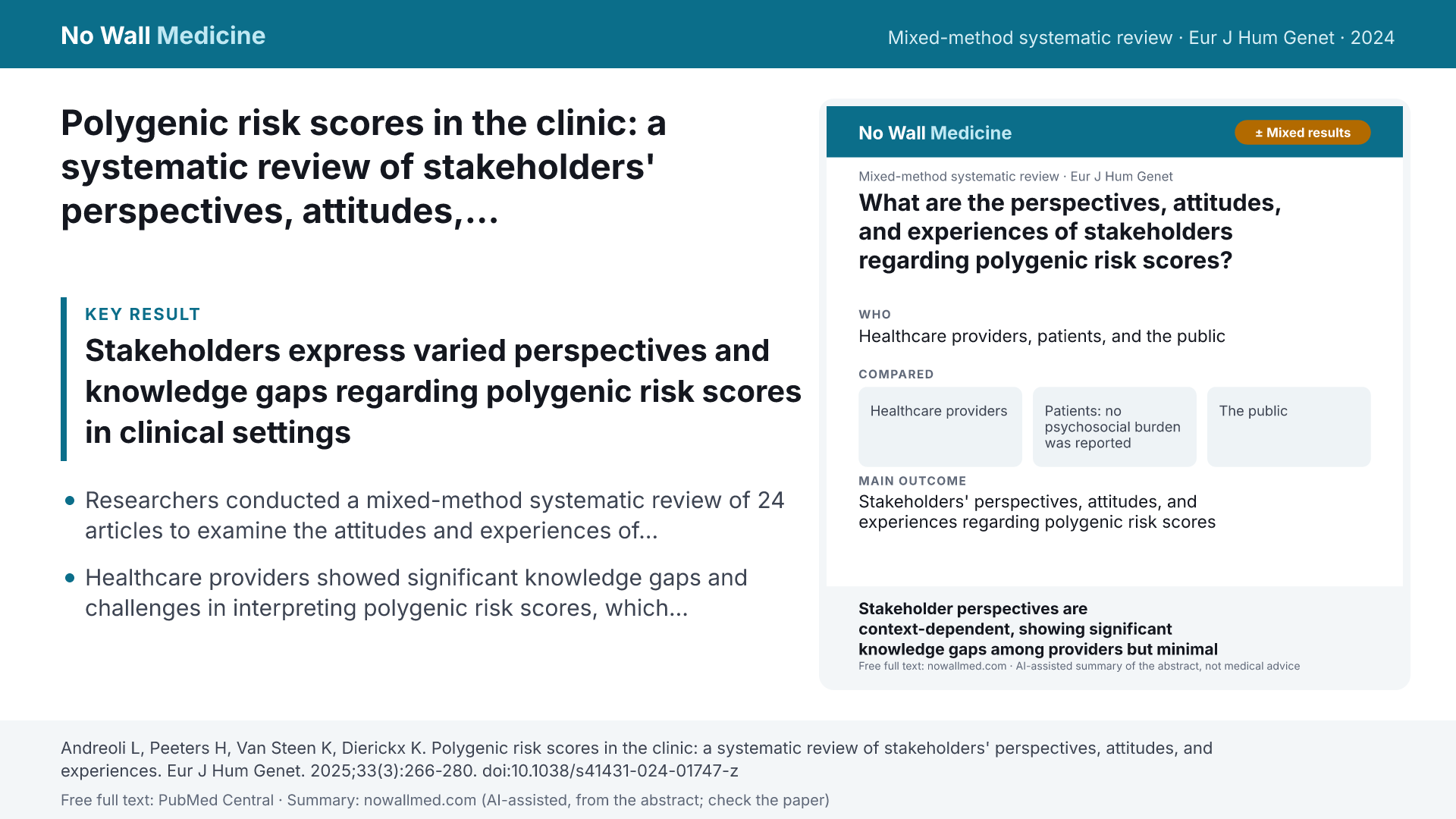
Stakeholders express varied perspectives and knowledge gaps regarding polygenic risk scores in clinical settings
Polygenic risk scores in the clinic: a systematic review of stakeholders' perspectives, attitudes, and experiences
Mixed-method systematic reviewMixed results
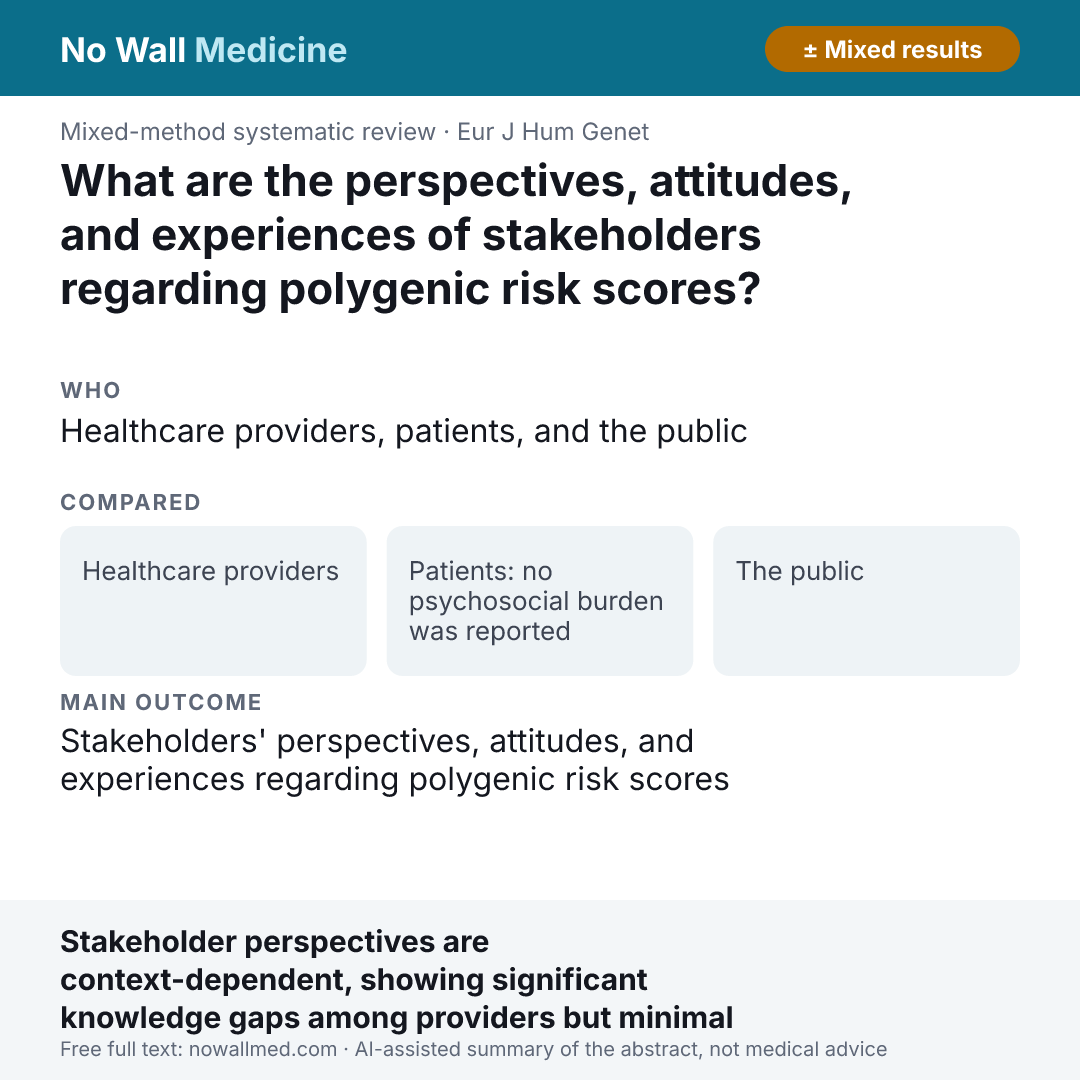
What are the perspectives, attitudes, and experiences of stakeholders regarding polygenic risk scores?
Who
Healthcare providers, patients, and the public
Compared
Healthcare providers
Patients: no psychosocial burden was reported
The public
Main outcome
Stakeholders' perspectives, attitudes, and experiences regarding polygenic risk scores
Bottom line: Stakeholder perspectives are context-dependent, showing significant knowledge gaps among providers but minimal psychosocial burden for patients.
Eur J Hum Genet · 2024-11-23 · Save PNG
Clinical question: What are the perspectives, attitudes, and experiences of stakeholders regarding polygenic risk scores?
Key points
- Researchers conducted a mixed-method systematic review of 24 articles to examine the attitudes and experiences of healthcare providers, patients, and the public regarding polygenic risk scores.
- Healthcare providers showed significant knowledge gaps and challenges in interpreting polygenic risk scores, which are statistical methods estimating genetic susceptibility to diseases.
- Genetic counseling was associated with better patient understanding of results, and most patients reported no psychosocial burden.
Headline and key points written with AI from the paper’s abstract, with every number checked against it. Read the paper before relying on them.
Was this summary helpful?
Subject terms
Headline, design, result, key points, caveat and citation as plain text.
Cite this article
Andreoli L, Peeters H, Van Steen K, Dierickx K. Polygenic risk scores in the clinic: a systematic review of stakeholders' perspectives, attitudes, and experiences. Eur J Hum Genet. 2025;33(3):266-280. doi:10.1038/s41431-024-01747-z
Spotted a mistake? Suggest a correction