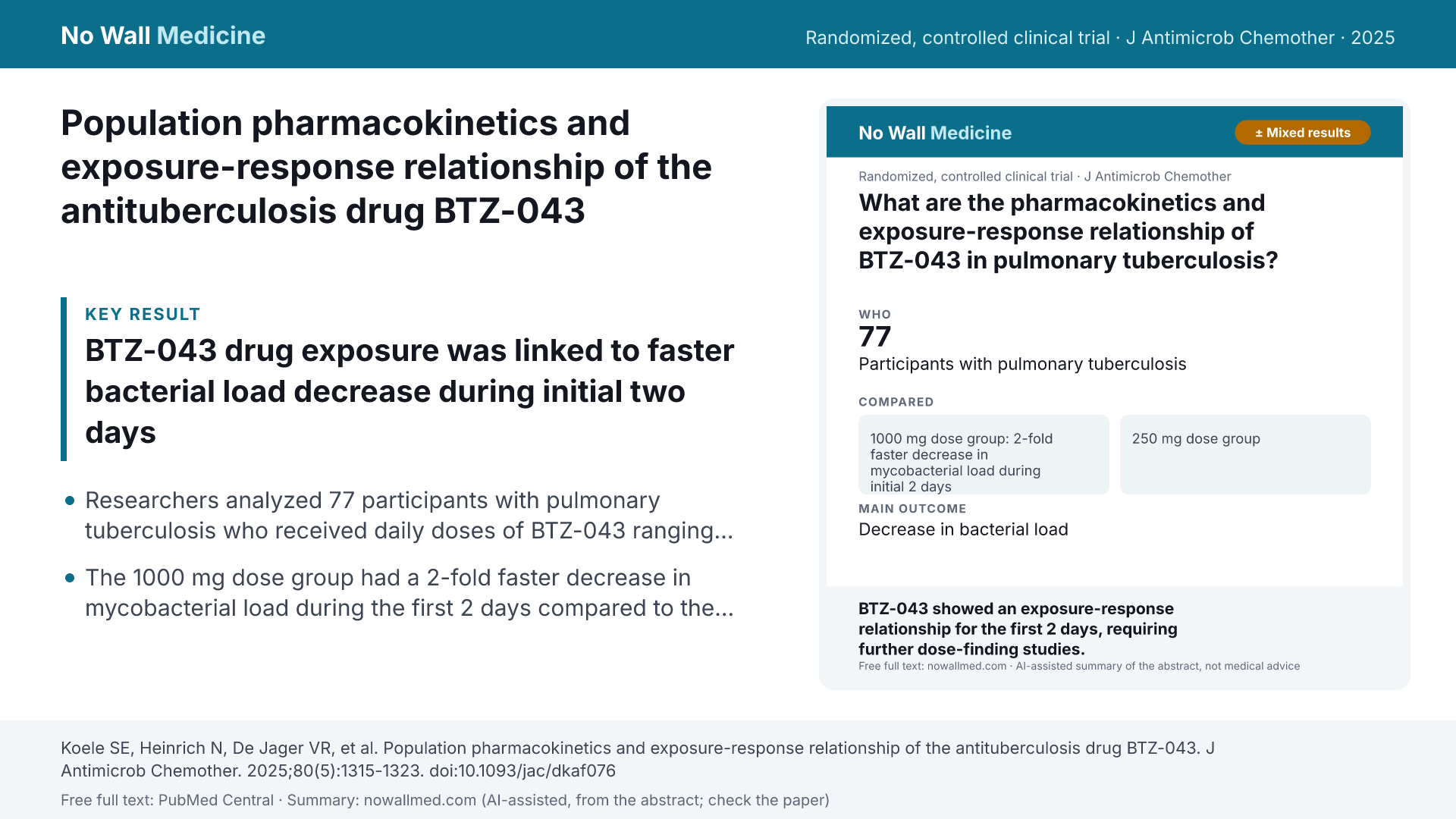
BTZ-043 drug exposure was linked to faster bacterial load decrease during initial two days
Population pharmacokinetics and exposure-response relationship of the antituberculosis drug BTZ-043
Randomized, controlled clinical trialMixed results
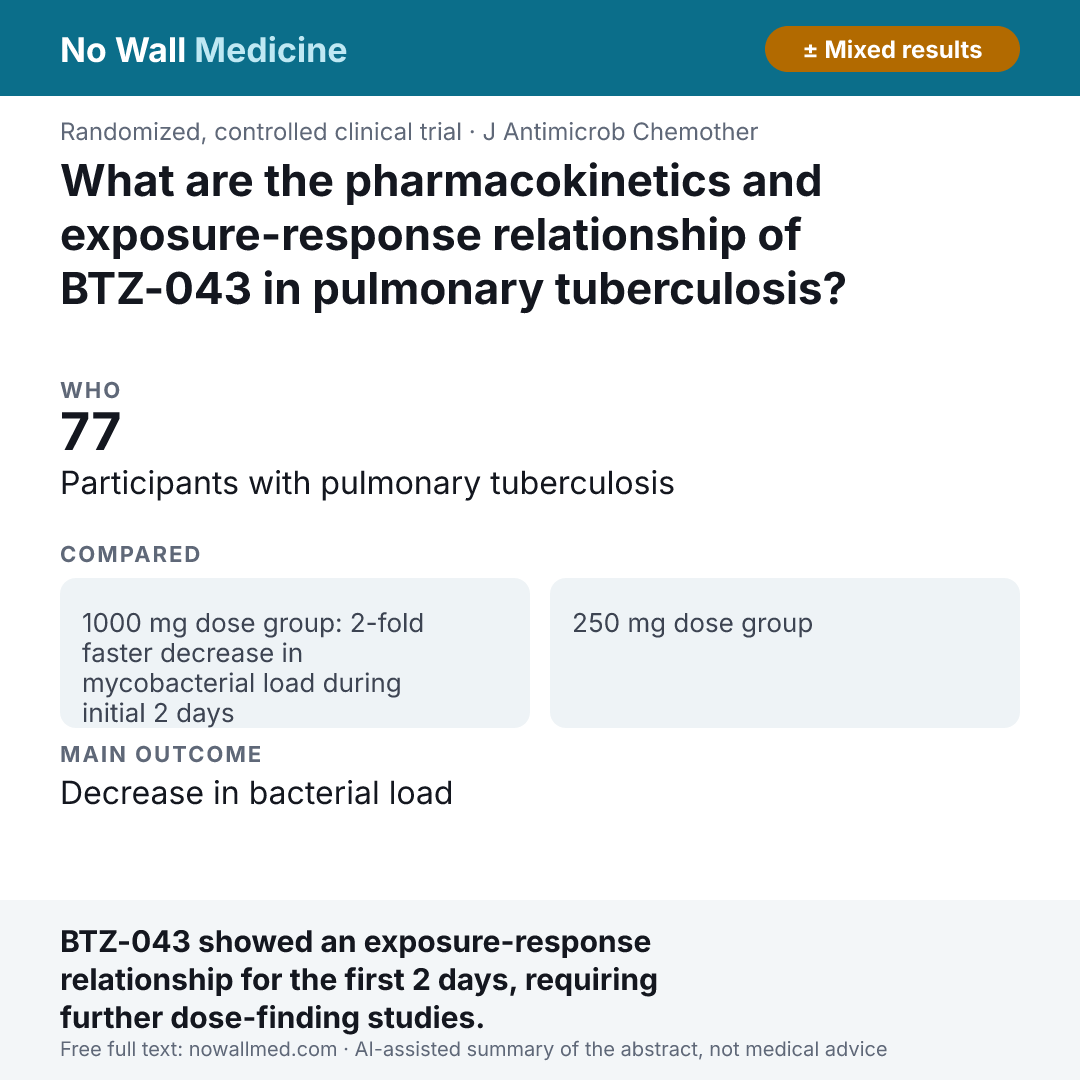
What are the pharmacokinetics and exposure-response relationship of BTZ-043 in pulmonary tuberculosis?
Who
77
Participants with pulmonary tuberculosis
Compared
1000 mg dose group: 2-fold faster decrease in mycobacterial load during initial 2 days
250 mg dose group
Main outcome
Decrease in bacterial load
Bottom line: BTZ-043 showed an exposure-response relationship for the first 2 days, requiring further dose-finding studies.
J Antimicrob Chemother · 2025-03-29 · Save PNG
Clinical question: What are the pharmacokinetics and exposure-response relationship of BTZ-043 in pulmonary tuberculosis?
Key points
- Researchers analyzed 77 participants with pulmonary tuberculosis who received daily doses of BTZ-043 ranging from 250 to 1750 mg over 14 days.
- The 1000 mg dose group had a 2-fold faster decrease in mycobacterial load during the first 2 days compared to the 250 mg dose group.
- Taking the drug without food was associated with 54% lower bioavailability compared to taking it with food.
Headline and key points written with AI from the paper’s abstract, with every number checked against it. Read the paper before relying on them.
Was this summary helpful?
Subject terms
Headline, design, result, key points, caveat and citation as plain text.
Cite this article
Koele SE, Heinrich N, De Jager VR, et al. Population pharmacokinetics and exposure-response relationship of the antituberculosis drug BTZ-043. J Antimicrob Chemother. 2025;80(5):1315-1323. doi:10.1093/jac/dkaf076
Spotted a mistake? Suggest a correction