Positive Effect of Methylphenidate for Cancer-Related Cognitive Impairment: A Pilot Randomized Trial
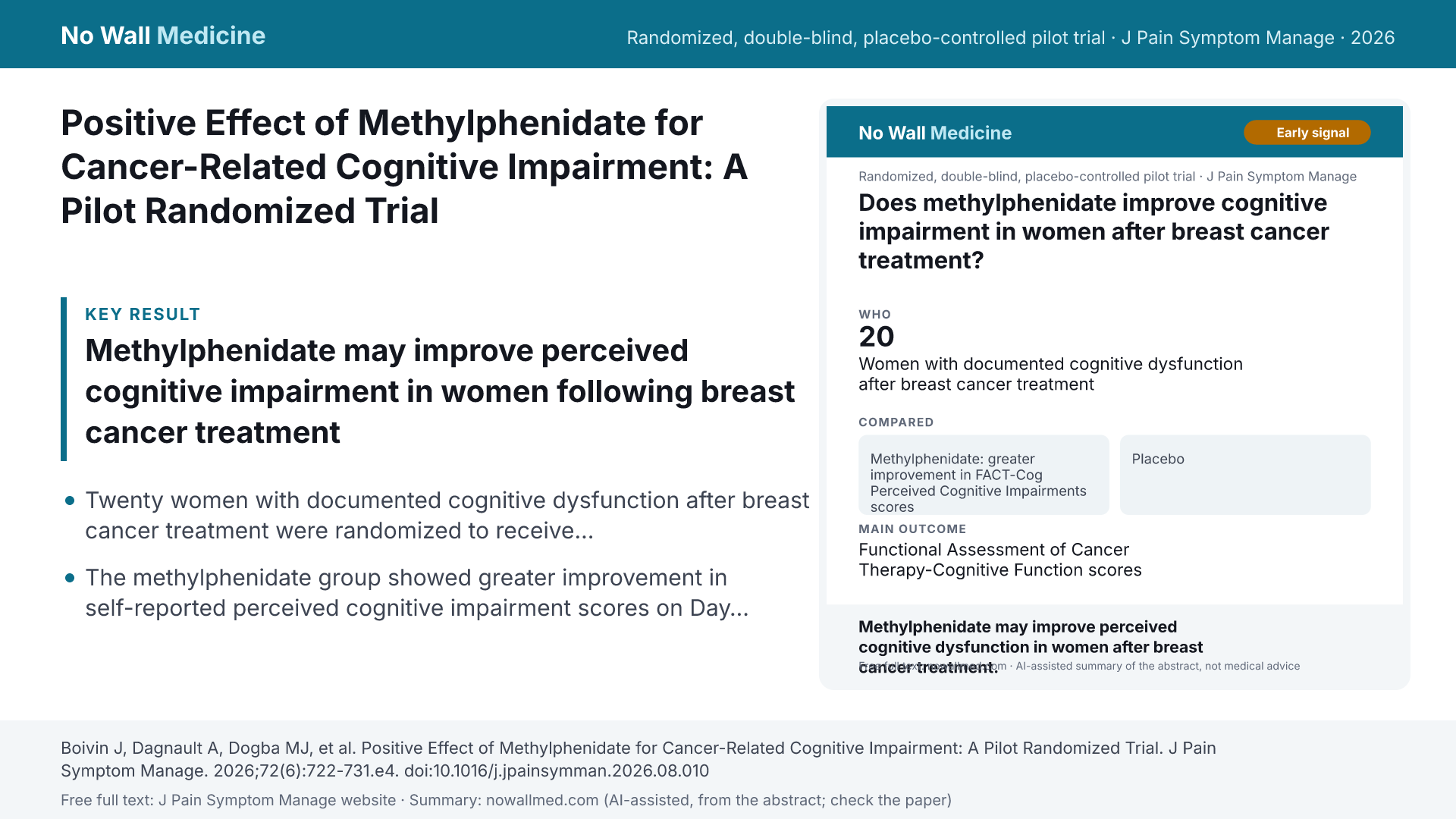
Key result: Methylphenidate may improve perceived cognitive impairment in women following breast cancer treatment

Key points
- Twenty women with documented cognitive dysfunction after breast cancer treatment were randomized to receive either methylphenidate or a placebo.
- The methylphenidate group showed greater improvement in self-reported perceived cognitive impairment scores on Day 29 compared to the placebo group (mean difference = 10.1, P = 0.02).
- No differences were observed between the groups regarding neuropsychological test scores or physical, psychological, and sleep-related symptoms.
Why it matters: Breast cancer and its treatments can cause cancer-related cognitive impairment, but the feasibility of using methylphenidate to manage these symptoms needed evaluation.
Limitation the authors note: This was a pilot study with a small sample of twenty women.
Discussion prompts
- Would these patients look like yours? Who was left out?
- Is the main outcome one that matters to patients?
- Is the difference large enough to change what you do?
Cite: Boivin J, Dagnault A, Dogba MJ, et al. Positive Effect of Methylphenidate for Cancer-Related Cognitive Impairment: A Pilot Randomized Trial. J Pain Symptom Manage. 2026;72(6):722-731.e4. doi:10.1016/j.jpainsymman.2026.08.010
Free full text: J Pain Symptom Manage website · Summary and visual abstract: nowallmed.com/a/positive-effect-of-methylphenidate-for-cancer-related-cognitive-akg1lx/ (AI-assisted from the abstract; check the paper before relying on it).