Rituximab combined with cell infusions showed higher response rates for post-transplant lymphoproliferative disorders
Post-transplant lymphoproliferative disorders after allogeneic hematopoietic stem cell transplantation: a case report, meta-analysis, and systematic review
Meta-analysis of patientsBenefit found
Treatment for post-transplant lymphoproliferative disorders
Who
431
Patients with post-transplant lymphoproliferative disorders
Compared
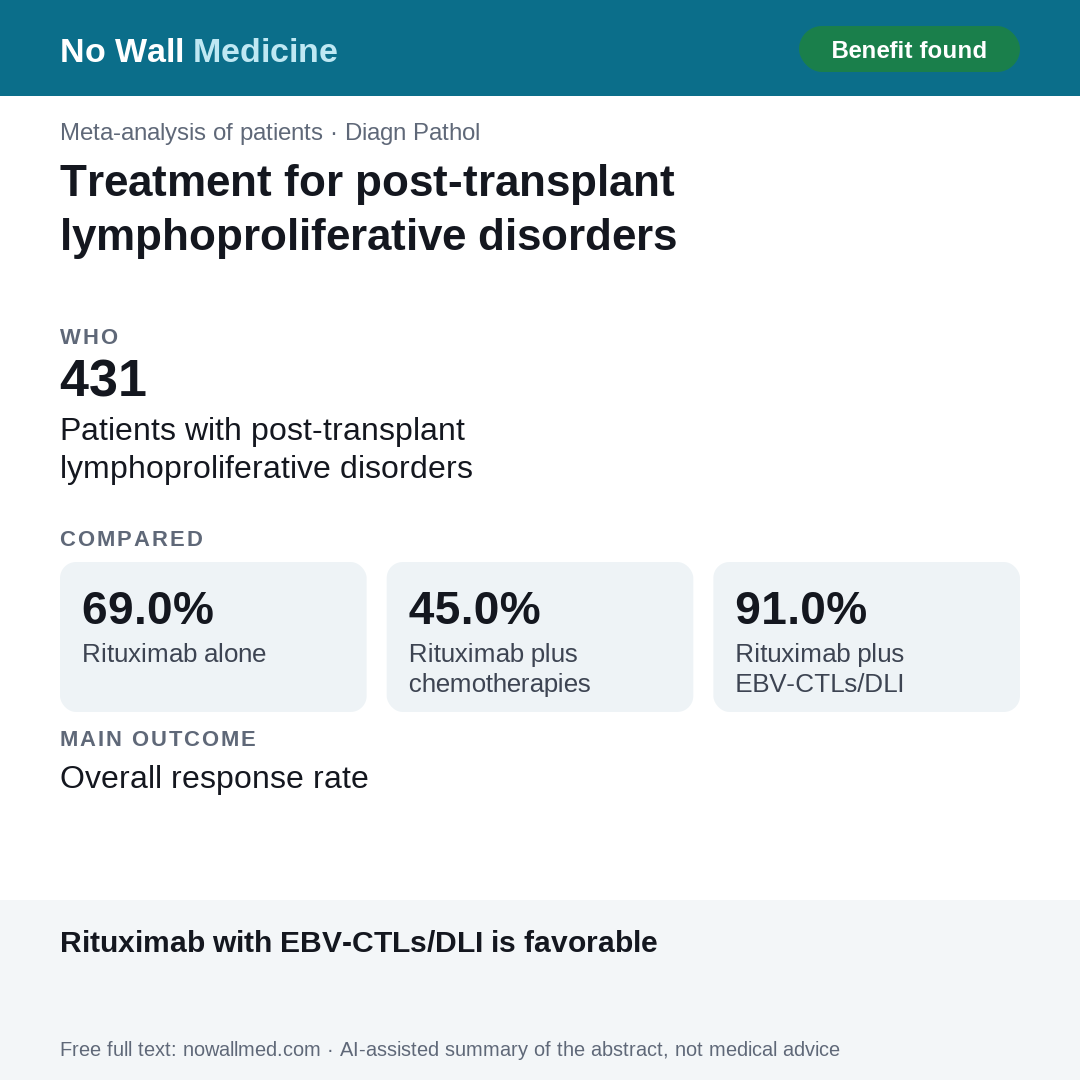
69.0%Rituximab alone (95% CI: 0.47-0.84)
45.0%Rituximab plus chemotherapies (95% CI: 0.15-0.80)
91.0%Rituximab plus EBV-CTLs/DLI (95% CI: 0.83-0.96)
Main outcome
Overall response rate
Bottom line: Rituximab with EBV-CTLs/DLI is favorable
Diagn Pathol · 2024-09-07Download image
Why it matters: The diagnostic value of Epstein-Barr virus DNA copies in central nervous system post-transplant lymphoproliferative disorders is poorly understood and effective, low-toxicity treatment regimens are needed.
Key points
- Researchers performed a meta-analysis of 431 patients with post-transplant lymphoproliferative disorders after allogeneic hematopoietic stem cell transplantation.
- The overall response rate was 91.0% for rituximab plus Epstein-Barr virus-specific cytotoxic T lymphocyte infusion or donor lymphocyte infusion, compared to 69.0% for rituximab alone.
- The complete response rate for all treatments was 67.0%, while the 1-year overall survival rate was 49.0%.
Headline and key points written with AI from the paper’s abstract, with every number checked against it. Read the paper before relying on them.
Topics
Cite this article
Su YY, Yu YF, Yan ZY, Zhao YJ, Lou JW, Xue F. Post-transplant lymphoproliferative disorders after allogeneic hematopoietic stem cell transplantation: a case report, meta-analysis, and systematic review. Diagn Pathol. 2024. doi:10.1186/s13000-024-01544-8
Spotted a mistake? Suggest a correction
Top studies every Monday
The week’s key trials and guidelines in your specialties, by email. Free.
Get the weekly digest