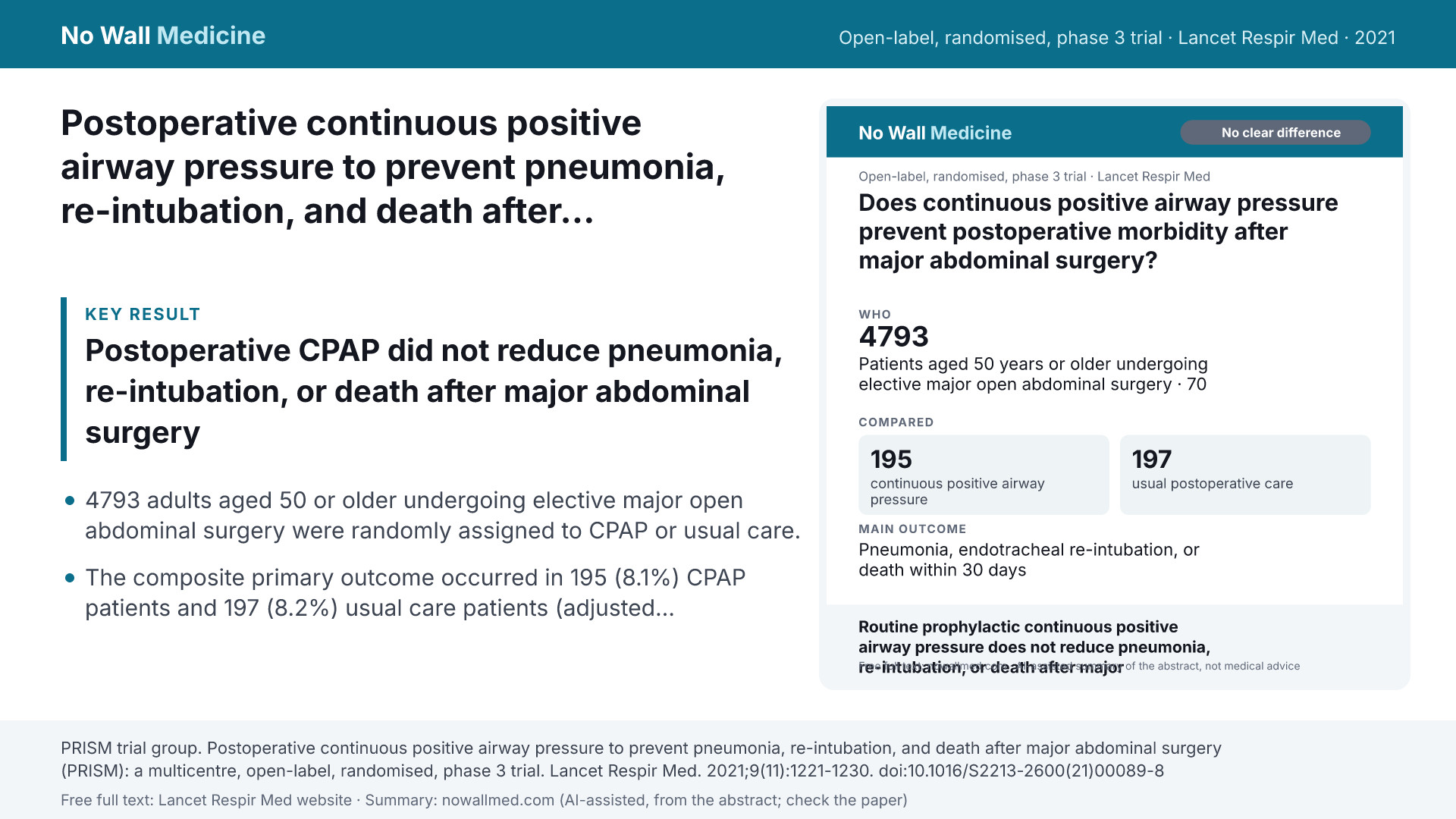
Postoperative continuous positive airway pressure to prevent pneumonia, re-intubation, and death after major abdominal surgery (PRISM): a multicentre, open-label, randomised, phase 3 trial
Key result: Postoperative CPAP did not reduce pneumonia, re-intubation, or death after major abdominal surgery
Key points
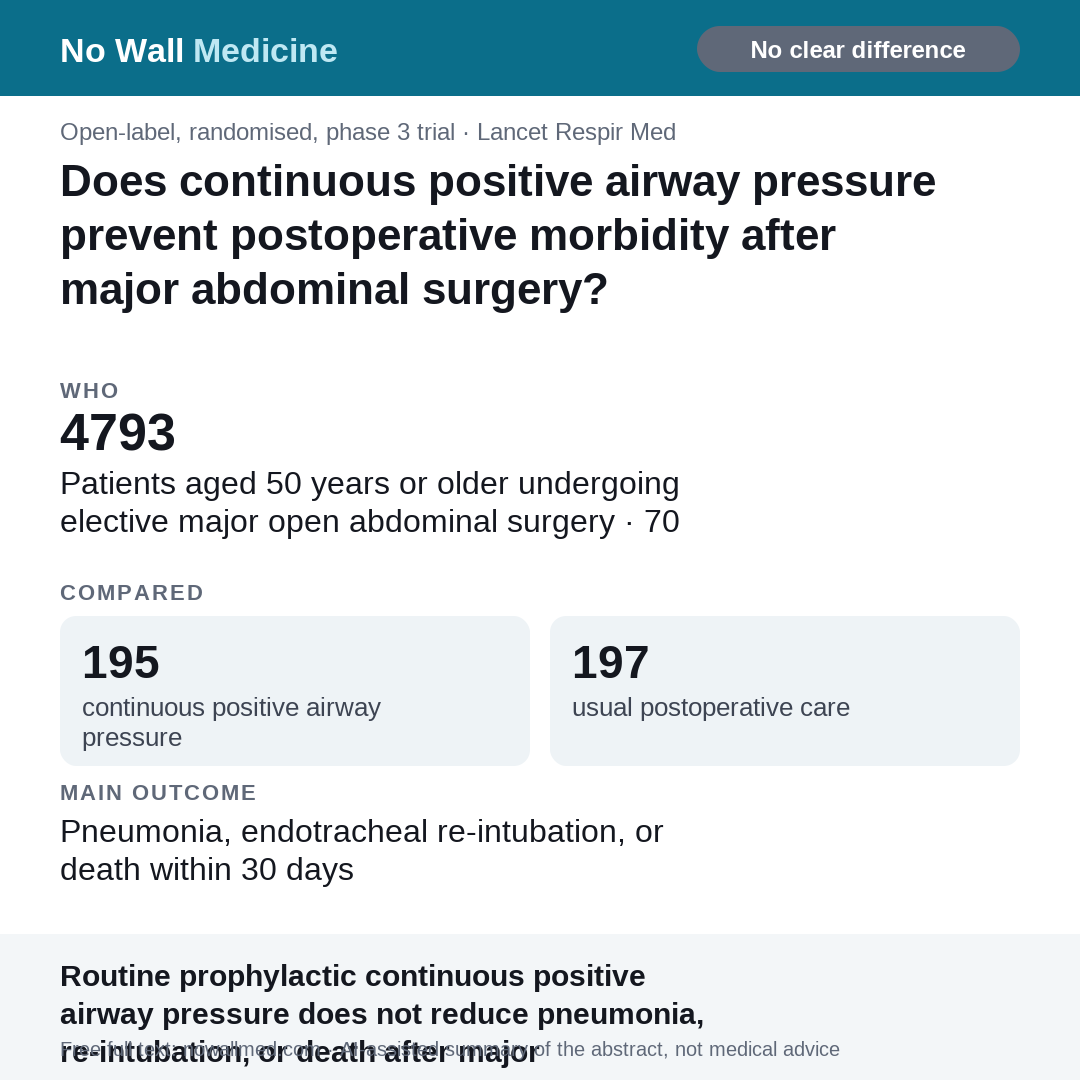
- 4793 adults aged 50 or older undergoing elective major open abdominal surgery were randomly assigned to CPAP or usual care.
- The composite primary outcome occurred in 195 (8.1%) CPAP patients and 197 (8.2%) usual care patients (adjusted odds ratio 1.01; p=0.95).
- Adverse events occurred in 200 (8.9%) CPAP patients, with claustrophobia (3.5%) and oronasal dryness (1.9%) being most common.
Why it matters: Applies to adults 50+ undergoing elective major open abdominal surgery; supports that routine prophylactic CPAP is not recommended.
Discussion prompts
- Would these patients look like yours? Who was left out?
- Is the main outcome one that matters to patients?
- Is the difference large enough to change what you do?
Cite: PRISM trial group. Postoperative continuous positive airway pressure to prevent pneumonia, re-intubation, and death after major abdominal surgery (PRISM): a multicentre, open-label, randomised, phase 3 trial. Lancet Respir Med. 2021. doi:10.1016/S2213-2600(21)00089-8
Free full text: Lancet Respir Med website · Summary and visual abstract: nowallmed.com/a/postoperative-continuous-positive-airway-pressure-to-prevent-1jlmfvh/ (AI-assisted from the abstract; check the paper before relying on it).