Surgery is associated with increased damage signals and changes to monocyte DNA accessibility
Postoperative Innate Immune Dysregulation, Proteomic, and Monocyte Epigenomic Changes After Colorectal Surgery: A Substudy of a Randomized Controlled Trial
Randomized controlled trial substudyMixed results
Do monocyte epigenetic and proteomic changes contribute to postoperative innate immune dysregulation after colorectal surgery?
Who
100
Colorectal surgery patients
Compared
Preoperative to end of surgery: HMGB1 mean 235% increase
Preoperative to postoperative day 1: HMGB1 mean 90% increase
Main outcome
Plasma damage-associated molecular patterns and monocyte cytokine production capacity
Bottom line: Colorectal surgery increases damage-associated molecular patterns and alters monocyte DNA accessibility, potentially contributing to postoperative immune dysregulation.
Anesth Analg · 2024-10-25Download image
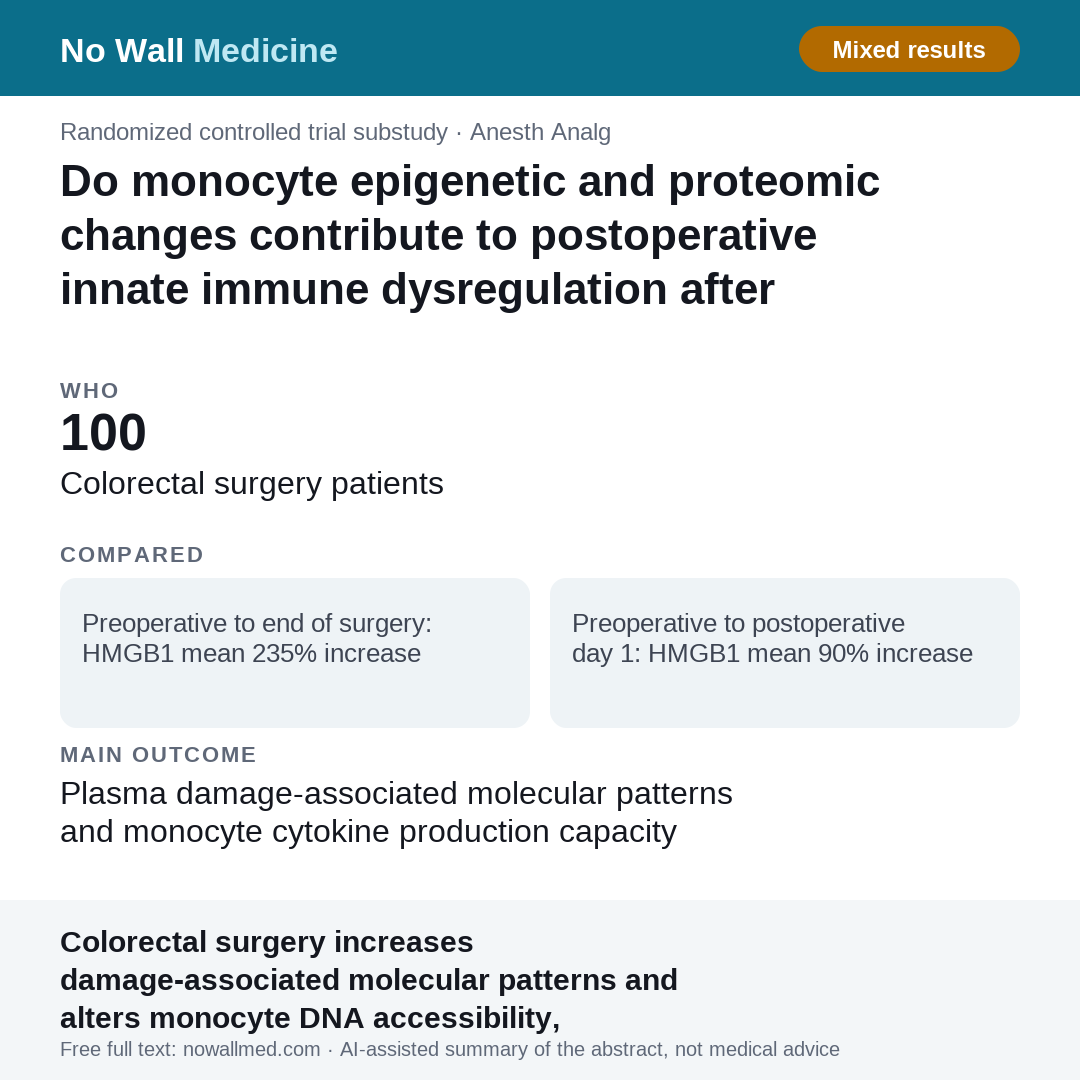
Clinical question: Do monocyte epigenetic and proteomic changes contribute to postoperative innate immune dysregulation after colorectal surgery?
Why it matters: It is unknown if changes in monocyte DNA accessibility contribute to the increased susceptibility to infections seen after colorectal surgery.
Key points
- Researchers studied 100 colorectal surgery patients to measure damage-associated molecular patterns and monocyte DNA accessibility.
- Postoperative day 1 showed a 90% increase in HMGB1 and a 503% increase in mitochondrial DNA compared to before surgery.
- In laboratory tests, incubation of monocytes with HSP70 and HMGB1 was associated with decreased cytokine production capacity.
Headline and key points written with AI from the paper’s abstract, with every number checked against it. Read the paper before relying on them.
Was this summary helpful?
Subject terms
Cite this article
Albers-Warlé KI, Helder LS, Groh LA, Polat F, Panhuizen IF, Snoeck MMJ. Postoperative Innate Immune Dysregulation, Proteomic, and Monocyte Epigenomic Changes After Colorectal Surgery: A Substudy of a Randomized Controlled Trial. Anesth Analg. 2024. doi:10.1213/ANE.0000000000007297
Spotted a mistake? Suggest a correction
Top studies every Monday
The week’s key trials and guidelines in your specialties, plus any topics you follow. By email, free.
Get the weekly digest