Systematic review identifies common features and management principles for pyoderma gangrenosum after breast surgery
Postsurgical Pyoderma Gangrenosum in Breast Surgery: An Updated Systematic Review, Takeaways, and the 6 Commandments
Systematic reviewUnclear result
What are the clinical characteristics and management of postsurgical pyoderma gangrenosum in breast surgery?
Who
152
Patients with postsurgical pyoderma gangrenosum following breast surgery
Compared
All cases: mean healing time 4.5 months
29%Surgical reconstruction needed
Main outcome
Clinical presentation, symptoms, and treatment response
Bottom line: Postsurgical pyoderma gangrenosum is a rare complication often mimicking infection, characterized by high pain and elevated C-reactive protein.
Aesthet Surg J · 2025-05-26Download image
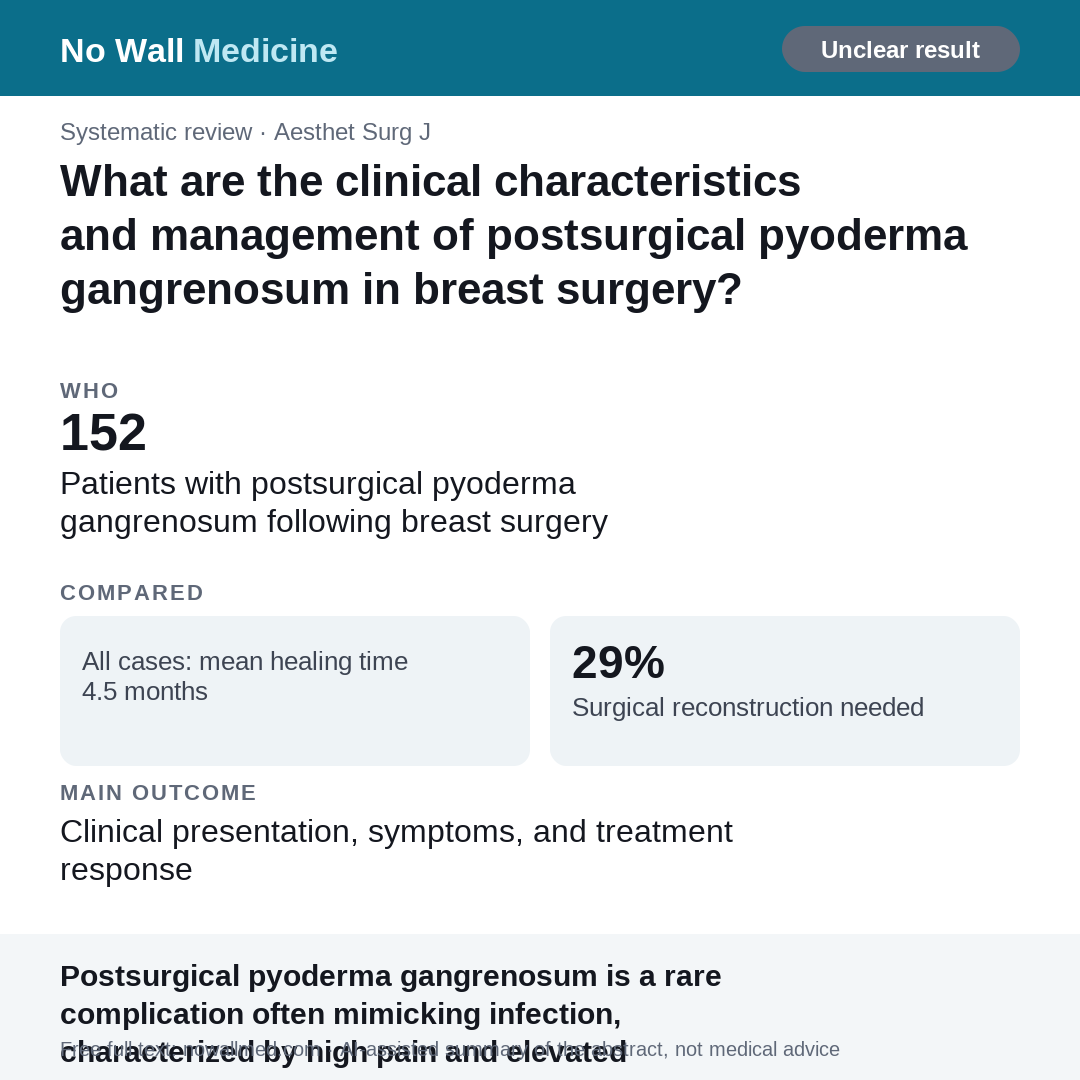
Clinical question: What are the clinical characteristics and management of postsurgical pyoderma gangrenosum in breast surgery?
Why it matters: Pyoderma gangrenosum after breast surgery often mimics infection or tissue death, which can lead to delayed diagnosis and inappropriate treatment.
Key points
- Researchers analyzed 65 new cases of pyoderma gangrenosum, an inflammatory skin condition, across 45 studies following breast procedures.
- The most frequent surgical trigger was reduction mammoplasty, and pain was the most common symptom in 86.2% of cases.
- Microbiological cultures were negative in 76.9% of cases, and surgical reconstruction was needed in 29% of the cases.
Headline and key points written with AI from the paper’s abstract, with every number checked against it. Read the paper before relying on them.
Topics
Cite this article
Caddia G, Voulliaume D, Dettori L, Rubino C, Delay E. Postsurgical Pyoderma Gangrenosum in Breast Surgery: An Updated Systematic Review, Takeaways, and the 6 Commandments. Aesthet Surg J. 2025. doi:10.1093/asj/sjaf095
Spotted a mistake? Suggest a correction
Top studies every Monday
The week’s key trials and guidelines in your specialties, plus any topics you follow. By email, free.
Get the weekly digest