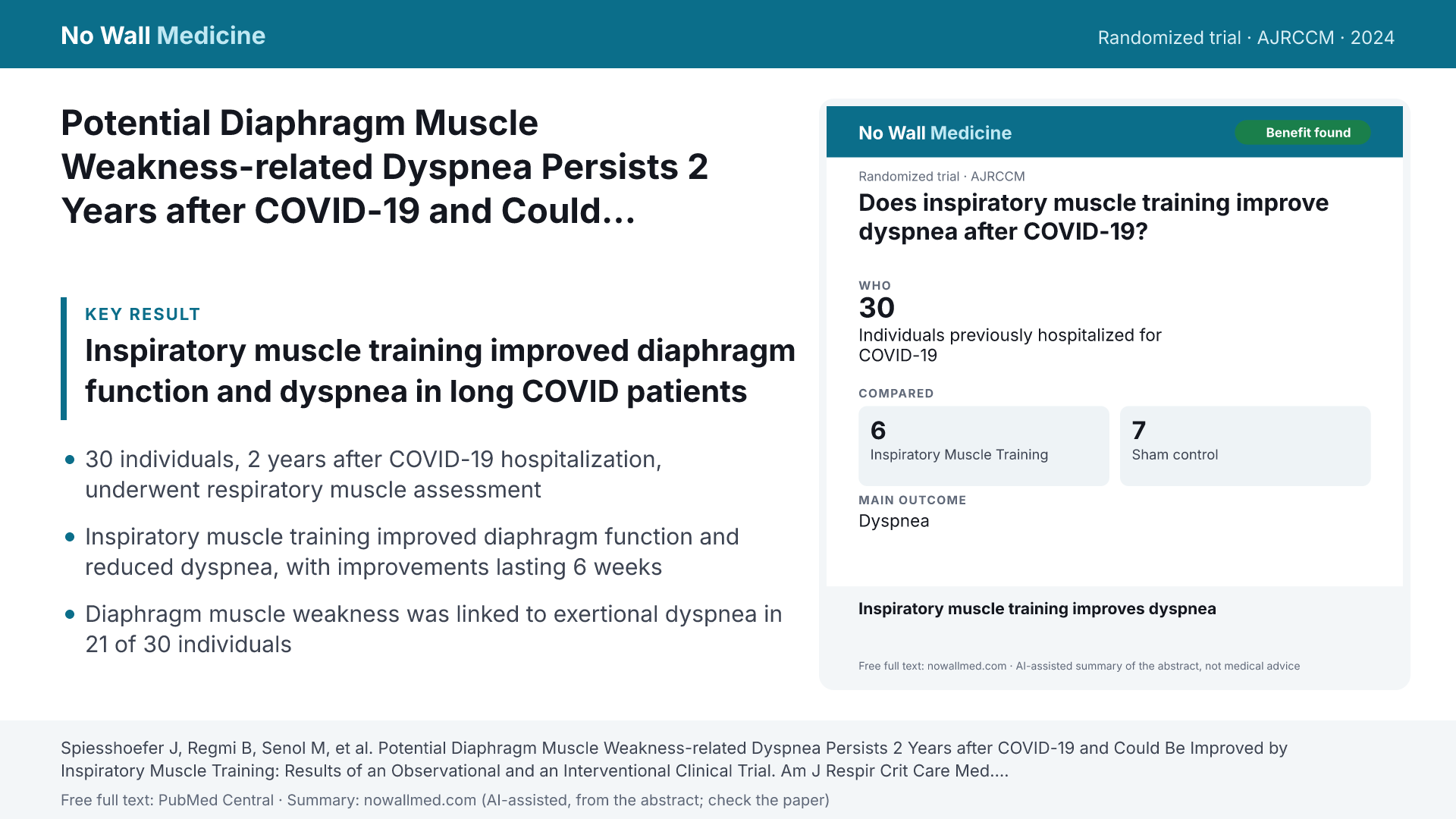
Inspiratory muscle training improved diaphragm function and dyspnea in long COVID patients
Potential Diaphragm Muscle Weakness-related Dyspnea Persists 2 Years after COVID-19 and Could Be Improved by Inspiratory Muscle Training: Results of an Observational and an Interventional Clinical Trial
Randomized trialBenefit found
Does inspiratory muscle training improve dyspnea after COVID-19?
Who
30
Individuals previously hospitalized for COVID-19
Compared
6Inspiratory Muscle Training (Borg score)
7Sham control (Borg score)
Main outcome
Dyspnea
Bottom line: Inspiratory muscle training improves dyspnea
AJRCCM · 2024-05-20 · Save PNG
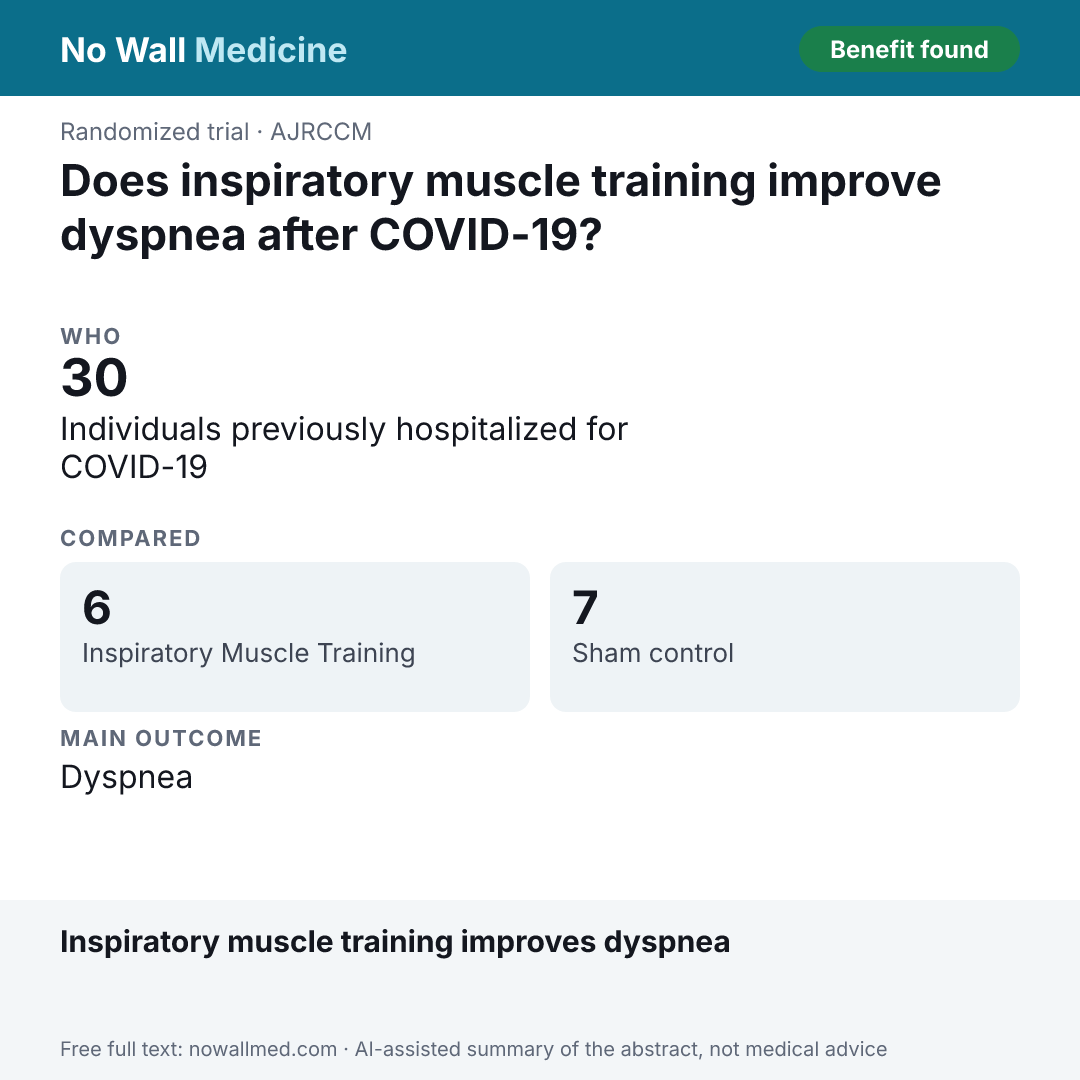
Clinical question: Does inspiratory muscle training improve dyspnea after COVID-19?
Key points
- 30 individuals, 2 years after COVID-19 hospitalization, underwent respiratory muscle assessment.
- Inspiratory muscle training improved diaphragm function and reduced dyspnea, with improvements lasting 6 weeks.
- Diaphragm muscle weakness was linked to exertional dyspnea in 21 of 30 individuals.
Headline and key points written with AI from the paper’s abstract, with every number checked against it. Read the paper before relying on them.
Was this summary helpful?
Subject terms
Headline, design, result, key points, caveat and citation as plain text.
Cite this article
Spiesshoefer J, Regmi B, Senol M, et al. Potential Diaphragm Muscle Weakness-related Dyspnea Persists 2 Years after COVID-19 and Could Be Improved by Inspiratory Muscle Training: Results of an Observational and an Interventional Clinical Trial. Am J Respir Crit Care Med. 2024;210(5):618-628. doi:10.1164/rccm.202309-1572OC
Spotted a mistake? Suggest a correction