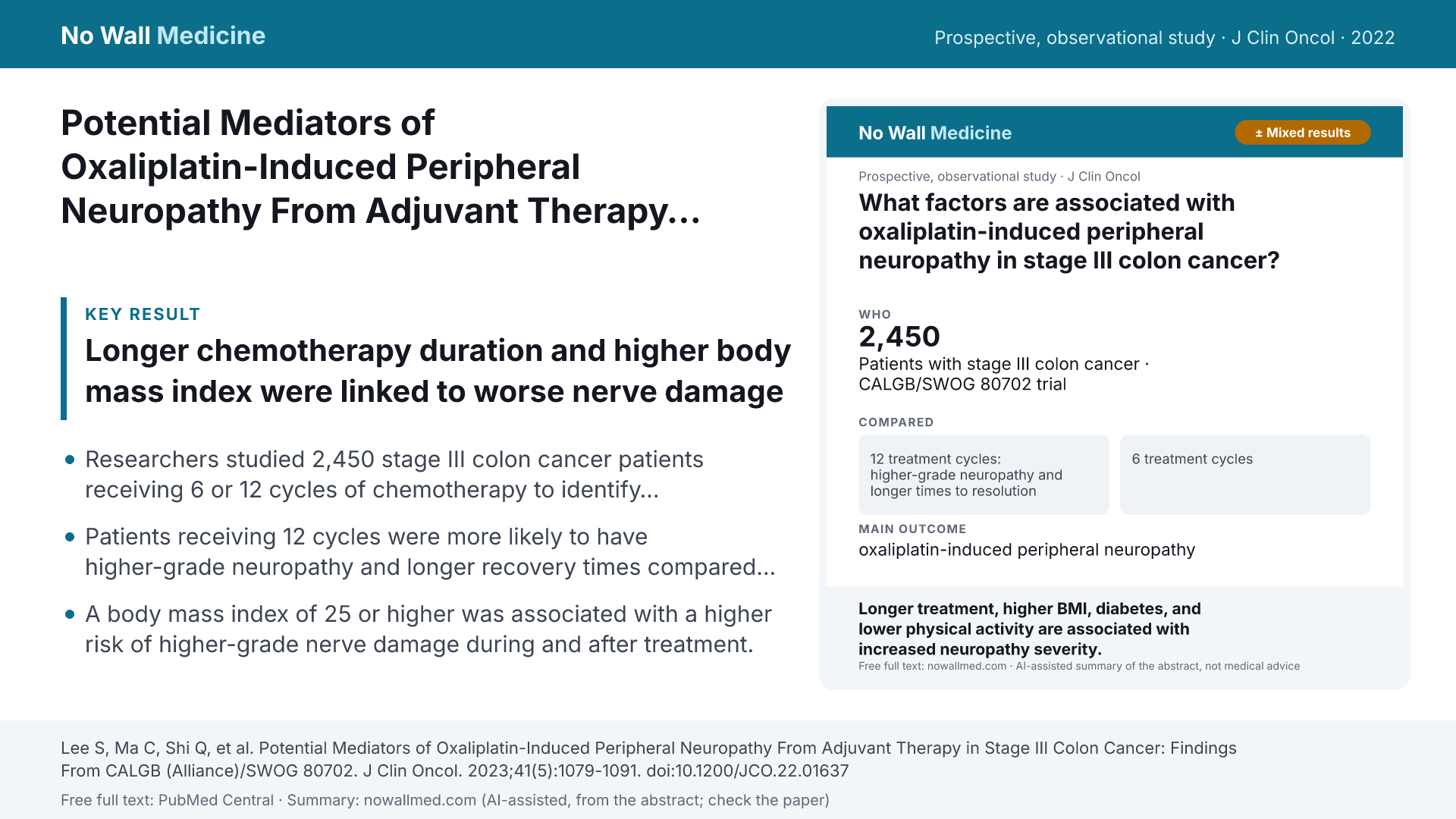
Potential Mediators of Oxaliplatin-Induced Peripheral Neuropathy From Adjuvant Therapy in Stage III Colon Cancer: Findings From CALGB (Alliance)/SWOG 80702
Key result: Longer chemotherapy duration and higher body mass index were linked to worse nerve damage
Prospective, observational studyMixed results
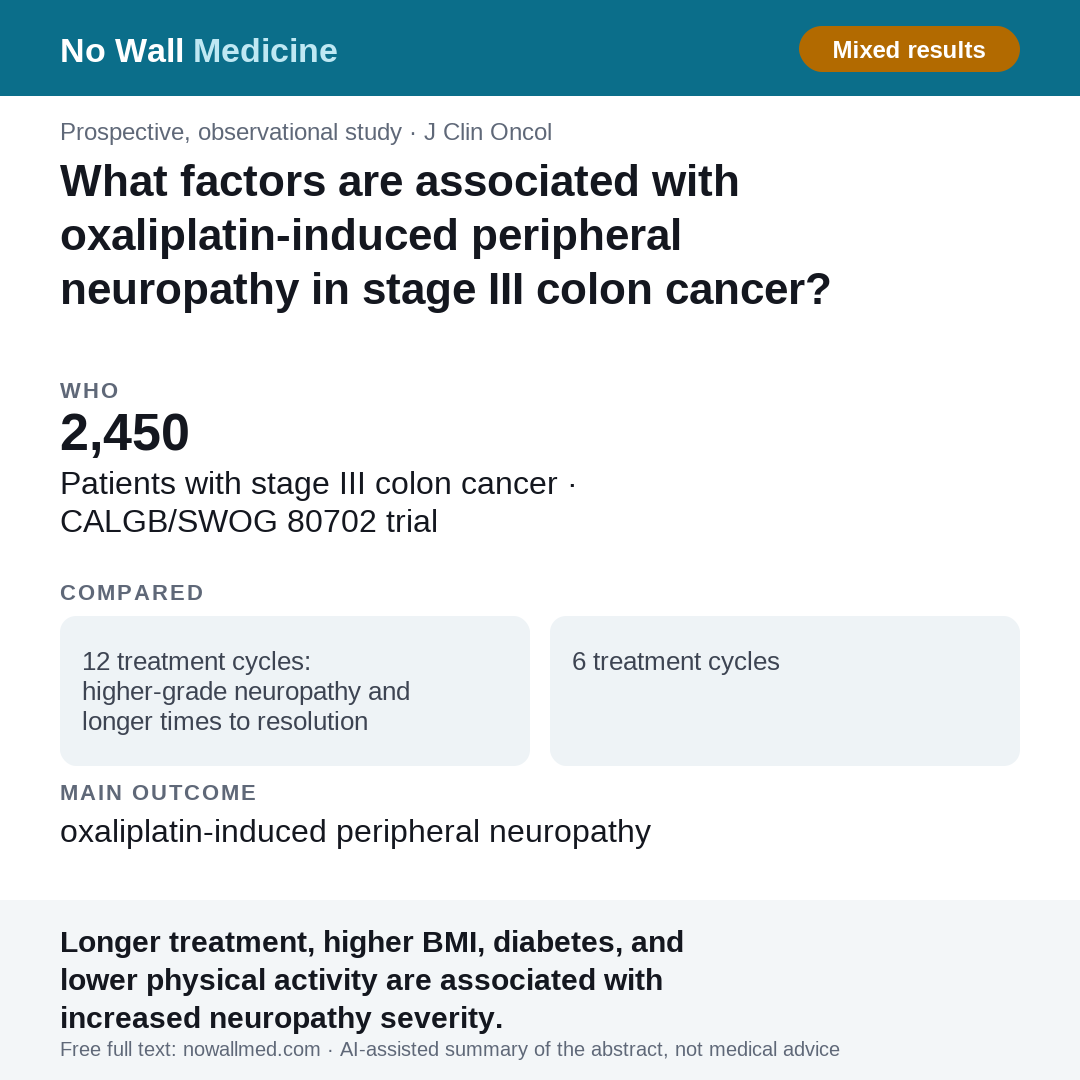
What factors are associated with oxaliplatin-induced peripheral neuropathy in stage III colon cancer?
Who
2,450
Patients with stage III colon cancer · CALGB/SWOG 80702 trial
Compared
12 treatment cycles: higher-grade neuropathy and longer times to resolution
6 treatment cycles
Main outcome
oxaliplatin-induced peripheral neuropathy
Bottom line: Longer treatment, higher BMI, diabetes, and lower physical activity are associated with increased neuropathy severity.
J Clin Oncol · 2022-11-11Download image
Key points
- Researchers studied 2,450 stage III colon cancer patients receiving 6 or 12 cycles of chemotherapy to identify factors linked to oxaliplatin-induced peripheral neuropathy, or nerve damage.
- Patients receiving 12 cycles were more likely to have higher-grade neuropathy and longer recovery times compared to those receiving 6 cycles.
- A body mass index of 25 or higher was associated with a higher risk of higher-grade nerve damage during and after treatment.
Discussion prompts
- Would these patients look like yours? Who was left out?
- Is the main outcome one that matters to patients?
- Is the difference large enough to change what you do?
Cite: Lee S, Ma C, Shi Q, et al. Potential Mediators of Oxaliplatin-Induced Peripheral Neuropathy From Adjuvant Therapy in Stage III Colon Cancer: Findings From CALGB (Alliance)/SWOG 80702. J Clin Oncol. 2022. doi:10.1200/JCO.22.01637
Free full text: PubMed Central · Summary and visual abstract: nowallmed.com/a/potential-mediators-of-oxaliplatin-induced-peripheral-neuropathy-from-346gin/ (AI-assisted from the abstract; check the paper before relying on it).