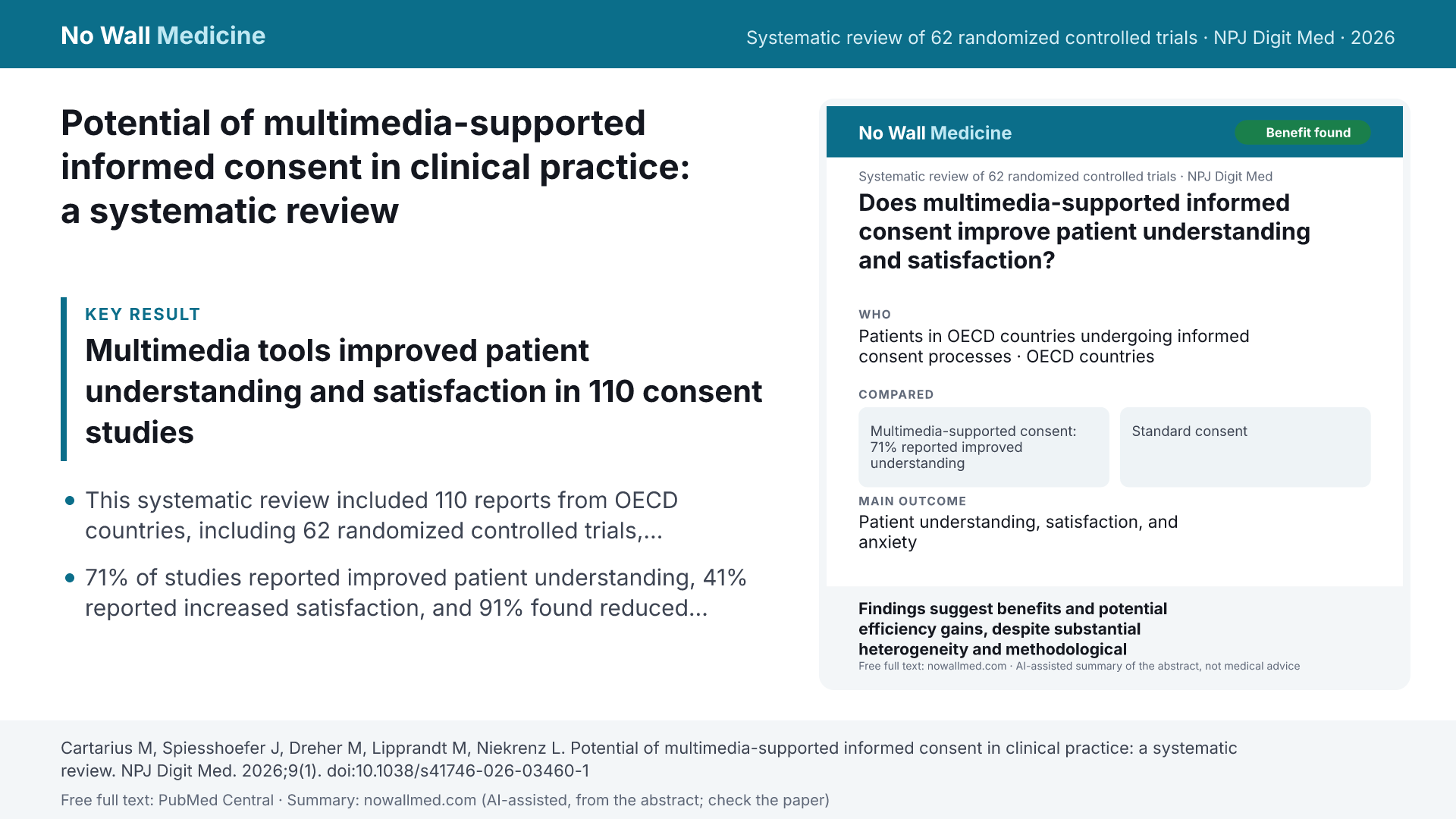
Potential of multimedia-supported informed consent in clinical practice: a systematic review
Key result: Multimedia tools improved patient understanding and satisfaction in 110 consent studies
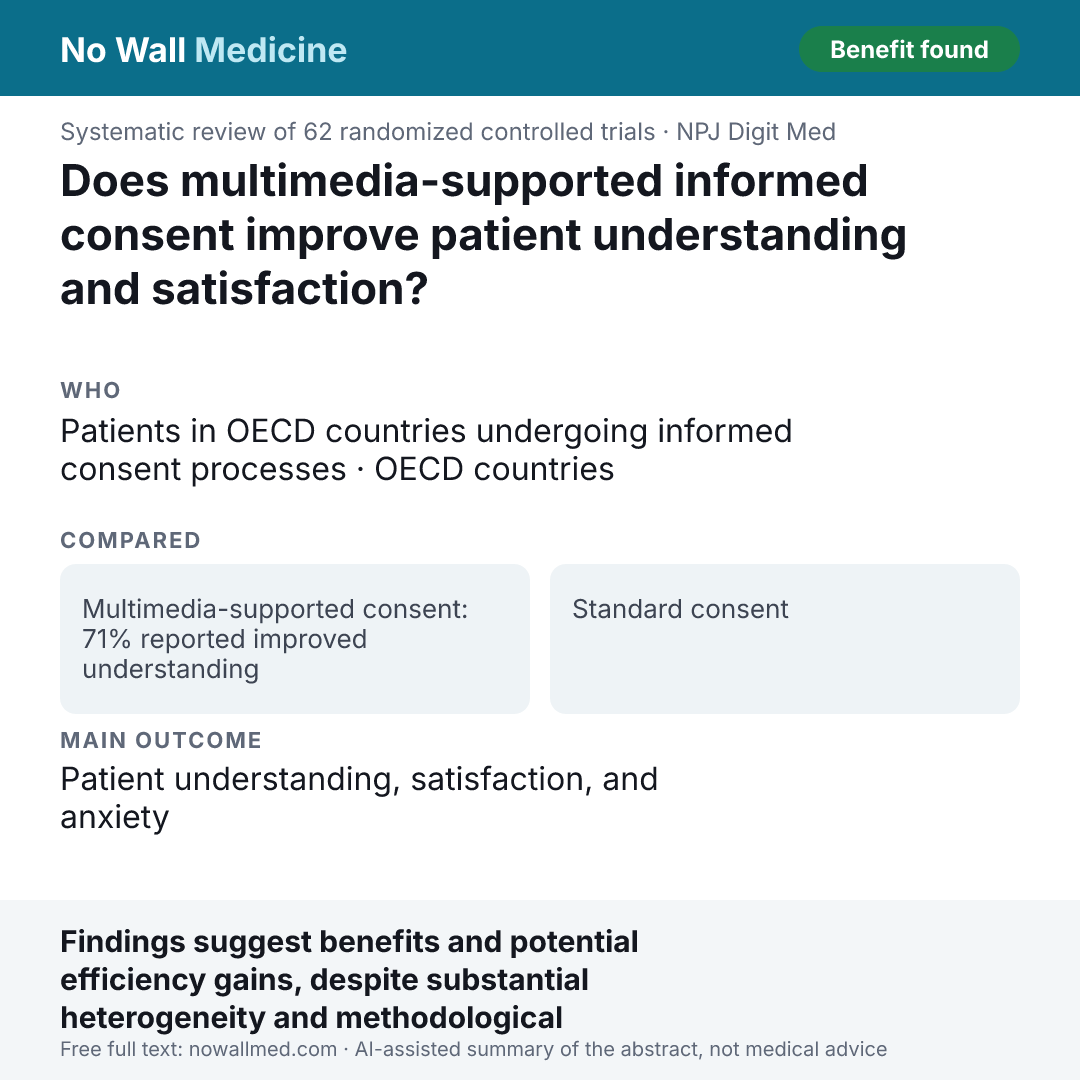
Systematic review of 62 randomized controlled trialsBenefit found
Does multimedia-supported informed consent improve patient understanding and satisfaction?
Who
Patients in OECD countries undergoing informed consent processes · OECD countries
Compared
Multimedia-supported consent: 71% reported improved understanding
Standard consent
Main outcome
Patient understanding, satisfaction, and anxiety
Bottom line: Findings suggest benefits and potential efficiency gains, despite substantial heterogeneity and methodological limitations.
Limitation: Considerable methodological variability and limitations affecting internal validity
NPJ Digit Med · 2026-11-25 · Save PNG
Key points
- This systematic review included 110 reports from OECD countries, including 62 randomized controlled trials, assessing multimedia-supported informed consent.
- 71% of studies reported improved patient understanding, 41% reported increased satisfaction, and 91% found reduced or unchanged anxiety.
- Authors note substantial heterogeneity and methodological limitations prevent robust conclusions, calling for high-quality comparative studies.
Why it matters: Applies to clinicians considering multimedia supplements to consent; suggests potential benefits for understanding and satisfaction despite mixed evidence quality.
Discussion prompts
- Would these patients look like yours? Who was left out?
- Is the main outcome one that matters to patients?
- Is the difference large enough to change what you do?
Cite: Cartarius M, Spiesshoefer J, Dreher M, Lipprandt M, Niekrenz L. Potential of multimedia-supported informed consent in clinical practice: a systematic review. NPJ Digit Med. 2026;9(1). doi:10.1038/s41746-026-03460-1
Free full text: PubMed Central · Summary and visual abstract: nowallmed.com/a/potential-of-multimedia-supported-informed-consent-in-clinical-1qj4le3/ (AI-assisted from the abstract; check the paper before relying on it).