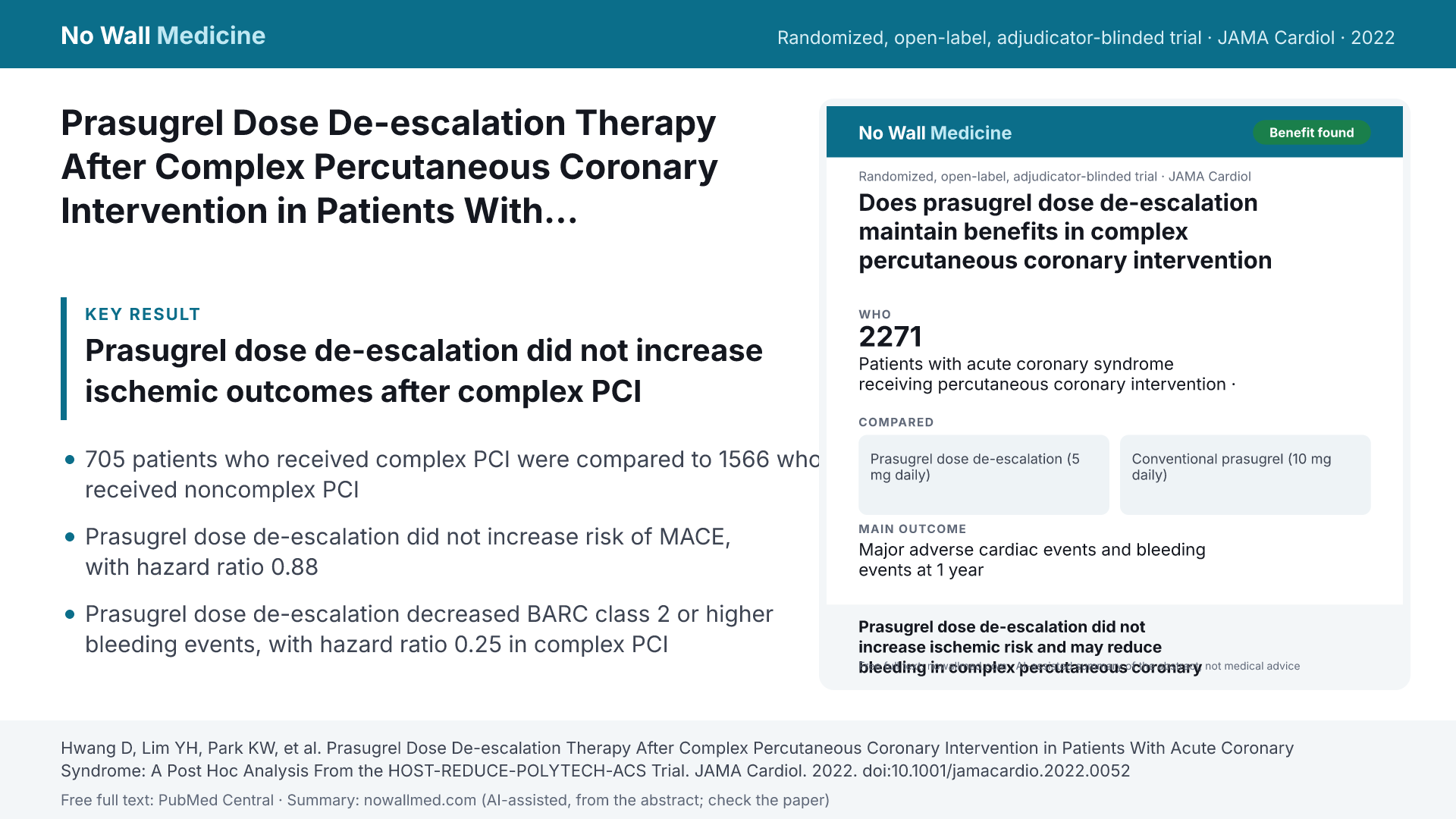
Prasugrel Dose De-escalation Therapy After Complex Percutaneous Coronary Intervention in Patients With Acute Coronary Syndrome: A Post Hoc Analysis From the HOST-REDUCE-POLYTECH-ACS Trial
Key result: Prasugrel dose de-escalation did not increase ischemic outcomes after complex PCI
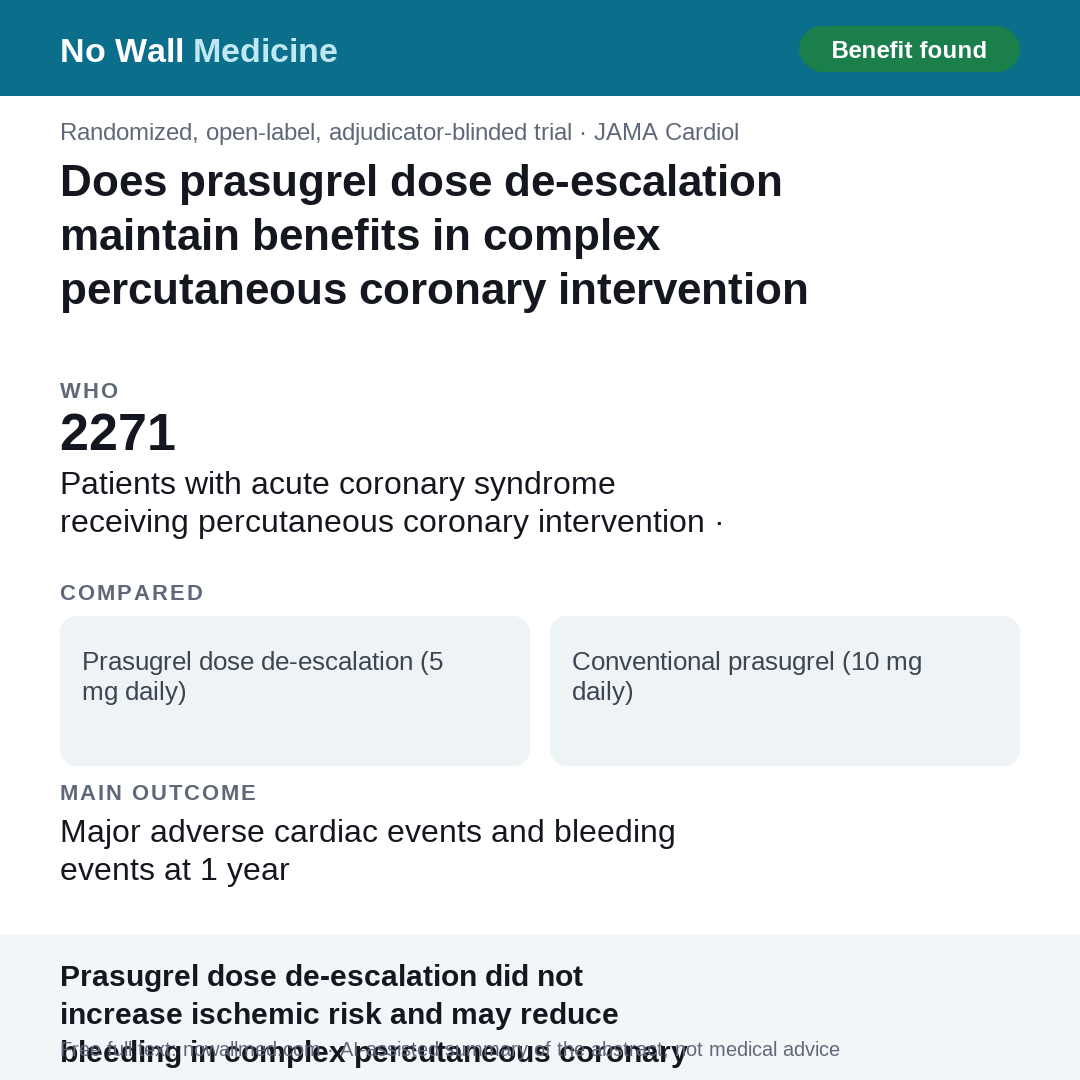
Randomized, open-label, adjudicator-blinded trialBenefit found
Does prasugrel dose de-escalation maintain benefits in complex percutaneous coronary intervention patients?
Who
2271
Patients with acute coronary syndrome receiving percutaneous coronary intervention · 35 hospitals in South Korea
Compared
Prasugrel dose de-escalation (5 mg daily)
Conventional prasugrel (10 mg daily)
Main outcome
Major adverse cardiac events and bleeding events at 1 year
Result: hazard ratio 0.88 (95% CI 0.47-1.66) for MACE in complex PCI
Bottom line: Prasugrel dose de-escalation did not increase ischemic risk and may reduce bleeding in complex percutaneous coronary intervention.
Limitation: This was a post hoc analysis
JAMA Cardiol · 2022-03-10Download image
Key points
- 705 patients who received complex PCI were compared to 1566 who received noncomplex PCI.
- Prasugrel dose de-escalation did not increase risk of MACE, with hazard ratio 0.88.
- Prasugrel dose de-escalation decreased BARC class 2 or higher bleeding events, with hazard ratio 0.25 in complex PCI.
Why it matters: Whether prasugrel dose de-escalation benefits patients after complex PCI is unknown
Discussion prompts
- Would these patients look like yours? Who was left out?
- Is the main outcome one that matters to patients?
- Is the difference large enough to change what you do?
Cite: Hwang D, Lim YH, Park KW, et al. Prasugrel Dose De-escalation Therapy After Complex Percutaneous Coronary Intervention in Patients With Acute Coronary Syndrome: A Post Hoc Analysis From the HOST-REDUCE-POLYTECH-ACS Trial. JAMA Cardiol. 2022. doi:10.1001/jamacardio.2022.0052
Free full text: PubMed Central · Summary and visual abstract: nowallmed.com/a/prasugrel-dose-de-escalation-therapy-after-complex-percutaneous-jpa0d9/ (AI-assisted from the abstract; check the paper before relying on it).