Synbiotics and prebiotics reduced gastrointestinal symptoms in critically ill patients
Prebiotics, probiotics, and synbiotics therapy in critically ill patients: a systematic review and network meta-analysis
Systematic review and network meta-analysisBenefit found
Are prebiotics, probiotics, or synbiotics effective for reducing gastrointestinal symptoms in critically ill patients?
Who
5,073
Critically ill adults
Compared
Control
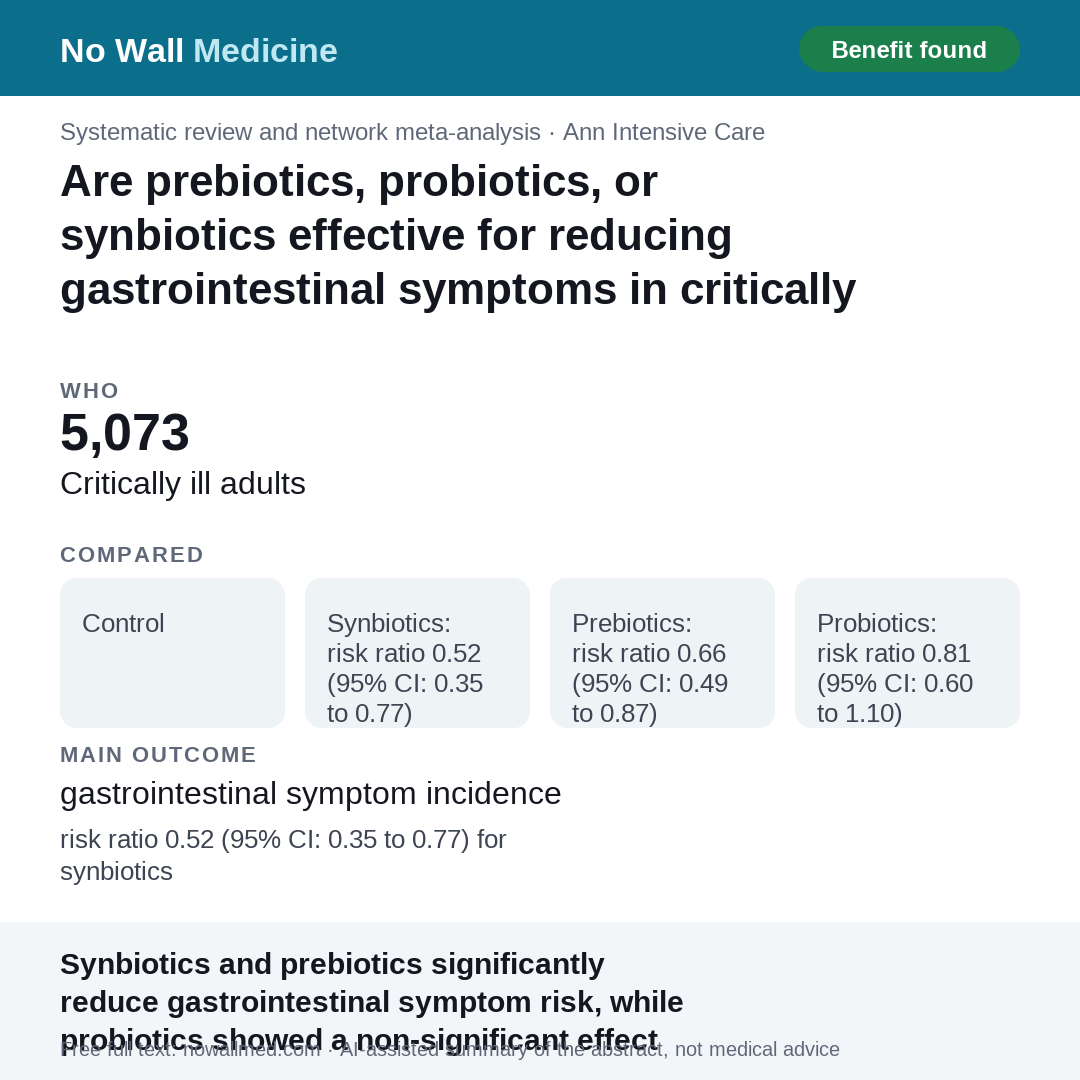
Synbiotics: risk ratio 0.52 (95% CI: 0.35 to 0.77)
Prebiotics: risk ratio 0.66 (95% CI: 0.49 to 0.87)
Probiotics: risk ratio 0.81 (95% CI: 0.60 to 1.10)
Main outcome
gastrointestinal symptom incidence
Result: risk ratio 0.52 (95% CI: 0.35 to 0.77) for synbiotics
Bottom line: Synbiotics and prebiotics significantly reduce gastrointestinal symptom risk, while probiotics showed a non-significant effect in critically ill patients.
Ann Intensive Care · 2026-08-04Download image
Clinical question: Are prebiotics, probiotics, or synbiotics effective for reducing gastrointestinal symptoms in critically ill patients?
Why it matters: Critically ill patients often develop intestinal dysbiosis, leading to gastrointestinal symptoms and infections
Key points
- Thirty-three trials with 5,073 patients compared prebiotics, probiotics, and synbiotics to controls.
- Synbiotics and prebiotics significantly reduced gastrointestinal symptom risk, with risk ratios 0.52 and 0.66 respectively.
- Probiotics had a similar effect, but it was not statistically significant, with a risk ratio of 0.81.
Headline and key points written with AI from the paper’s abstract, with every number checked against it. Read the paper before relying on them.
Spotted a mistake? Suggest a correction