Predictive tools for bilateral primary aldosteronism show wide variation in sensitivity and specificity
Predicting Bilateral Subtypes of Primary Aldosteronism Without Adrenal Vein Sampling: A Systematic Review and Meta-analysis
Systematic review and meta-analysisUnclear result
How accurate are tools for predicting bilateral subtypes of primary aldosteronism without adrenal vein sampling?
Who
Patients with primary aldosteronism
Compared
Group A algorithms: highest specificity
Group F algorithms: highest sensitivity
Main outcome
sensitivity and specificity of predictive tools for bilateral primary aldosteronism
Bottom line: Predictive algorithms show high variability in sensitivity and specificity for identifying bilateral primary aldosteronism subtypes.
J Clin Endocrinol Metab · 2023-08-02Download image
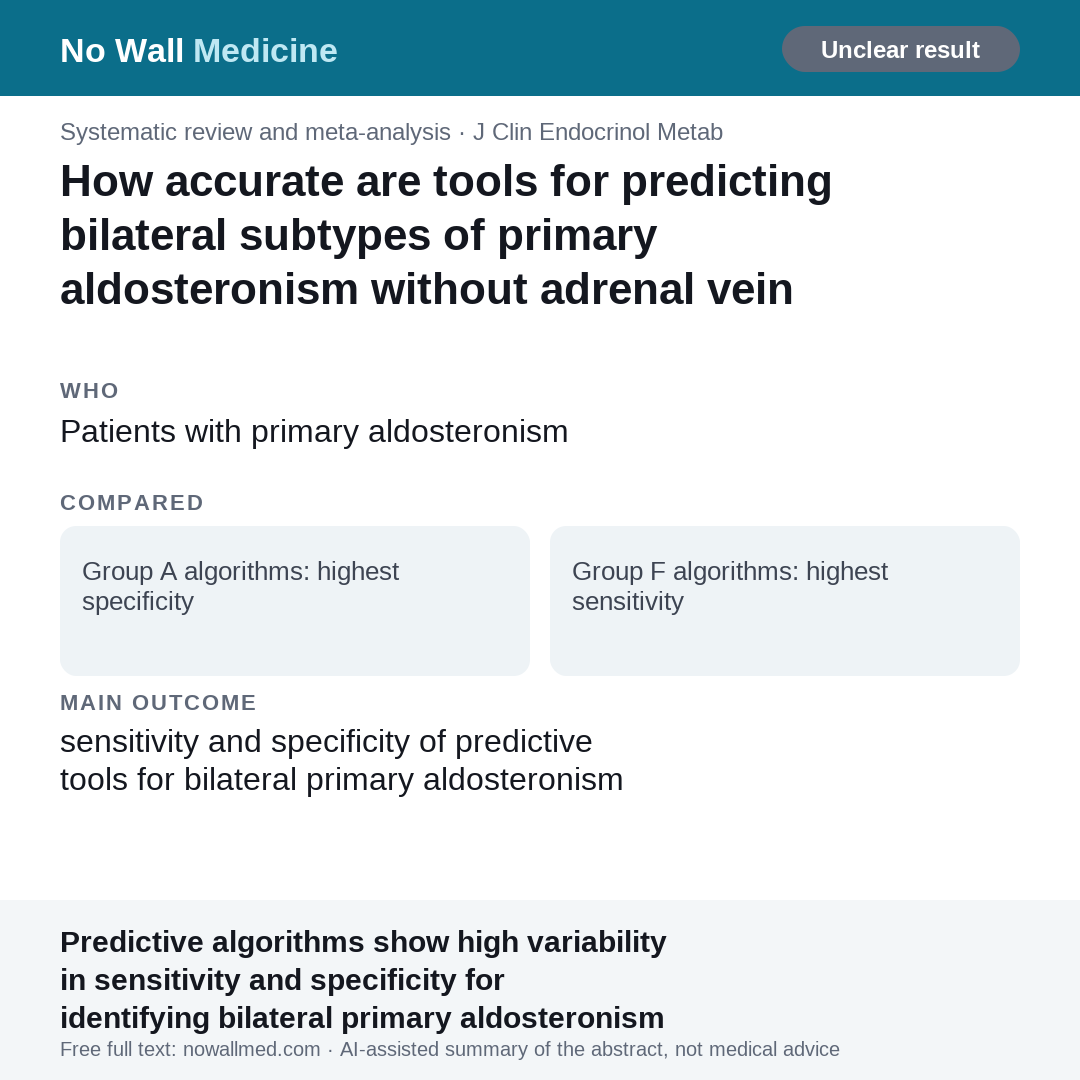
Clinical question: How accurate are tools for predicting bilateral subtypes of primary aldosteronism without adrenal vein sampling?
Why it matters: The diagnostic process for determining if primary aldosteronism is unilateral or bilateral is time and resource intensive, creating a need for tools to predict subtypes without invasive adrenal vein sampling.
Key points
- Researchers analyzed 35 studies involving 55 unique algorithms designed to predict whether primary aldosteronism is bilateral or unilateral.
- Across all identified algorithms, sensitivity ranged from 5% to 100% and specificity ranged from 36% to 100%.
- Algorithms combining biochemical, radiological, and demographic characteristics had the highest specificity, while functional imaging had the highest sensitivity.
Headline and key points written with AI from the paper’s abstract, with every number checked against it. Read the paper before relying on them.
Was this summary helpful?
Subject terms
Cite this article
Ng E, Gwini SM, Zheng W, Fuller PJ, Yang J. Predicting Bilateral Subtypes of Primary Aldosteronism Without Adrenal Vein Sampling: A Systematic Review and Meta-analysis. J Clin Endocrinol Metab. 2023. doi:10.1210/clinem/dgad451
Spotted a mistake? Suggest a correction
Top studies every Monday
The week’s key trials and guidelines in your specialties, plus any topics you follow. By email, free.
Get the weekly digest