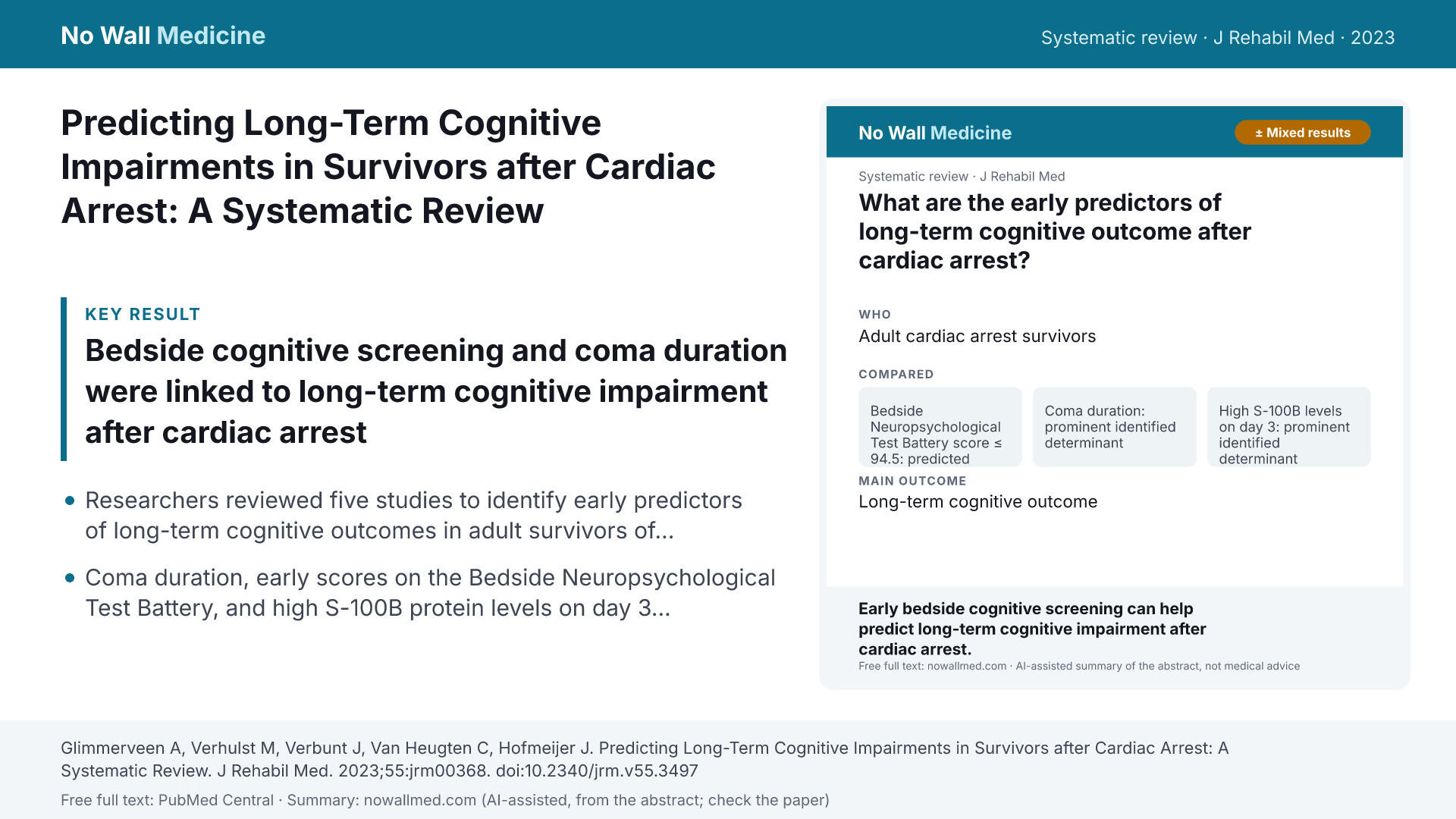
Bedside cognitive screening and coma duration were linked to long-term cognitive impairment after cardiac arrest
Predicting Long-Term Cognitive Impairments in Survivors after Cardiac Arrest: A Systematic Review
Systematic reviewMixed results
What are the early predictors of long-term cognitive outcome after cardiac arrest?
Who
Adult cardiac arrest survivors
Compared
Bedside Neuropsychological Test Battery score ≤ 94.5: predicted cognitive impairments at 6 months
Coma duration: prominent identified determinant
High S-100B levels on day 3: prominent identified determinant
Main outcome
Long-term cognitive outcome
Bottom line: Early bedside cognitive screening can help predict long-term cognitive impairment after cardiac arrest.
Limitation: Evidence is scarce for S-100B levels and coma duration and absent for imaging and electroencephalography.
J Rehabil Med · 2023-01-30Download image
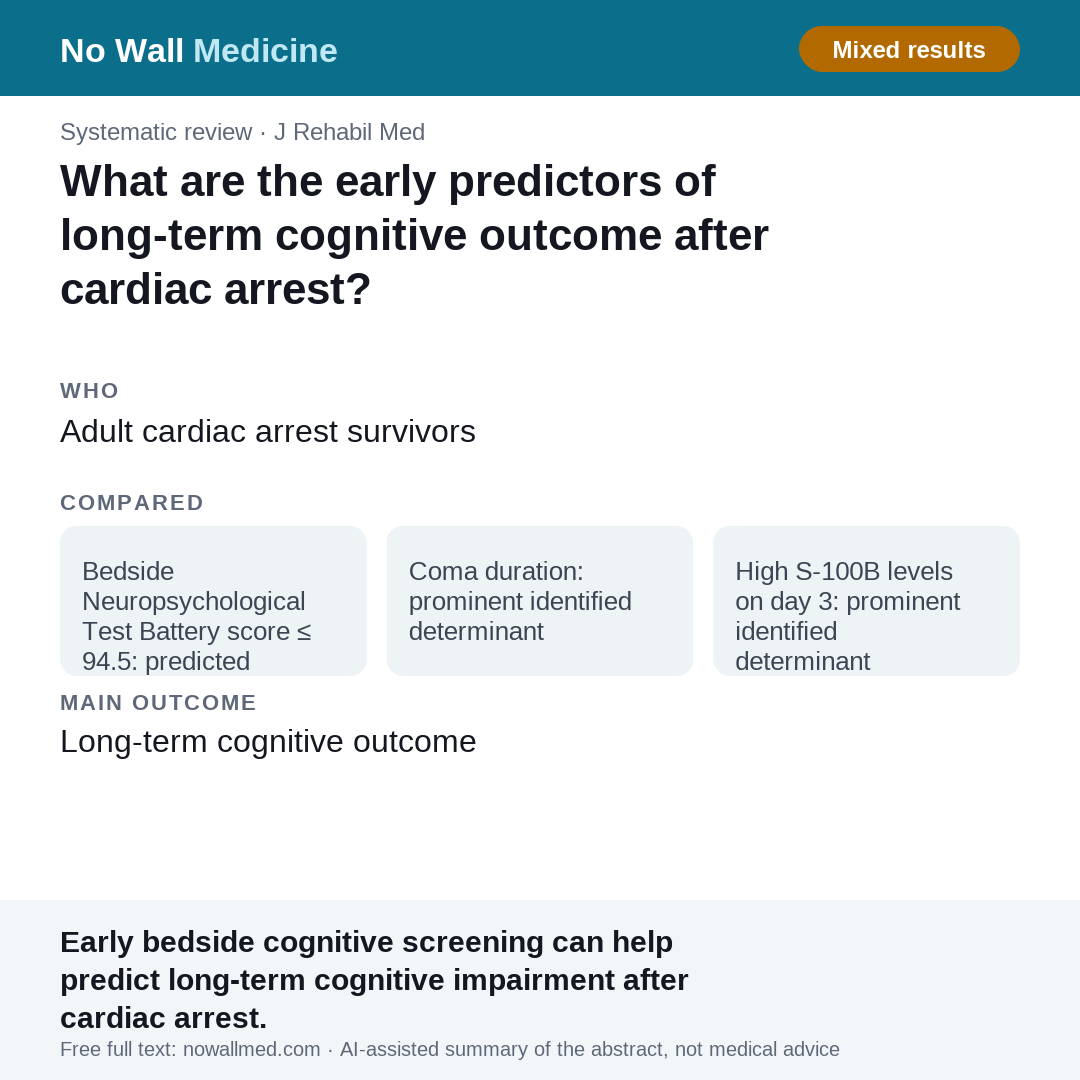
Clinical question: What are the early predictors of long-term cognitive outcome after cardiac arrest?
Why it matters: International guidelines recommend early screening for patients at risk of long-term cognitive impairment after cardiac arrest, but specific predictors are not provided.
Key points
- Researchers reviewed five studies to identify early predictors of long-term cognitive outcomes in adult survivors of cardiac arrest.
- Coma duration, early scores on the Bedside Neuropsychological Test Battery, and high S-100B protein levels on day 3 were associated with cognitive impairment.
- A score of ≤ 94.5 on the Bedside Neuropsychological Test Battery was linked to cognitive impairment at 6 months after cardiac arrest.
Limitation the authors note: Studies on brain imaging and electroencephalography, which measures electrical activity in the brain, are lacking.
Headline and key points written with AI from the paper’s abstract, with every number checked against it. Read the paper before relying on them.
Was this summary helpful?
Subject terms
Headline, design, result, key points, caveat and citation as plain text.
Cite this article
Glimmerveen A, Verhulst M, Verbunt J, Van Heugten C, Hofmeijer J. Predicting Long-Term Cognitive Impairments in Survivors after Cardiac Arrest: A Systematic Review. J Rehabil Med. 2023. doi:10.2340/jrm.v55.3497
Spotted a mistake? Suggest a correction