Artificial intelligence models generally outperformed traditional methods for predicting bladder cancer recurrence and progression
Predicting non-muscle invasive bladder cancer outcomes using artificial intelligence: a systematic review using APPRAISE-AI
Systematic reviewBenefit found
How do artificial intelligence models compare to non-artificial intelligence approaches in predicting bladder cancer outcomes?
Who
15
Patients with non-muscle invasive bladder cancer
Compared
Artificial intelligence approaches: generally outperformed non-artificial intelligence approaches
Non-artificial intelligence approaches
Main outcome
recurrence or progression of non-muscle invasive bladder cancer
Result: median absolute performance difference was 10 for low, 22 for moderate, and 4 for high quality studies
Bottom line: Artificial intelligence models generally outperformed non-artificial intelligence approaches, but most studies were of low quality.
Limitation: Most studies were low quality, with dataset limitations, methodological flaws, and reproducibility issues.
NPJ Digit Med · 2024-04-18Download image
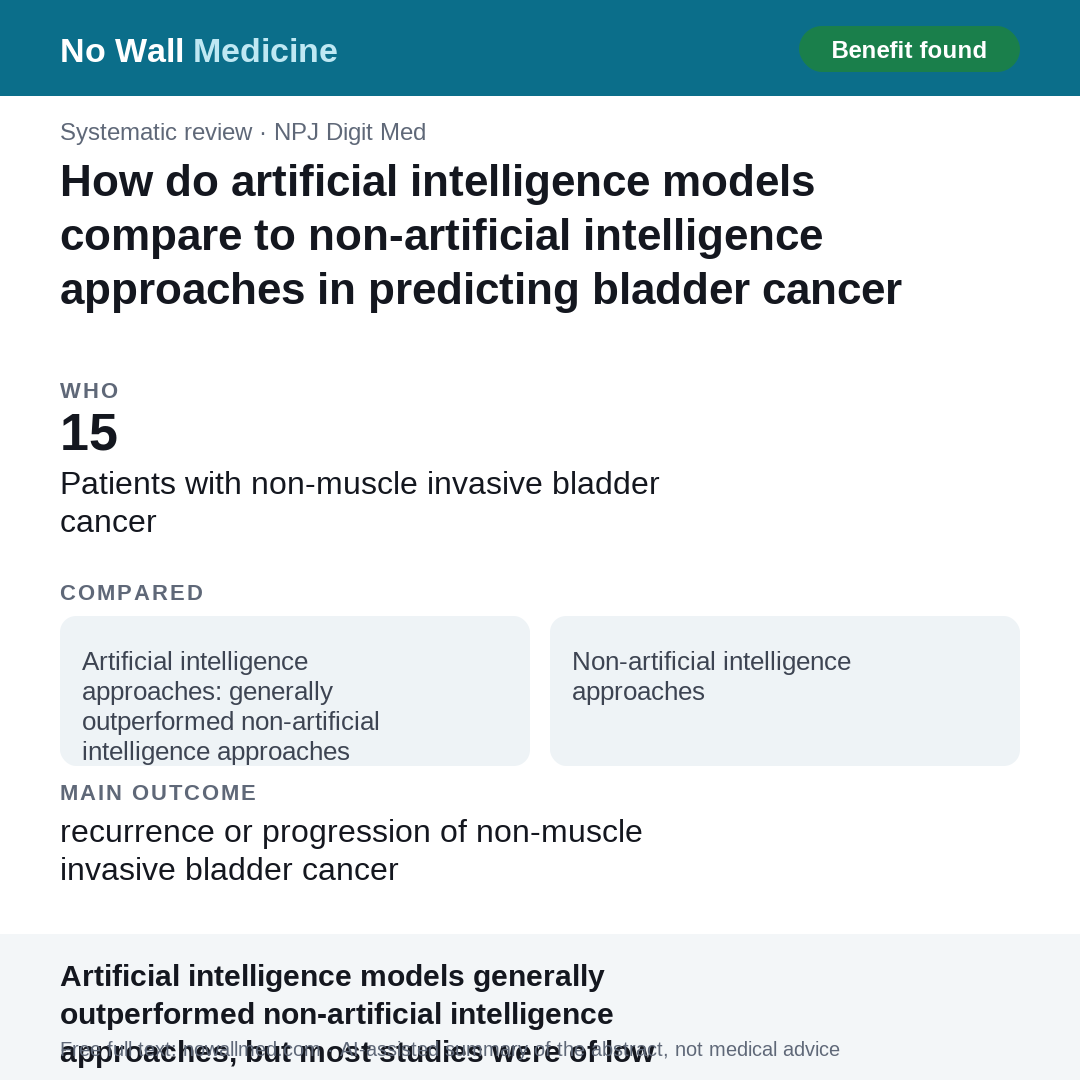
Clinical question: How do artificial intelligence models compare to non-artificial intelligence approaches in predicting bladder cancer outcomes?
Why it matters: The clinical readiness of artificial intelligence applications for predicting recurrence and progression in non-muscle invasive bladder cancer remains unclear.
Key points
- Researchers reviewed 15 retrospective studies involving a median cohort size of 125 patients to evaluate artificial intelligence performance in non-muscle invasive bladder cancer.
- Artificial intelligence models generally showed higher accuracy, c-index, sensitivity, and specificity than non-artificial intelligence approaches.
- The median absolute performance difference between models was 10 for low quality studies, 22 for moderate quality studies, and 4 for high quality studies.
Limitation the authors note: All included studies were retrospective and most were classified as low quality.
Headline and key points written with AI from the paper’s abstract, with every number checked against it. Read the paper before relying on them.
Cite this article
Kwong JCC, Wu J, Malik S, Khondker A, Gupta N, Bodnariuc N. Predicting non-muscle invasive bladder cancer outcomes using artificial intelligence: a systematic review using APPRAISE-AI. NPJ Digit Med. 2024. doi:10.1038/s41746-024-01088-7
Spotted a mistake? Suggest a correction
Top studies every Monday
The week’s key trials and guidelines in your specialties, plus any topics you follow. By email, free.
Get the weekly digest