Predicting Probability of Response to Tumor Necrosis Factor Inhibitors for Individual Patients With Ankylosing Spondylitis
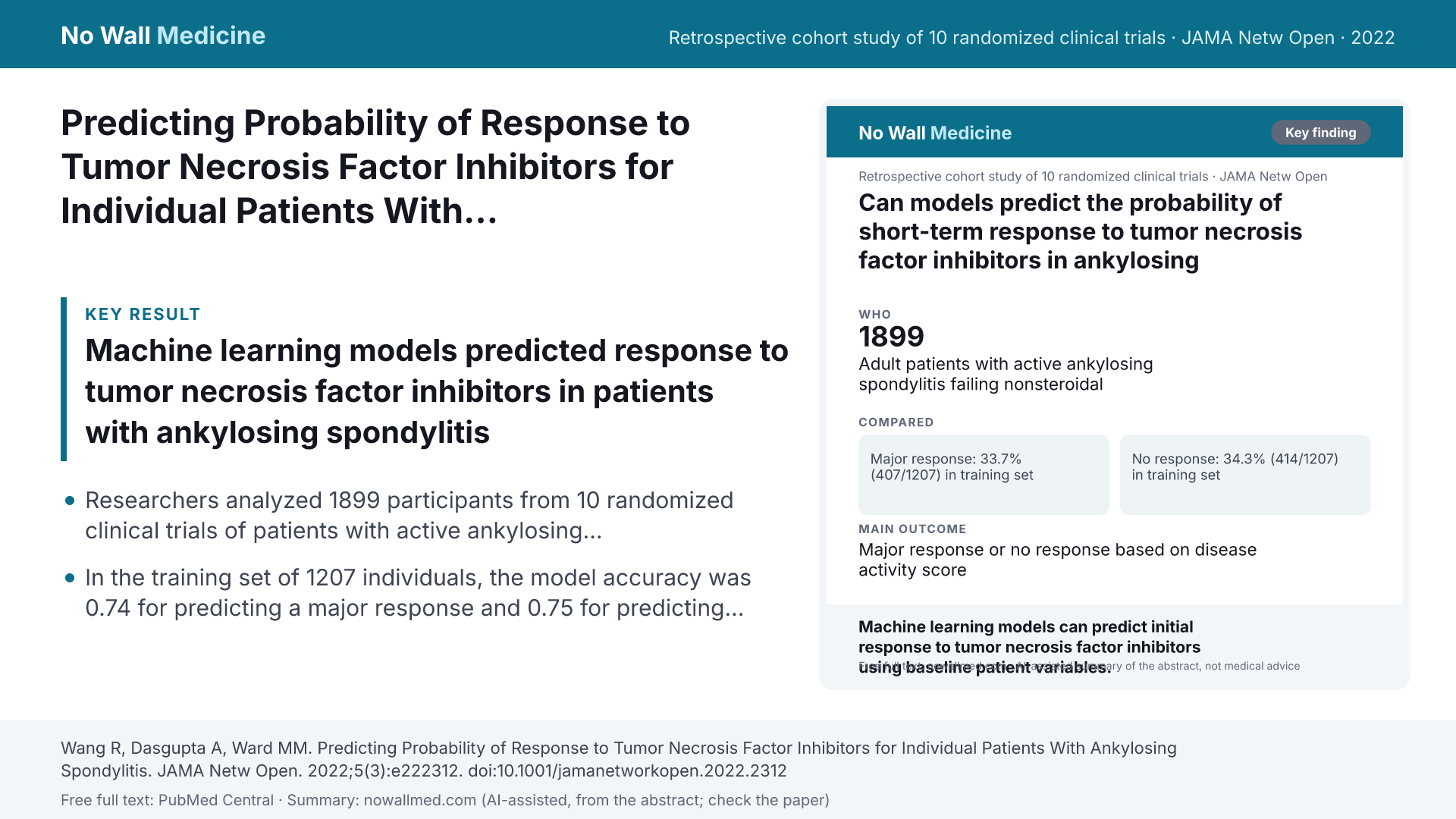
Key result: Machine learning models predicted response to tumor necrosis factor inhibitors in patients with ankylosing spondylitis
Retrospective cohort study of 10 randomized clinical trialsKey finding
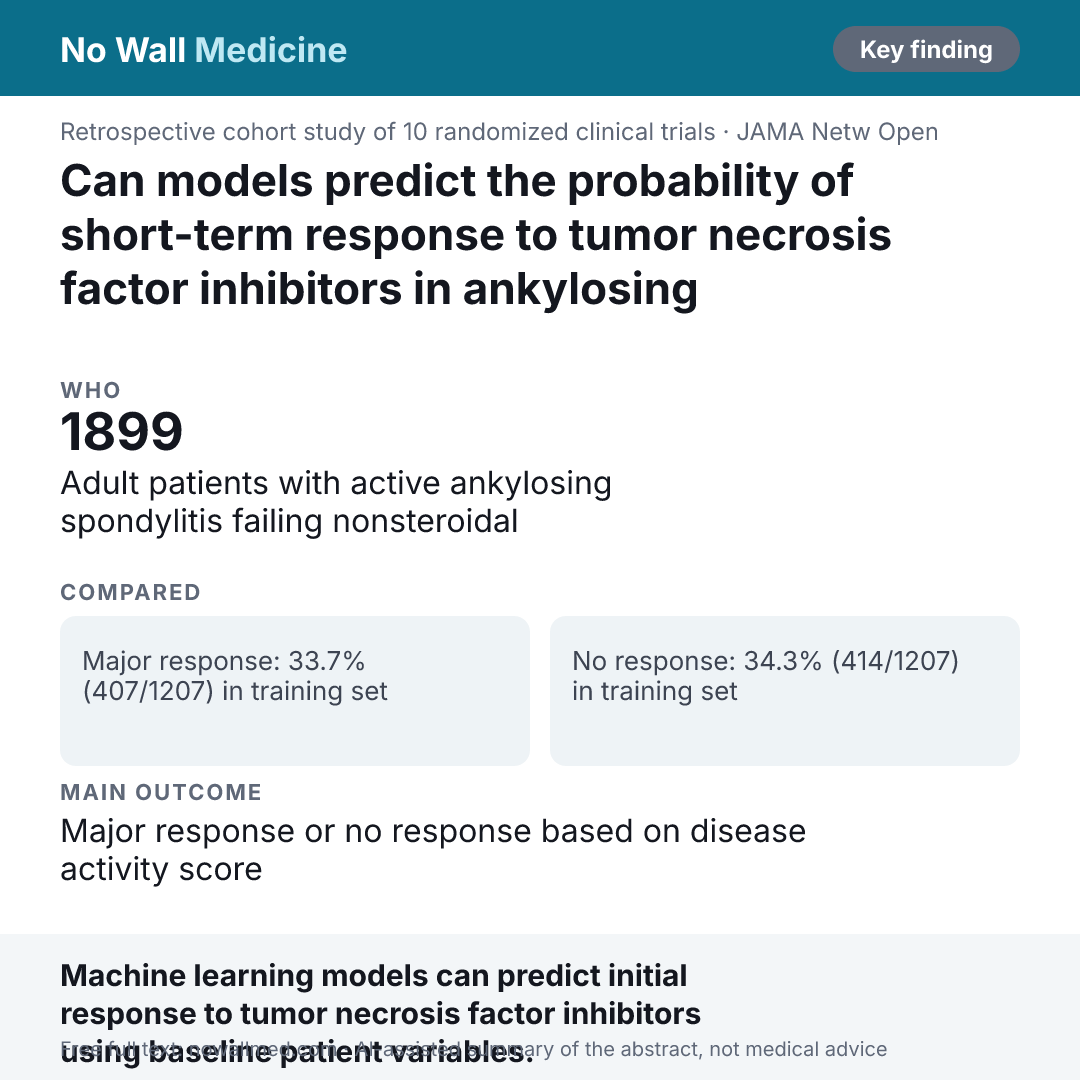
Can models predict the probability of short-term response to tumor necrosis factor inhibitors in ankylosing spondylitis?
Who
1899
Adult patients with active ankylosing spondylitis failing nonsteroidal anti-inflammatory drugs
Compared
Major response: 33.7% (407/1207) in training set
No response: 34.3% (414/1207) in training set
Main outcome
Major response or no response based on disease activity score
Bottom line: Machine learning models can predict initial response to tumor necrosis factor inhibitors using baseline patient variables.
JAMA Netw Open · 2022-03-01 · Save PNG
Key points
- Researchers analyzed 1899 participants from 10 randomized clinical trials of patients with active ankylosing spondylitis who failed nonsteroidal anti-inflammatory drugs.
- In the training set of 1207 individuals, the model accuracy was 0.74 for predicting a major response and 0.75 for predicting no response.
- The probability of a major response was associated with higher C-reactive protein levels, patient global assessment, and Bath AS Disease Activity Index question 2 scores.
Limitation the authors note: This was a retrospective cohort study using data from 10 randomized clinical trials.
Discussion prompts
- Would these patients look like yours? Who was left out?
- Is the main outcome one that matters to patients?
- Is the difference large enough to change what you do?
Cite: Wang R, Dasgupta A, Ward MM. Predicting Probability of Response to Tumor Necrosis Factor Inhibitors for Individual Patients With Ankylosing Spondylitis. JAMA Netw Open. 2022. doi:10.1001/jamanetworkopen.2022.2312
Free full text: PubMed Central · Summary and visual abstract: nowallmed.com/a/predicting-probability-of-response-to-tumor-necrosis-factor-1u0ooqy/ (AI-assisted from the abstract; check the paper before relying on it).