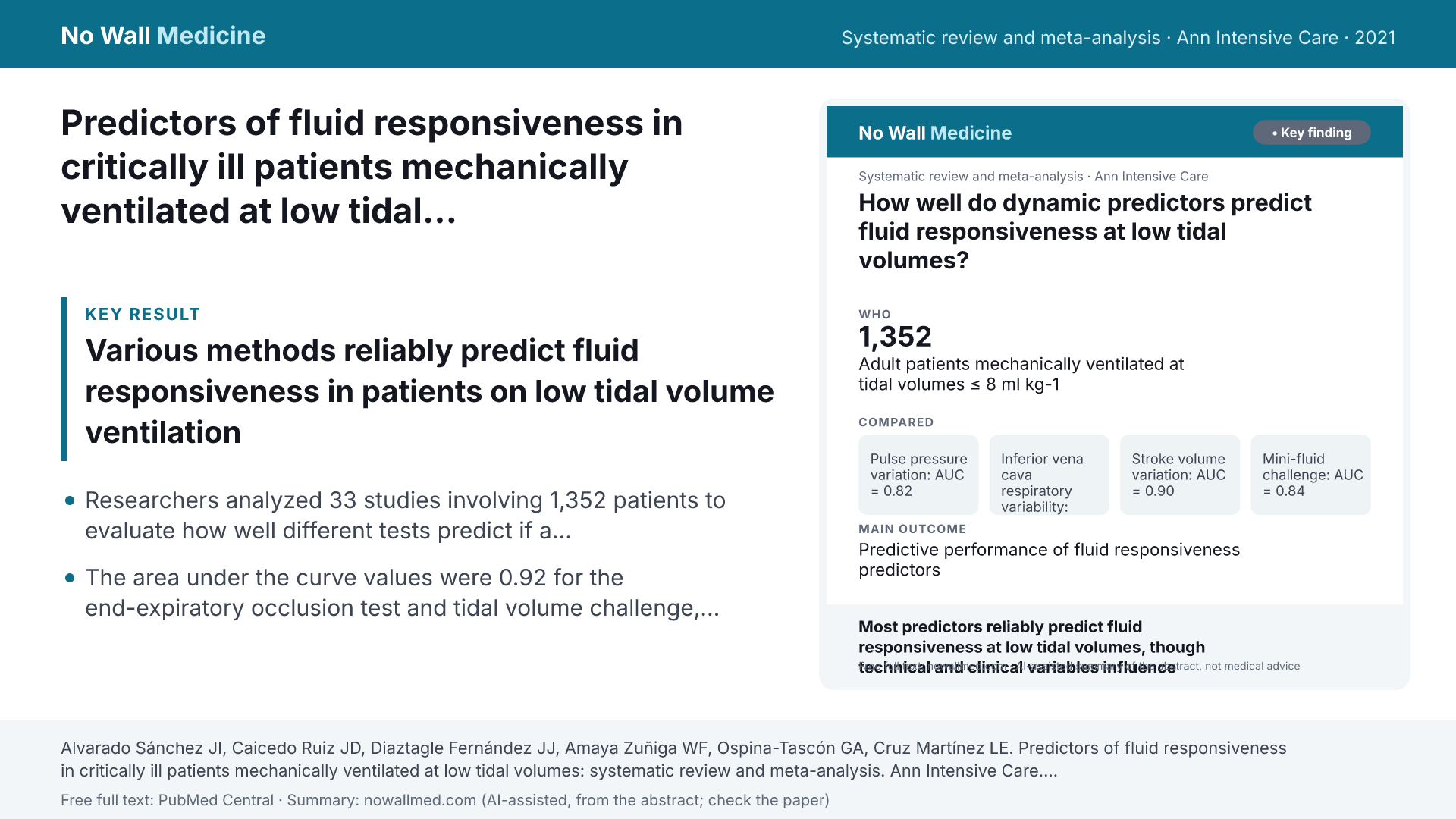
Various methods reliably predict fluid responsiveness in patients on low tidal volume ventilation
Predictors of fluid responsiveness in critically ill patients mechanically ventilated at low tidal volumes: systematic review and meta-analysis
Systematic review and meta-analysisBenefit found
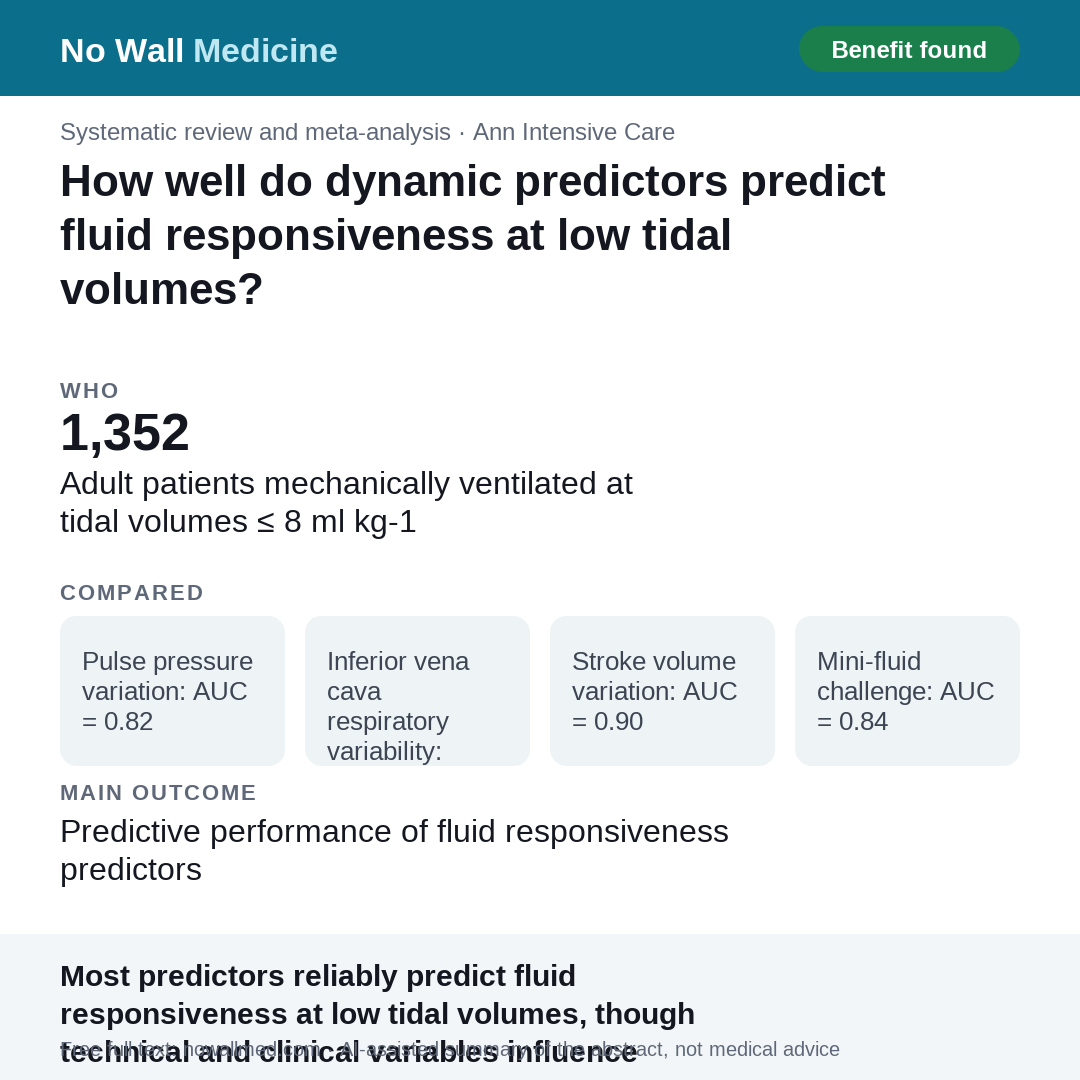
How well do dynamic predictors predict fluid responsiveness at low tidal volumes?
Who
1,352
Adult patients mechanically ventilated at tidal volumes ≤ 8 ml kg-1
Compared
Pulse pressure variation: AUC = 0.82
Inferior vena cava respiratory variability: AUC = 0.86
Stroke volume variation: AUC = 0.90
Mini-fluid challenge: AUC = 0.84
Main outcome
Predictive performance of fluid responsiveness predictors
Bottom line: Most predictors reliably predict fluid responsiveness at low tidal volumes, though technical and clinical variables influence performance.
Ann Intensive Care · 2021-02-08Download image
Clinical question: How well do dynamic predictors predict fluid responsiveness at low tidal volumes?
Why it matters: It is unknown how well dynamic predictors of fluid responsiveness perform in critically ill patients receiving low tidal volume ventilation.
Key points
- Researchers analyzed 33 studies involving 1,352 patients to evaluate how well different tests predict if a patient's cardiac output will increase after receiving fluids.
- The area under the curve values were 0.92 for the end-expiratory occlusion test and tidal volume challenge, 0.90 for stroke volume variation, and 0.82 for pulse pressure variation.
- Technical factors like how cardiac output is measured and the amount of fluid infused can influence the performance of several predictors.
Headline and key points written with AI from the paper’s abstract, with every number checked against it. Read the paper before relying on them.
Was this summary helpful?
Cite this article
Alvarado Sánchez JI, Caicedo Ruiz JD, Diaztagle Fernández JJ, Amaya Zuñiga WF, Ospina-Tascón GA, Cruz Martínez LE. Predictors of fluid responsiveness in critically ill patients mechanically ventilated at low tidal volumes: systematic review and meta-analysis. Ann Intensive Care. 2021. doi:10.1186/s13613-021-00817-5
Spotted a mistake? Suggest a correction