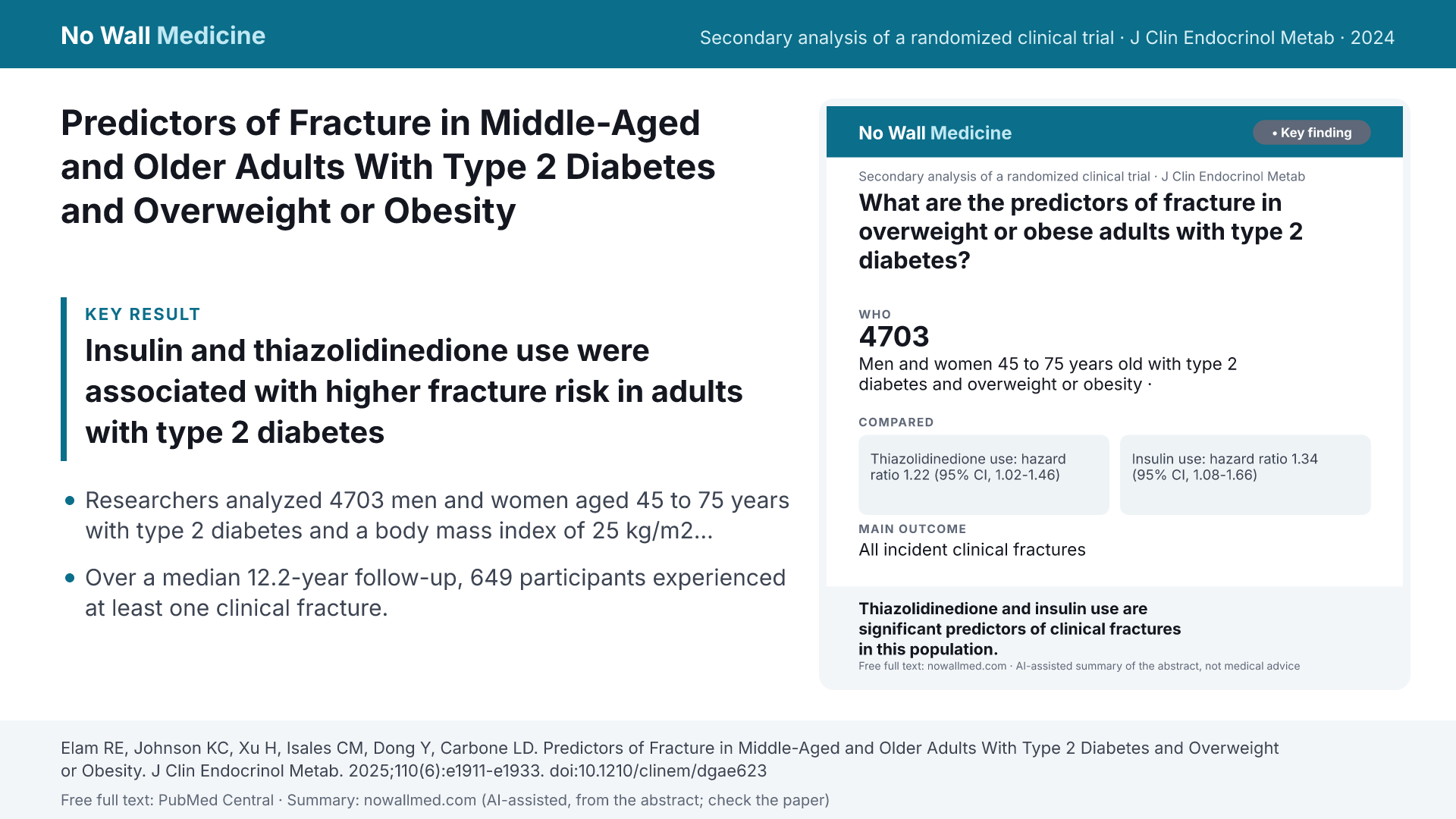
Insulin and thiazolidinedione use were associated with higher fracture risk in adults with type 2 diabetes
Predictors of Fracture in Middle-Aged and Older Adults With Type 2 Diabetes and Overweight or Obesity
Secondary analysis of a randomized clinical trialKey finding
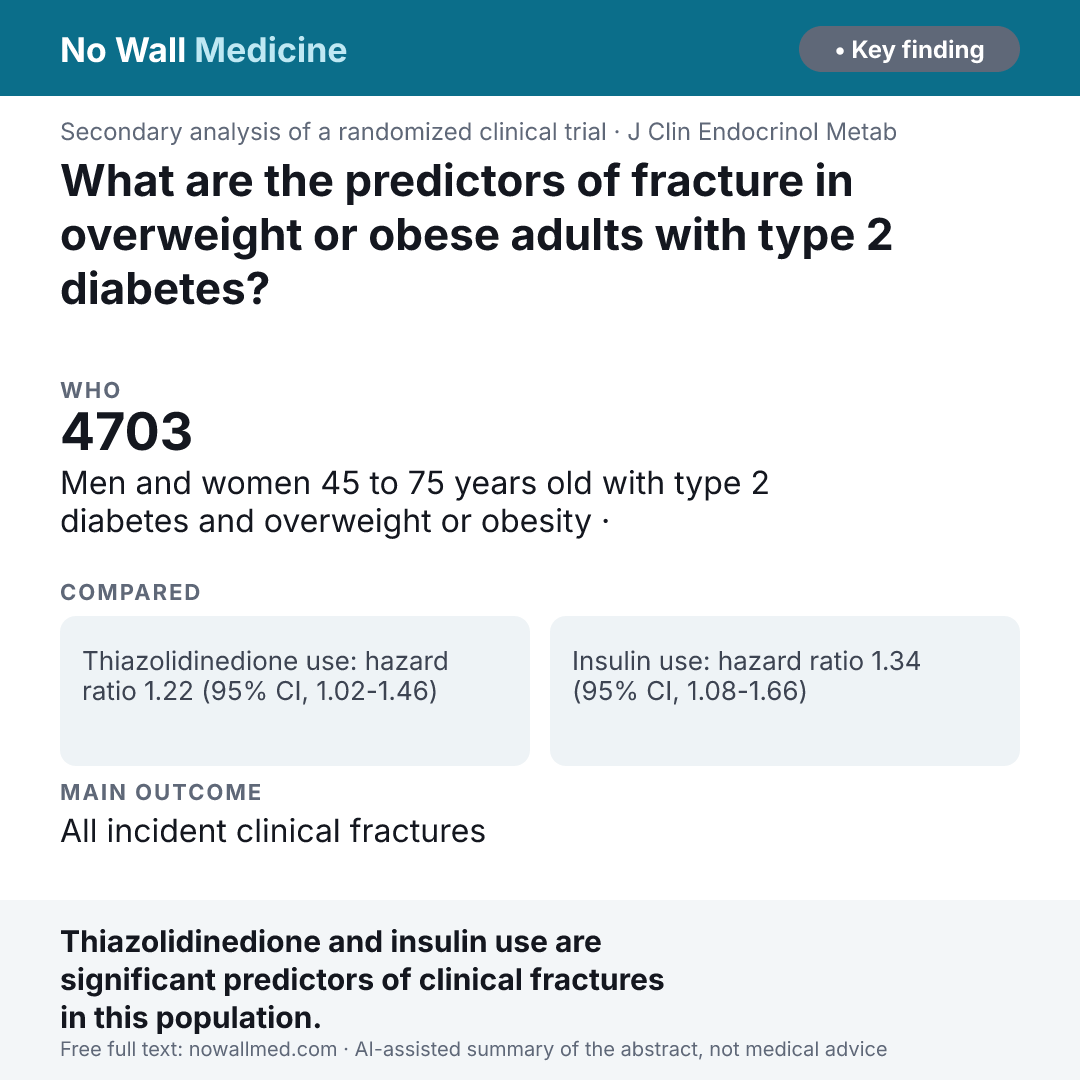
What are the predictors of fracture in overweight or obese adults with type 2 diabetes?
Who
4703
Men and women 45 to 75 years old with type 2 diabetes and overweight or obesity · Multicenter United States
Compared
Thiazolidinedione use: hazard ratio 1.22 (95% CI, 1.02-1.46)
Insulin use: hazard ratio 1.34 (95% CI, 1.08-1.66)
Main outcome
All incident clinical fractures
Result: hazard ratio 1.22 (95% CI, 1.02-1.46) for thiazolidinedione
Bottom line: Thiazolidinedione and insulin use are significant predictors of clinical fractures in this population.
J Clin Endocrinol Metab · 2024-09-11
Why it matters: Existing fracture risk assessment tools underestimate the risk of fractures in people living with type 2 diabetes.
Headline and visual abstract written with AI from the paper’s abstract, with every number checked against it. Read the paper before relying on them.
Was this summary helpful?
Subject terms
Cite this article
Elam RE, Johnson KC, Xu H, Isales CM, Dong Y, Carbone LD. Predictors of Fracture in Middle-Aged and Older Adults With Type 2 Diabetes and Overweight or Obesity. J Clin Endocrinol Metab. 2025;110(6):e1911-e1933. doi:10.1210/clinem/dgae623
Spotted a mistake? Suggest a correction