Lyophilized plasma transfusion in the prehospital setting did not change blood clotting measurements in trauma patients
Prehospital Lyophilized Plasma Transfusion for Trauma-Induced Coagulopathy in Patients at Risk for Hemorrhagic Shock: A Randomized Clinical Trial
Randomized clinical trialNo clear difference
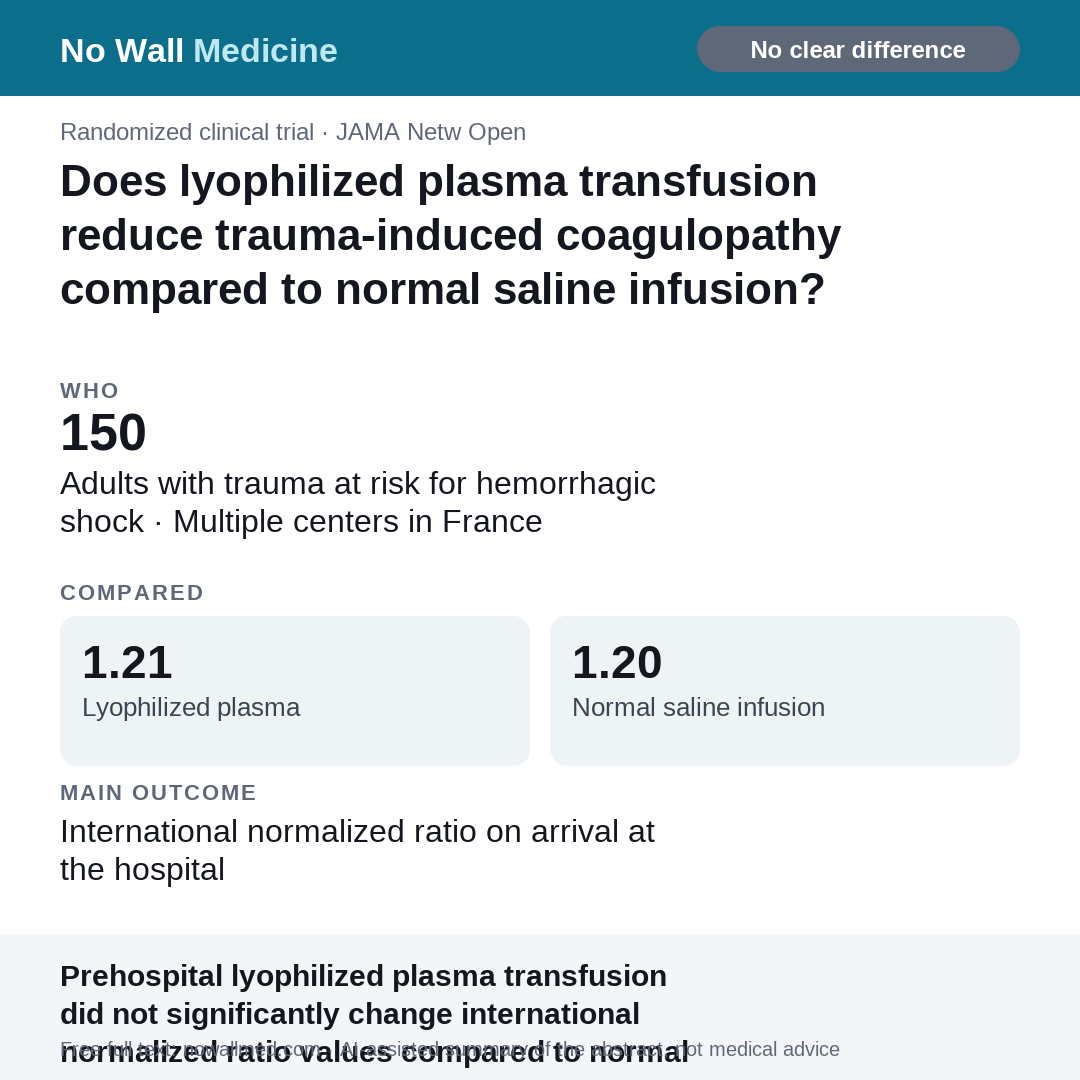
Does lyophilized plasma transfusion reduce trauma-induced coagulopathy compared to normal saline infusion?
Who
150
Adults with trauma at risk for hemorrhagic shock · Multiple centers in France
Compared
1.21Lyophilized plasma (IQR, 1.12-1.49)
1.20Normal saline infusion (IQR, 1.10-1.39)
Main outcome
International normalized ratio on arrival at the hospital
Result: median difference, -0.01 (IQR, -0.09 to 0.08)
Bottom line: Prehospital lyophilized plasma transfusion did not significantly change international normalized ratio values compared to normal saline infusion.
JAMA Netw Open · 2022-07-01Download image
Clinical question: Does lyophilized plasma transfusion reduce trauma-induced coagulopathy compared to normal saline infusion?
Why it matters: The optimal methods for providing plasma transfusion to trauma patients before they reach the hospital remain undefined.
Key points
- Researchers conducted a randomized trial of 150 adults at risk for hemorrhagic shock and blood clotting issues, comparing prehospital lyophilized plasma to standard normal saline infusion.
- The median international normalized ratio, a measure of how long it takes blood to clot, was 1.21 in the plasma group and 1.20 in the control group.
- There were no significant differences between groups regarding the need for massive transfusion, 30-day survival, or the rates of prespecified adverse events.
Headline and key points written with AI from the paper’s abstract, with every number checked against it. Read the paper before relying on them.
Was this summary helpful?
Subject terms
Cite this article
Jost D, Lemoine S, Lemoine F, Derkenne C, Beaume S, Lanoë V. Prehospital Lyophilized Plasma Transfusion for Trauma-Induced Coagulopathy in Patients at Risk for Hemorrhagic Shock: A Randomized Clinical Trial. JAMA Netw Open. 2022. doi:10.1001/jamanetworkopen.2022.23619
Spotted a mistake? Suggest a correction
Top studies every Monday
The week’s key trials and guidelines in your specialties, plus any topics you follow. By email, free.
Get the weekly digest