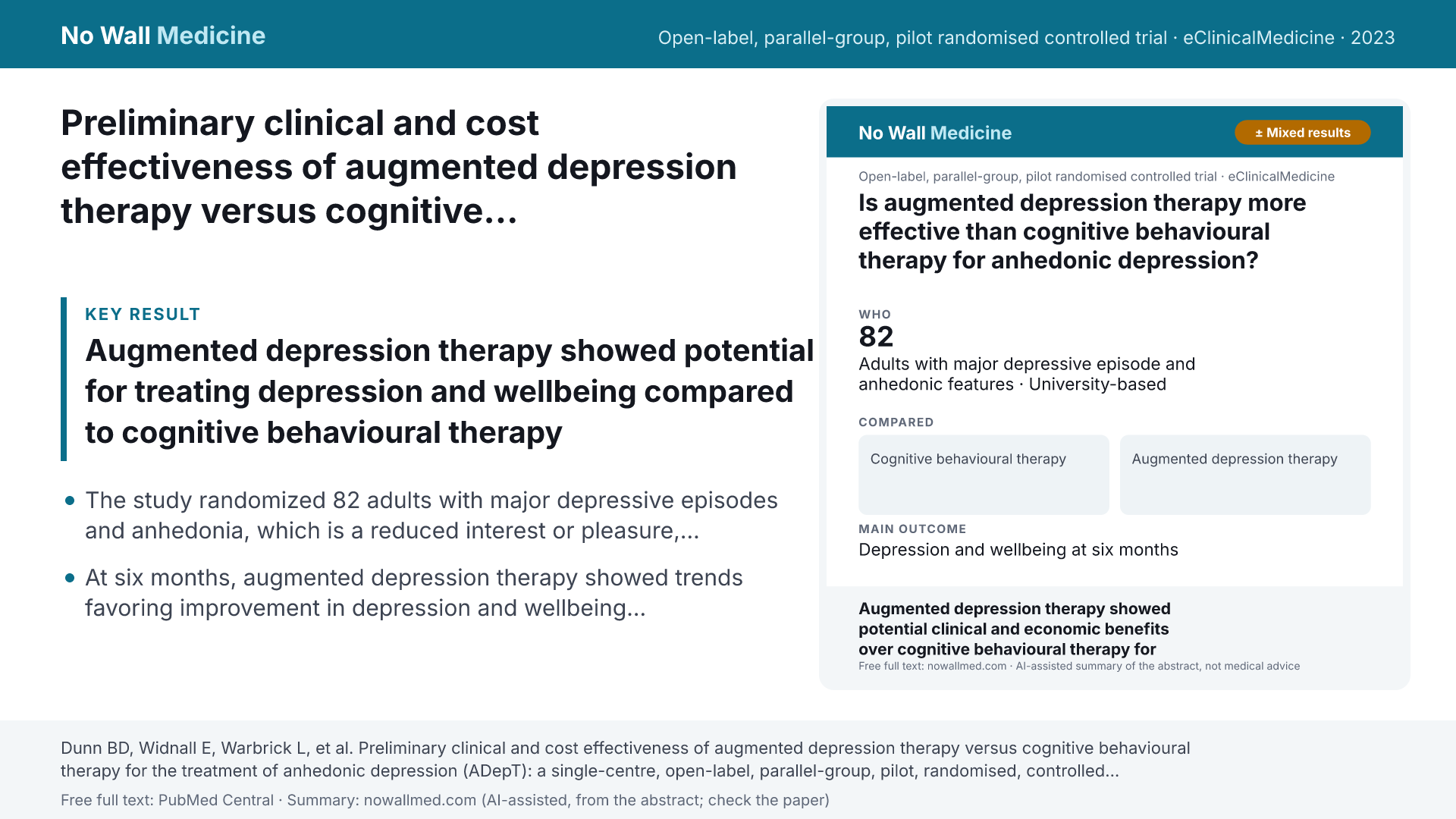
Preliminary clinical and cost effectiveness of augmented depression therapy versus cognitive behavioural therapy for the treatment of anhedonic depression (ADepT): a single-centre, open-label, parallel-group, pilot, randomised, controlled trial
Key result: Augmented depression therapy showed potential for treating depression and wellbeing compared to cognitive behavioural therapy
Key points
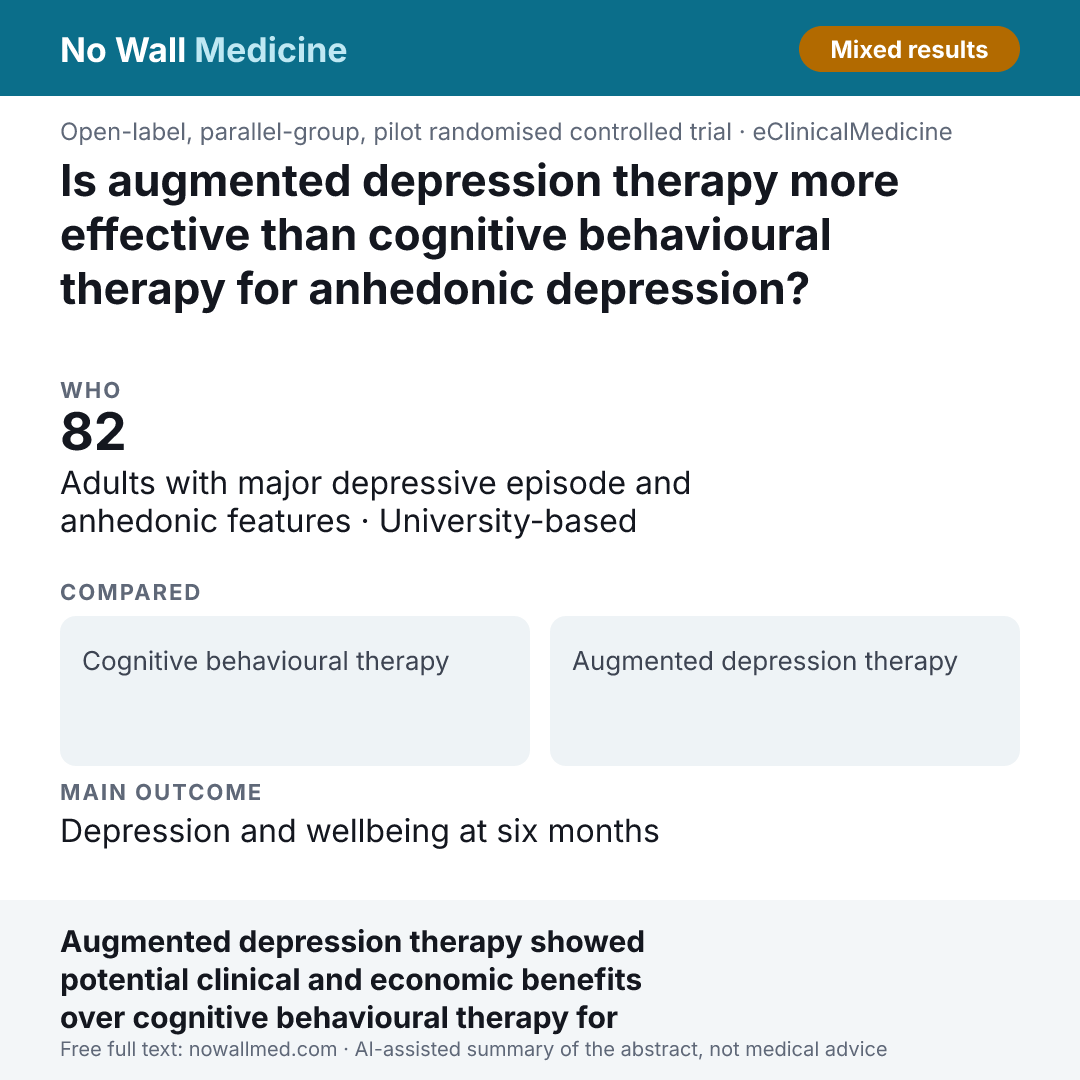
- The study randomized 82 adults with major depressive episodes and anhedonia, which is a reduced interest or pleasure, to receive either 20 sessions of cognitive behavioural therapy or augmented depression therapy.
- At six months, augmented depression therapy showed trends favoring improvement in depression and wellbeing scores compared to cognitive behavioural therapy, though results were not statistically significant.
- At 18 months, the advantage for augmented depression therapy was preserved and the treatment had a >80% probability of being cost-effective.
Why it matters: Current depression psychotherapies fail to adequately target anhedonia and wellbeing deficits, which are core to depression and predict a poor prognosis.
Limitation the authors note: This was a single-centre, open-label, pilot randomized controlled trial.
Discussion prompts
- Would these patients look like yours? Who was left out?
- Is the main outcome one that matters to patients?
- Is the difference large enough to change what you do?
Cite: Dunn BD, Widnall E, Warbrick L, et al. Preliminary clinical and cost effectiveness of augmented depression therapy versus cognitive behavioural therapy for the treatment of anhedonic depression (ADepT): a single-centre, open-label, parallel-group, pilot, randomised, controlled trial. EClinicalMedicine. 2023;61:102084. doi:10.1016/j.eclinm.2023.102084
Free full text: PubMed Central · Summary and visual abstract: nowallmed.com/a/preliminary-clinical-and-cost-effectiveness-of-augmented-depression-cowk2j/ (AI-assisted from the abstract; check the paper before relying on it).