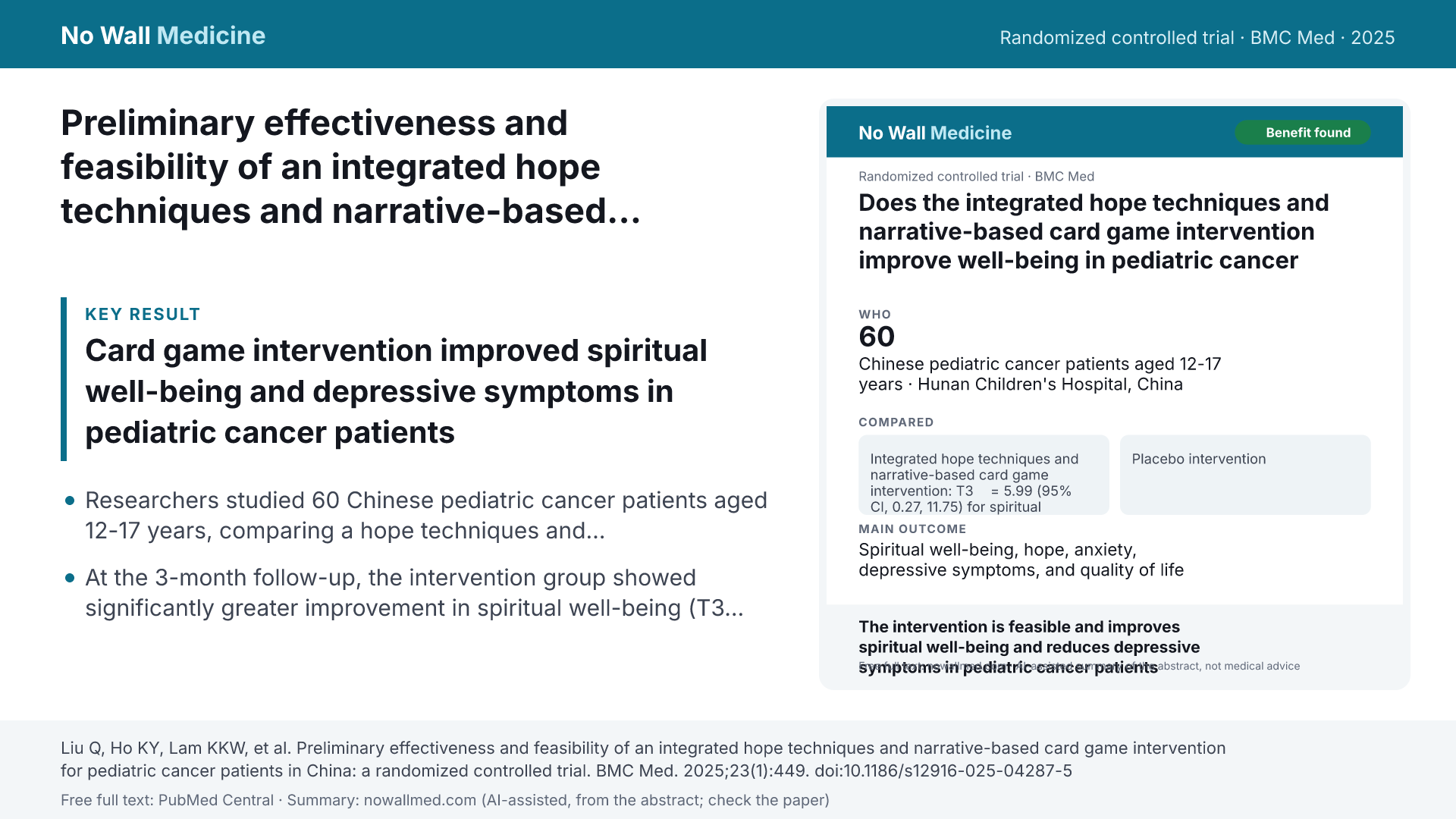
Card game intervention improved spiritual well-being and depressive symptoms in pediatric cancer patients
Preliminary effectiveness and feasibility of an integrated hope techniques and narrative-based card game intervention for pediatric cancer patients in China: a randomized controlled trial
Randomized controlled trialBenefit found
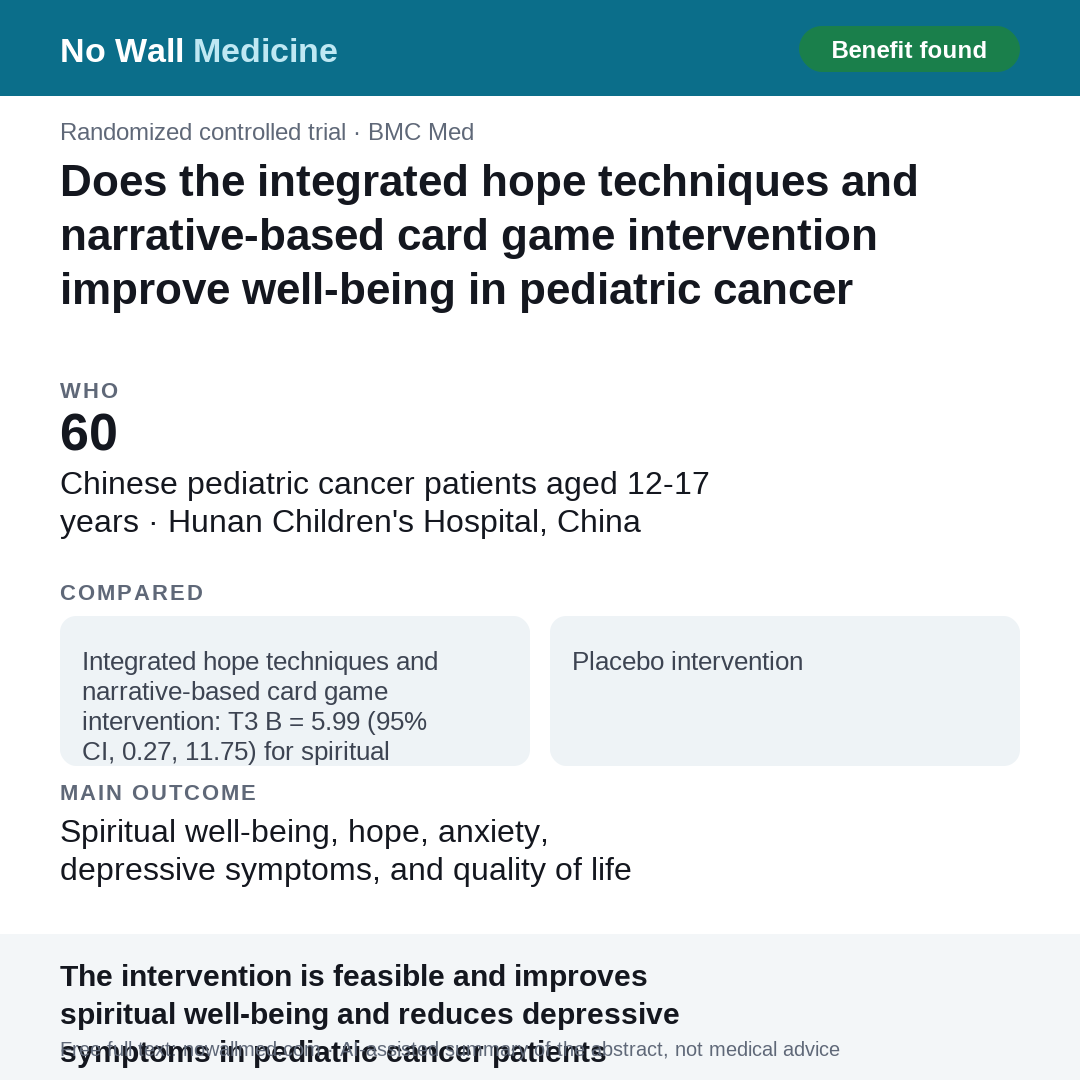
Does the integrated hope techniques and narrative-based card game intervention improve well-being in pediatric cancer patients?
Who
60
Chinese pediatric cancer patients aged 12-17 years · Hunan Children's Hospital, China
Compared
Integrated hope techniques and narrative-based card game intervention: T3 Β = 5.99 (95% CI, 0.27, 11.75) for spiritual well-being
Placebo intervention
Main outcome
Spiritual well-being, hope, anxiety, depressive symptoms, and quality of life
Result: T3 Β = 5.99 (95% CI, 0.27, 11.75) for spiritual well-being
Bottom line: The intervention is feasible and improves spiritual well-being and reduces depressive symptoms in pediatric cancer patients through three-month follow-up.
BMC Med · 2025-07-31Download image
Clinical question: Does the integrated hope techniques and narrative-based card game intervention improve well-being in pediatric cancer patients?
Why it matters: Few interventions have focused on the spiritual dimension of well-being among pediatric patients with cancer.
Key points
- Researchers studied 60 Chinese pediatric cancer patients aged 12-17 years, comparing a hope techniques and narrative-based card game to a placebo intervention.
- At the 3-month follow-up, the intervention group showed significantly greater improvement in spiritual well-being (T3 Β = 5.99; 95% CI, 0.27, 11.75; p = 0.042).
- The intervention group also showed a greater reduction in depressive symptoms (T3 Β = -6.41; 95% CI, -12.75, -0.07; p = 0.047) compared to the control group.
Headline and key points written with AI from the paper’s abstract, with every number checked against it. Read the paper before relying on them.
Was this summary helpful?
Subject terms
Cite this article
Liu Q, Ho KY, Lam KKW, Wong FKY, Lam W, Cheng F. Preliminary effectiveness and feasibility of an integrated hope techniques and narrative-based card game intervention for pediatric cancer patients in China: a randomized controlled trial. BMC Med. 2025. doi:10.1186/s12916-025-04287-5
Spotted a mistake? Suggest a correction