Group-based interventions showed potential to reduce stigma and depressive symptoms in adolescents with HIV
Preliminary Impact of Group-Based Interventions on Stigma, Mental Health, and Treatment Adherence Among Adolescents Living with Human Immunodeficiency Virus in Uganda
Pilot randomized clinical trialBenefit found
Do group-based interventions improve HIV stigma and mental health in Ugandan adolescents?
Who
89
Adolescents living with HIV and their caregivers · 9 health clinics in Uganda
Compared
Multiple family group-based family strengthening: lower internalized stigma (mean difference = -0.008, 95% CI = -0.015, -0.001)
Group cognitive behavioral therapy: lower anticipated stigma (mean difference = -0.039, 95% CI = -0.072, -0.006)
Usual care
Main outcome
HIV stigma and mental health functioning
Bottom line: Group-based interventions show preliminary evidence to reduce HIV stigma and improve mental health in adolescents.
J Pediatr · 2024-02-23Download image
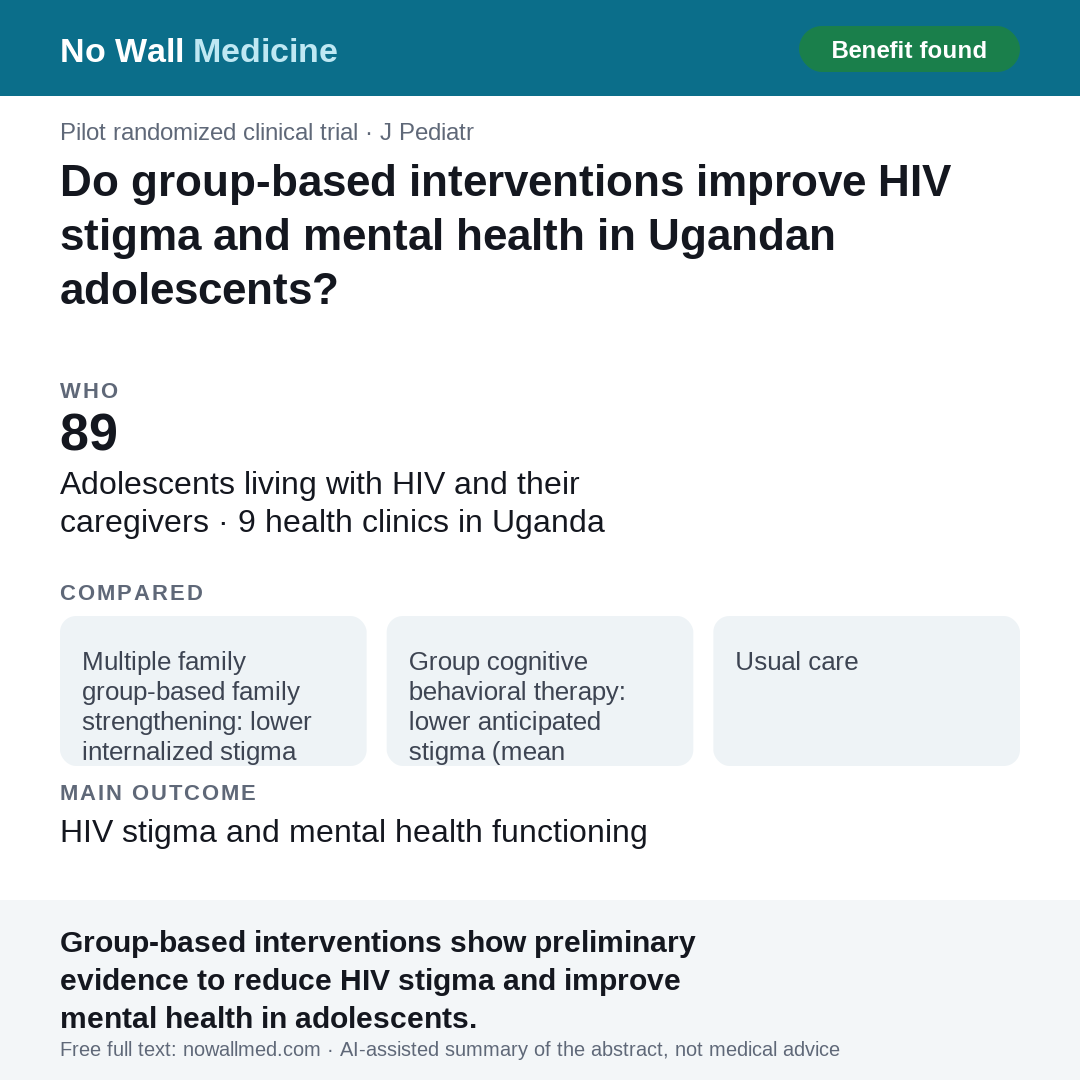
Clinical question: Do group-based interventions improve HIV stigma and mental health in Ugandan adolescents?
Why it matters: It was unknown if group cognitive behavioral therapy or family strengthening interventions could address HIV stigma and mental health in adolescents living with HIV in Uganda.
Key points
- Researchers studied 89 dyads consisting of adolescents aged 10-14 years living with HIV and their caregivers across 9 health clinics in Uganda.
- The family strengthening intervention was associated with lower internalized stigma (mean difference = -0.008) and depressive symptoms (mean difference = -0.34) at 3 months.
- Group cognitive behavioral therapy was associated with lower anticipated stigma at 3 months (mean difference = -0.039) and improved self-concept at 6 months (mean difference = 0.04).
Headline and key points written with AI from the paper’s abstract, with every number checked against it. Read the paper before relying on them.
Was this summary helpful?
Subject terms
Cite this article
Nabunya P, Ssewamala FM, Kizito S, Mugisha J, Brathwaite R, Neilands TB. Preliminary Impact of Group-Based Interventions on Stigma, Mental Health, and Treatment Adherence Among Adolescents Living with Human Immunodeficiency Virus in Uganda. J Pediatr. 2024. doi:10.1016/j.jpeds.2024.113983
Spotted a mistake? Suggest a correction
Top studies every Monday
The week’s key trials and guidelines in your specialties, plus any topics you follow. By email, free.
Get the weekly digest