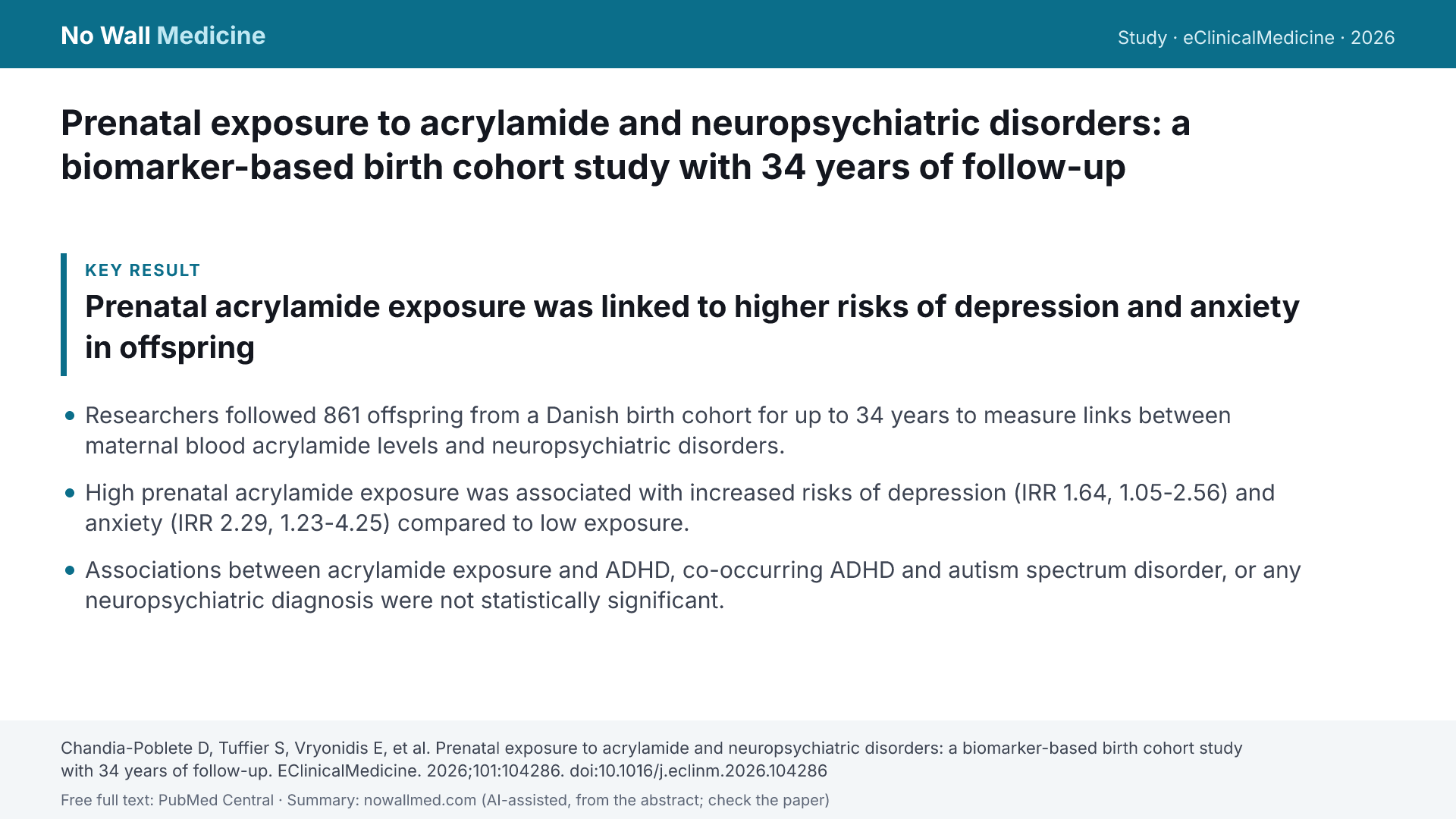
Prenatal acrylamide exposure was linked to higher risks of depression and anxiety in offspring
Prenatal exposure to acrylamide and neuropsychiatric disorders: a biomarker-based birth cohort study with 34 years of follow-up
Obstetrics & GynecologyAdult and pediatric
Key points
- Researchers followed 861 offspring from a Danish birth cohort for up to 34 years to measure links between maternal blood acrylamide levels and neuropsychiatric disorders.
- High prenatal acrylamide exposure was associated with increased risks of depression (IRR 1.64, 1.05-2.56) and anxiety (IRR 2.29, 1.23-4.25) compared to low exposure.
- Associations between acrylamide exposure and ADHD, co-occurring ADHD and autism spectrum disorder, or any neuropsychiatric diagnosis were not statistically significant.
Study type: Observational study: it can show a link, but not prove that one thing causes another.
Headline and key points written with AI from the paper’s abstract, with every number checked against it. Read the paper before relying on them.
Was this summary helpful?
Cite this article
Chandia-Poblete D, Tuffier S, Vryonidis E, et al. Prenatal exposure to acrylamide and neuropsychiatric disorders: a biomarker-based birth cohort study with 34 years of follow-up. EClinicalMedicine. 2026;101:104286. doi:10.1016/j.eclinm.2026.104286
Spotted a mistake? Suggest a correction