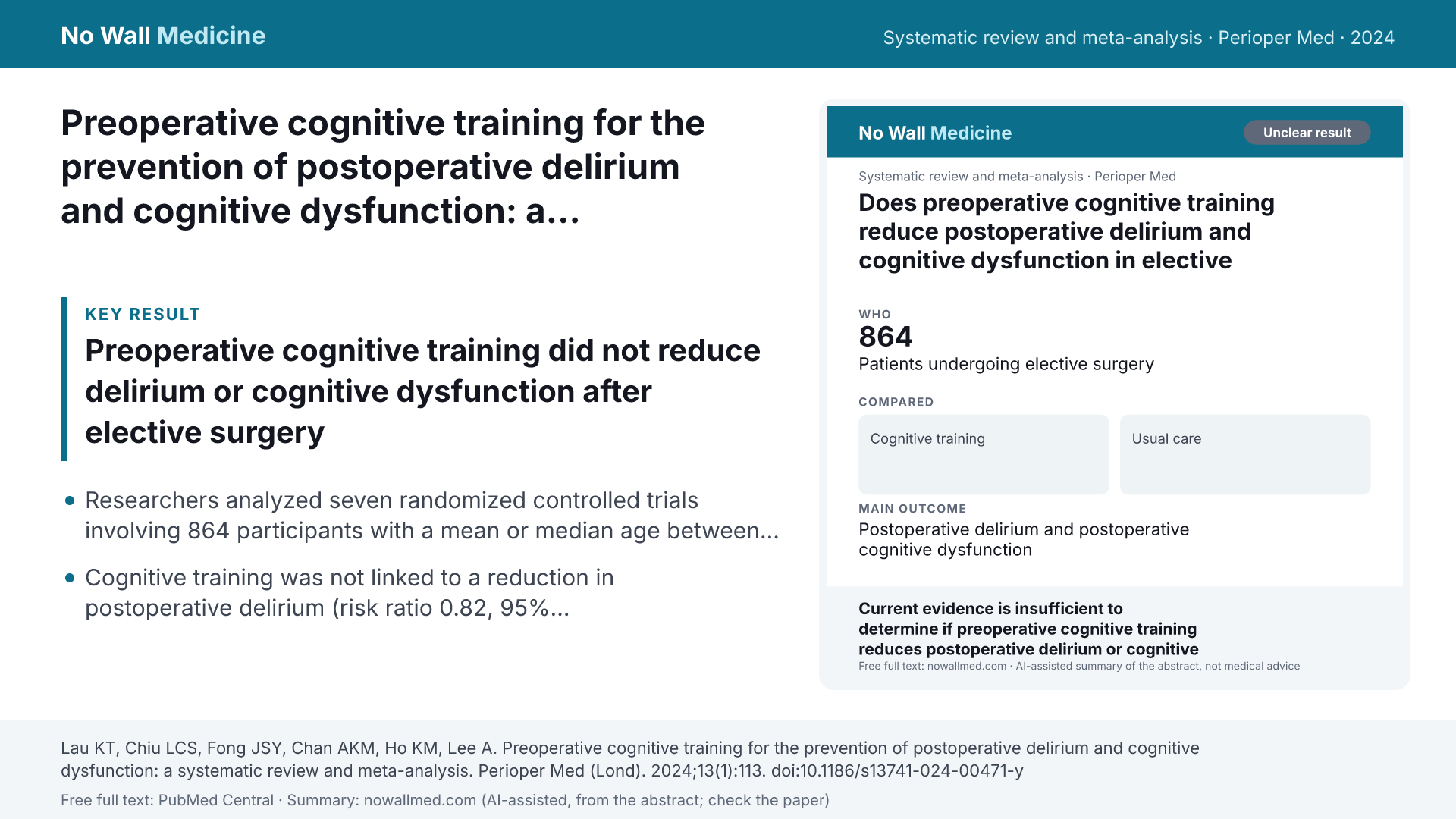
Preoperative cognitive training for the prevention of postoperative delirium and cognitive dysfunction: a systematic review and meta-analysis
Key result: Preoperative cognitive training did not reduce delirium or cognitive dysfunction after elective surgery
Key points
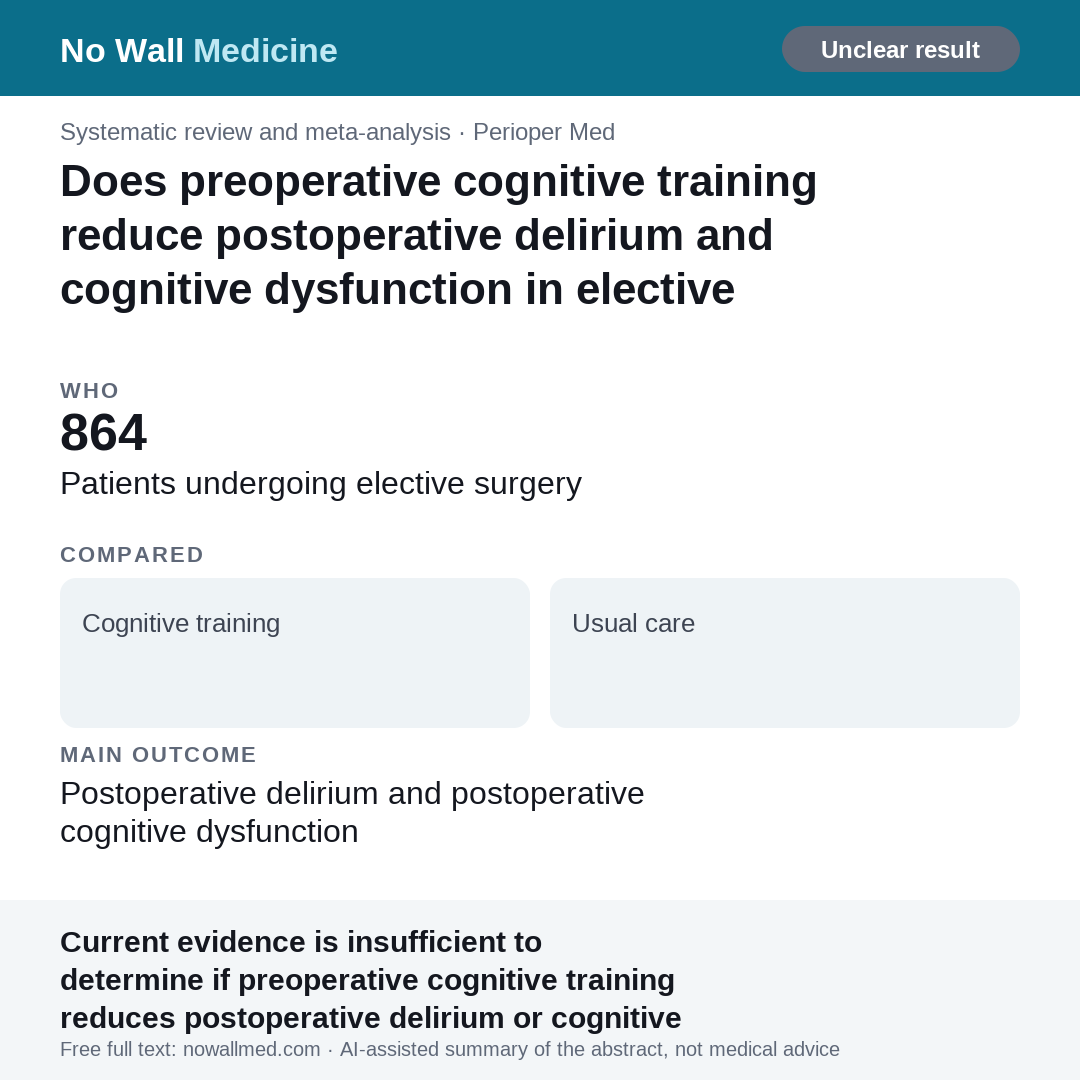
- Researchers analyzed seven randomized controlled trials involving 864 participants with a mean or median age between 66 and 73 years old.
- Cognitive training was not linked to a reduction in postoperative delirium (risk ratio 0.82, 95% confidence interval 0.57-1.18) or early postoperative cognitive dysfunction (risk ratio 0.93, 95% confidence interval 0.58-1.49).
- Compliance rates for the training programs were either not reported or mostly below 70%.
Limitation the authors note: The authors noted that sample sizes were insufficient to exclude the effectiveness of the training and that compliance was low or unreported.
Discussion prompts
- Would these patients look like yours? Who was left out?
- Is the main outcome one that matters to patients?
- Is the difference large enough to change what you do?
Cite: Lau KT, Chiu LCS, Fong JSY, Chan AKM, Ho KM, Lee A. Preoperative cognitive training for the prevention of postoperative delirium and cognitive dysfunction: a systematic review and meta-analysis. Perioper Med. 2024. doi:10.1186/s13741-024-00471-y
Free full text: PubMed Central · Summary and visual abstract: nowallmed.com/a/preoperative-cognitive-training-for-the-prevention-of-postoperative-14e61oa/ (AI-assisted from the abstract; check the paper before relying on it).