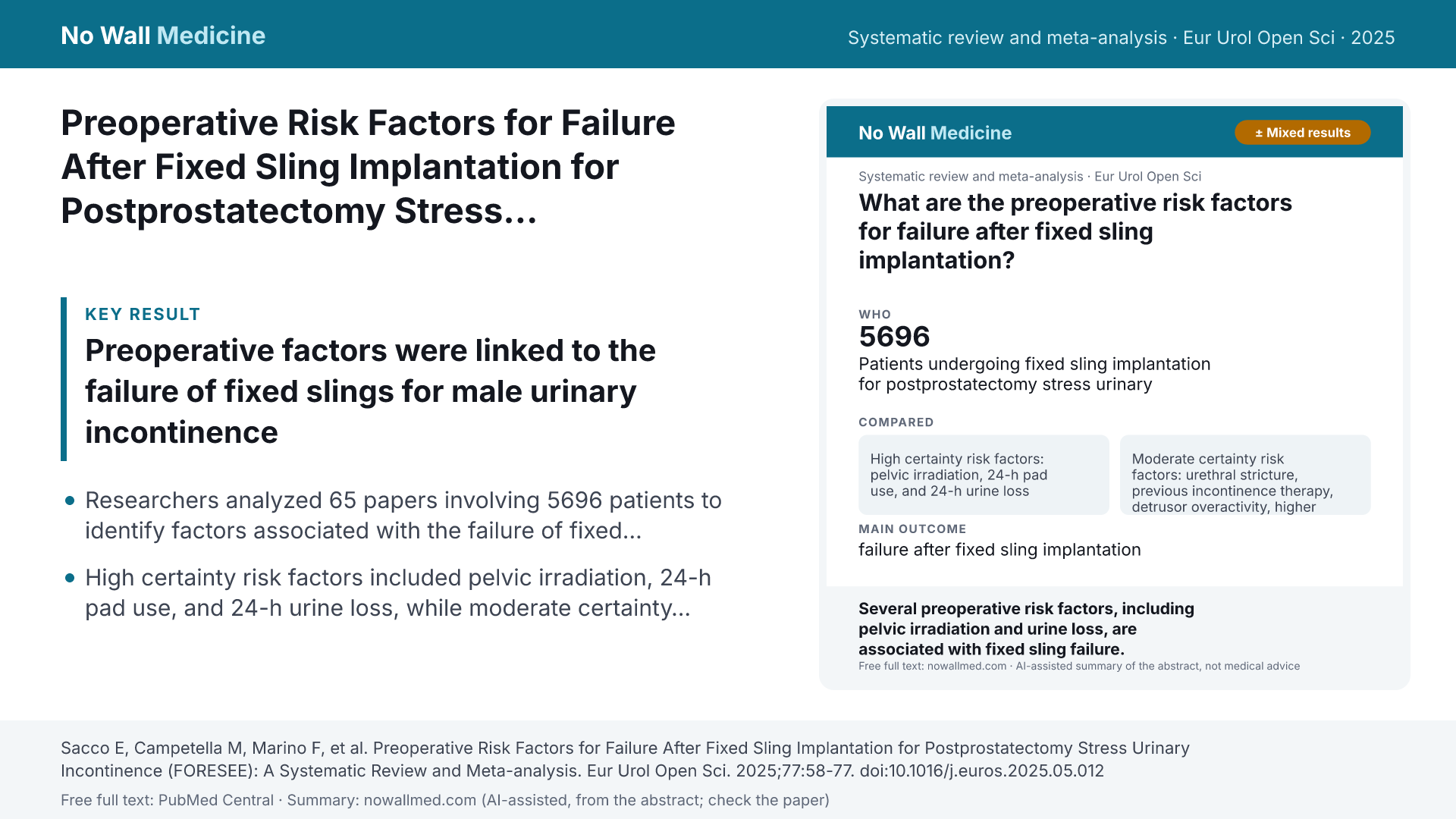
Preoperative Risk Factors for Failure After Fixed Sling Implantation for Postprostatectomy Stress Urinary Incontinence (FORESEE): A Systematic Review and Meta-analysis
Key result: Preoperative factors were linked to the failure of fixed slings for male urinary incontinence
Key points
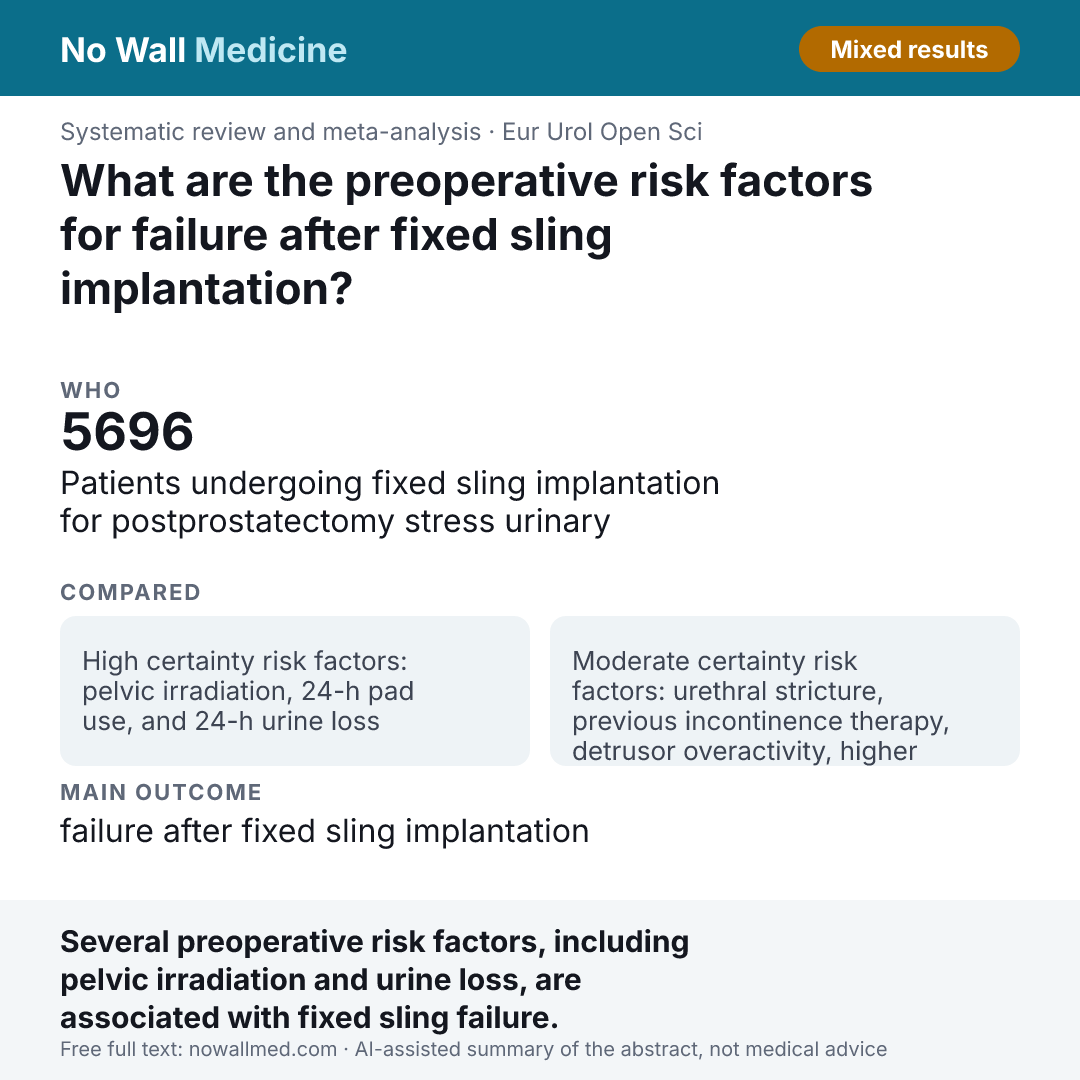
- Researchers analyzed 65 papers involving 5696 patients to identify factors associated with the failure of fixed slings for urinary incontinence after prostate surgery.
- High certainty risk factors included pelvic irradiation, 24-h pad use, and 24-h urine loss, while moderate certainty factors included urethral stricture and previous incontinence therapy.
- Age and the time elapsed since prostate surgery were not linked to sling outcomes with moderate certainty.
Why it matters: It is currently disputed which preoperative factors affect the efficacy of fixed male slings for treating urinary incontinence.
Limitation the authors note: The authors noted heterogeneity and suboptimal study quality as main limitations.
Discussion prompts
- Would these patients look like yours? Who was left out?
- Is the main outcome one that matters to patients?
- Is the difference large enough to change what you do?
Cite: Sacco E, Campetella M, Marino F, et al. Preoperative Risk Factors for Failure After Fixed Sling Implantation for Postprostatectomy Stress Urinary Incontinence (FORESEE): A Systematic Review and Meta-analysis. Eur Urol Open Sci. 2025;77:58-77. doi:10.1016/j.euros.2025.05.012
Free full text: PubMed Central · Summary and visual abstract: nowallmed.com/a/preoperative-risk-factors-for-failure-after-fixed-sling-implantation-1b1y7ri/ (AI-assisted from the abstract; check the paper before relying on it).