Preterm Brain Injury and Neurodevelopmental Outcomes: A Meta-analysis
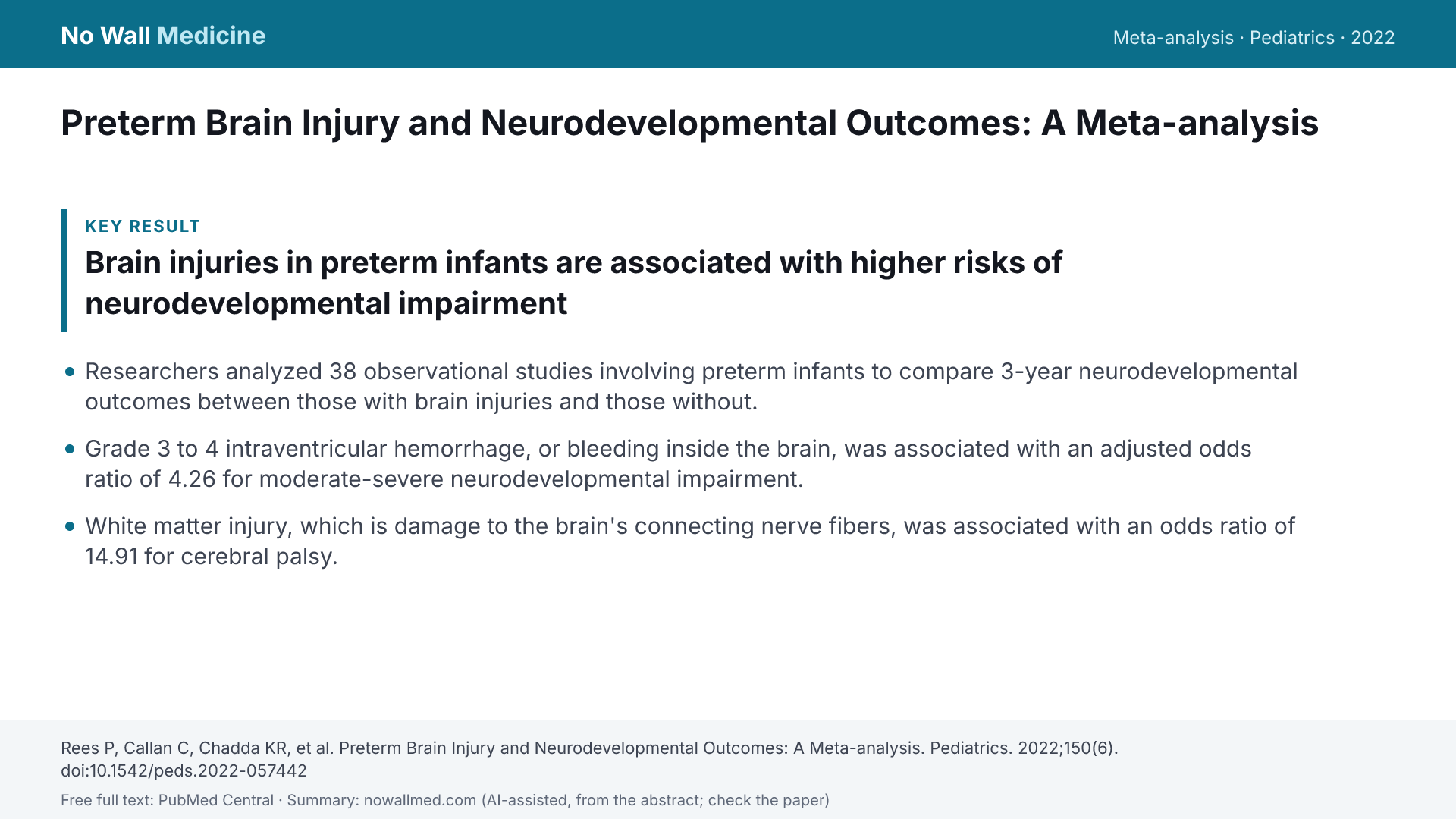
Key result: Brain injuries in preterm infants are associated with higher risks of neurodevelopmental impairment
Key points
- Researchers analyzed 38 observational studies involving preterm infants to compare 3-year neurodevelopmental outcomes between those with brain injuries and those without.
- Grade 3 to 4 intraventricular hemorrhage, or bleeding inside the brain, was associated with an adjusted odds ratio of 4.26 for moderate-severe neurodevelopmental impairment.
- White matter injury, which is damage to the brain's connecting nerve fibers, was associated with an odds ratio of 14.91 for cerebral palsy.
Why it matters: The specific neurodevelopmental risks for preterm infants following intraventricular hemorrhage and white matter injury were not fully synthesized across existing observational data.
Limitation the authors note: The authors noted heterogeneity of outcome data.
Discussion prompts
- Would these patients look like yours? Who was left out?
- Is the main outcome one that matters to patients?
- Is the difference large enough to change what you do?
Cite: Rees P, Callan C, Chadda KR, et al. Preterm Brain Injury and Neurodevelopmental Outcomes: A Meta-analysis. Pediatrics. 2022;150(6). doi:10.1542/peds.2022-057442
Free full text: PubMed Central · Summary and visual abstract: nowallmed.com/a/preterm-brain-injury-and-neurodevelopmental-outcomes-a-meta-1povvgg/ (AI-assisted from the abstract; check the paper before relying on it).