Heterozygous COL4A3 or COL4A4 mutations were associated with varying kidney disease severity
Prevalence of clinical, pathological and molecular features of glomerular basement membrane nephropathy caused by COL4A3 or COL4A4 mutations: a systematic review
Systematic literature reviewMixed results
What are the clinical, pathological and molecular features of COL4A3 or COL4A4 mutations?
Who
777
Patients with heterozygous COL4A3 or COL4A4 mutations · Not specified
Compared
29%Chronic kidney disease
15.1%End-stage renal disease
Main outcome
Clinical, pathological and molecular features
Bottom line: Heterozygous COL4A3 or COL4A4 mutations pose a high risk of developing severe chronic kidney disease.
Limitation: Potential ascertainment bias
Clin Kidney J · 2020-02-10 · Save PNG
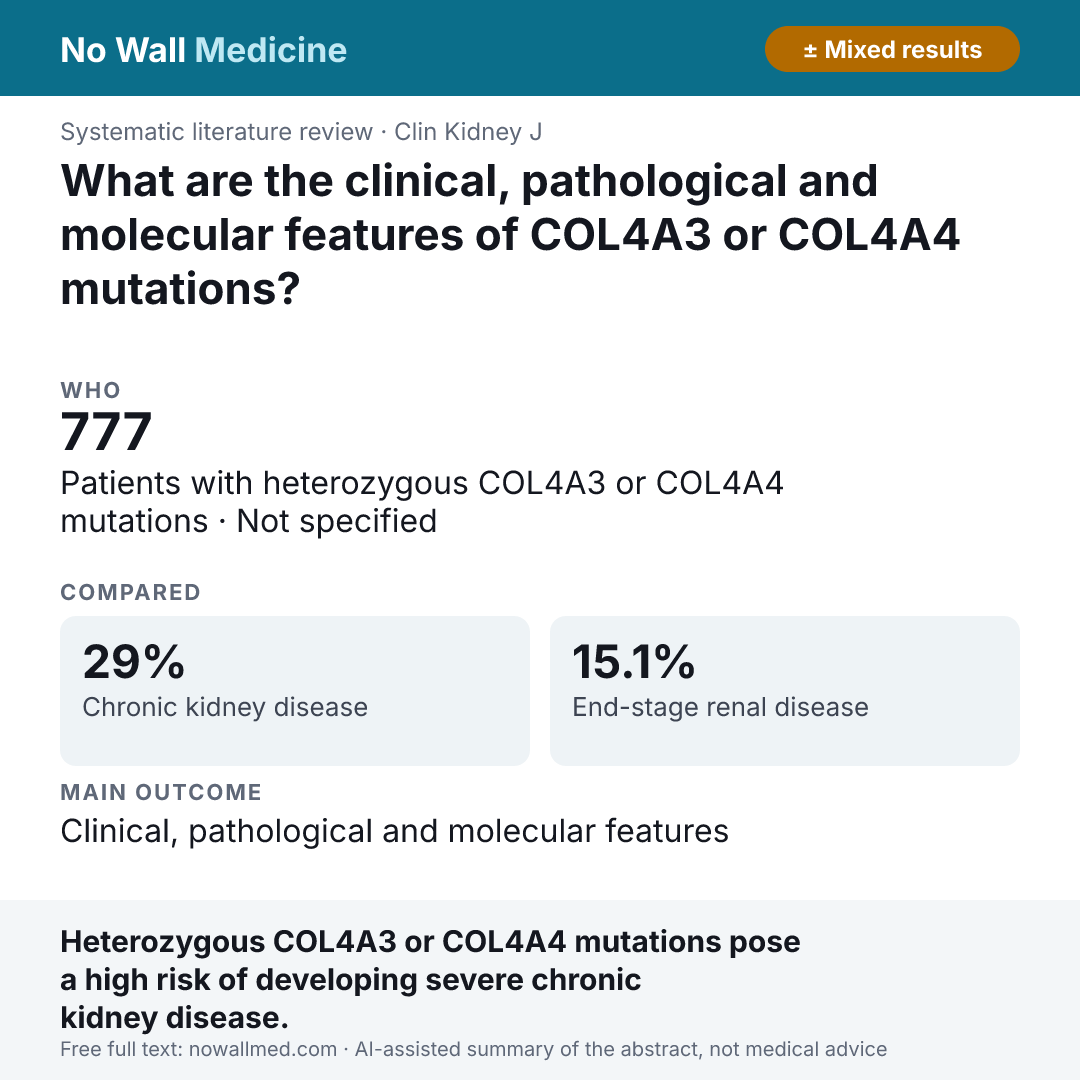
Clinical question: What are the clinical, pathological and molecular features of COL4A3 or COL4A4 mutations?
Key points
- Researchers reviewed 48 publications involving 777 patients from 258 families with heterozygous mutations in COL4A3 or COL4A4.
- Among these patients, 29% developed chronic kidney disease and 15.1% reached end-stage renal disease at a mean age of 52.8 years.
- Low prevalence rates were observed for hearing loss at 16%, ocular lesions at 3%, and podocyte foot process effacement at 6.9%.
Limitation the authors note: The authors noted the potential consequence of an ascertainment bias.
Headline and key points written with AI from the paper’s abstract, with every number checked against it. Read the paper before relying on them.
Was this summary helpful?
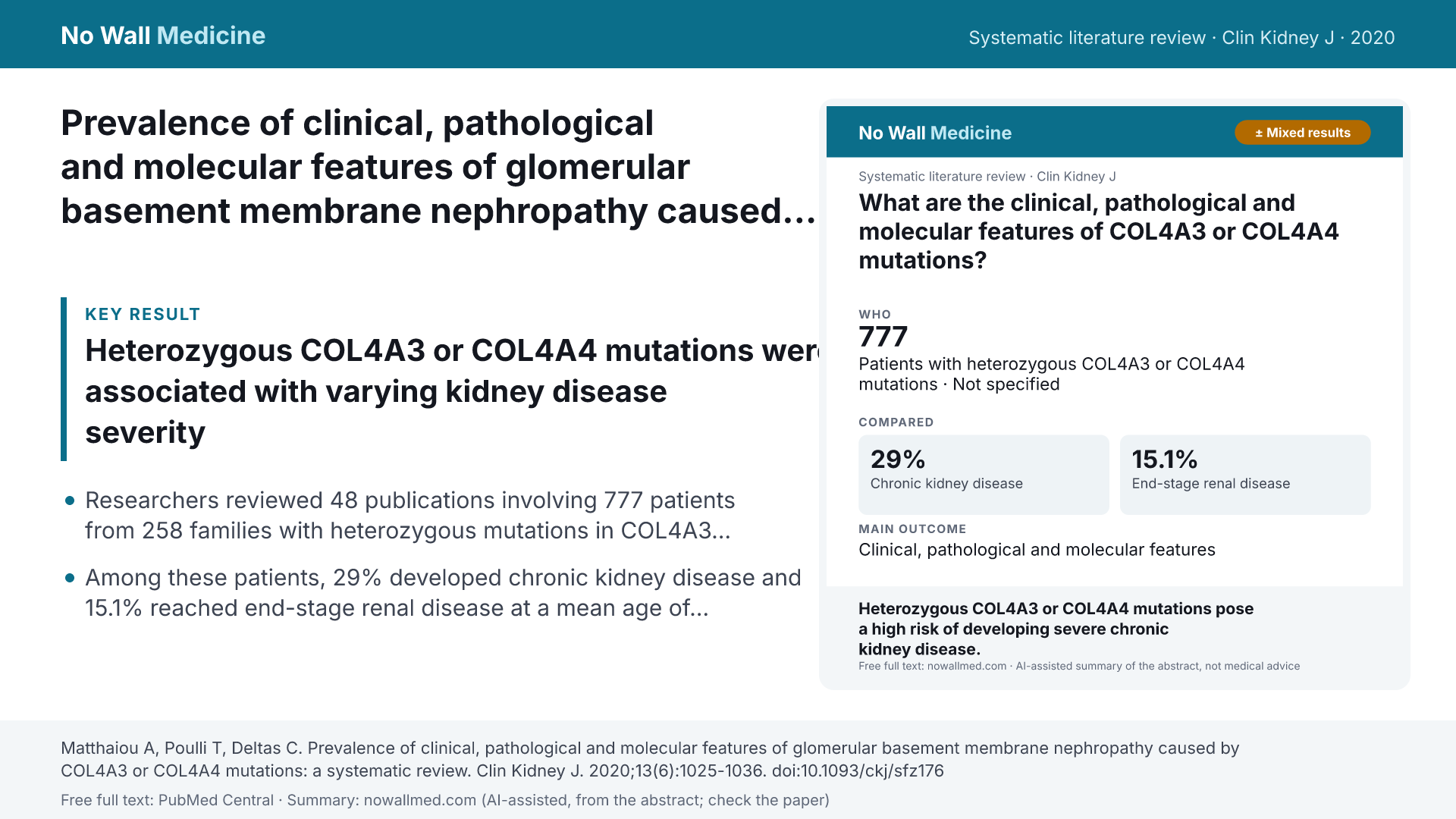
Headline, design, result, key points, caveat and citation as plain text.
Cite this article
Matthaiou A, Poulli T, Deltas C. Prevalence of clinical, pathological and molecular features of glomerular basement membrane nephropathy caused by COL4A3 or COL4A4 mutations: a systematic review. Clin Kidney J. 2020;13(6):1025-1036. doi:10.1093/ckj/sfz176
Spotted a mistake? Suggest a correction