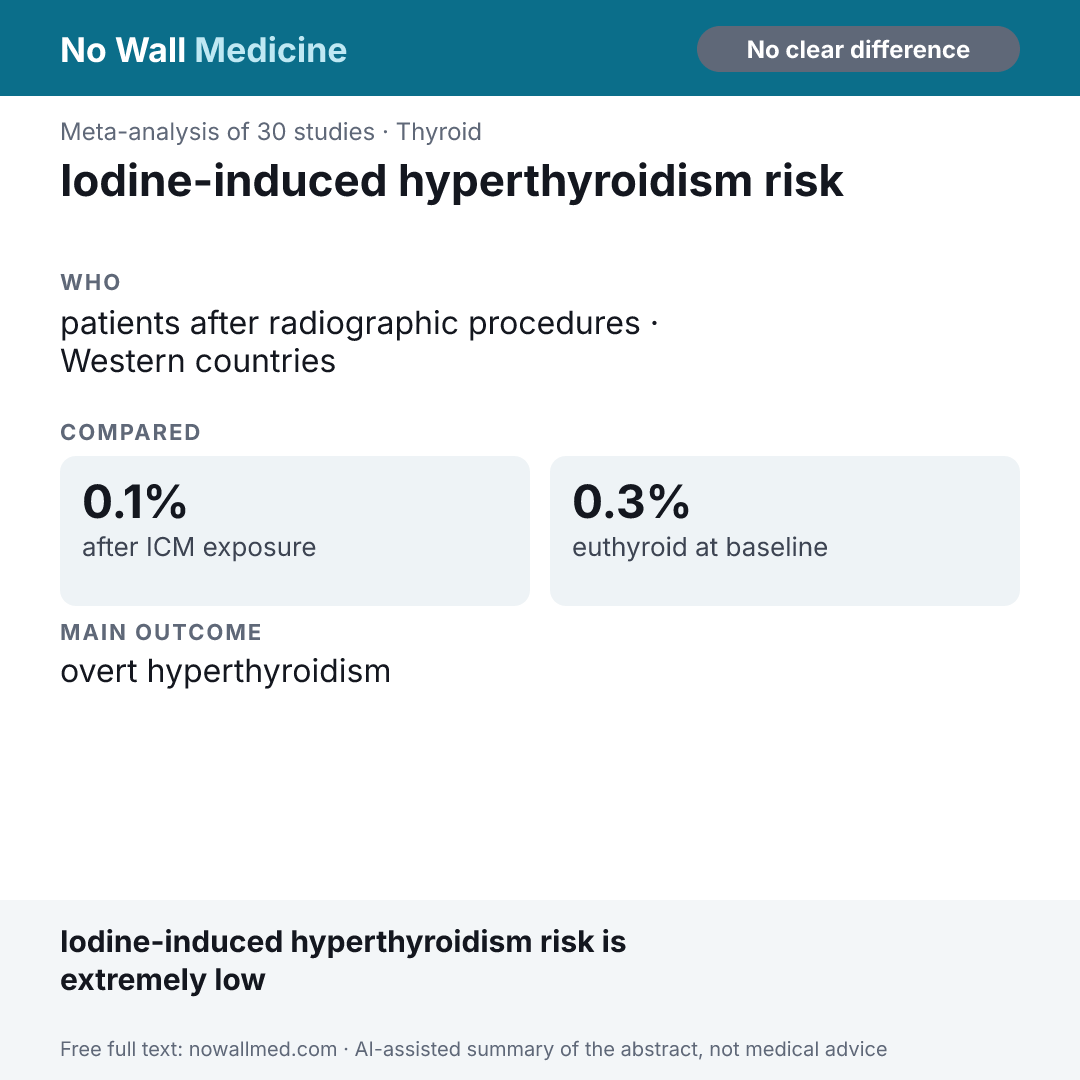
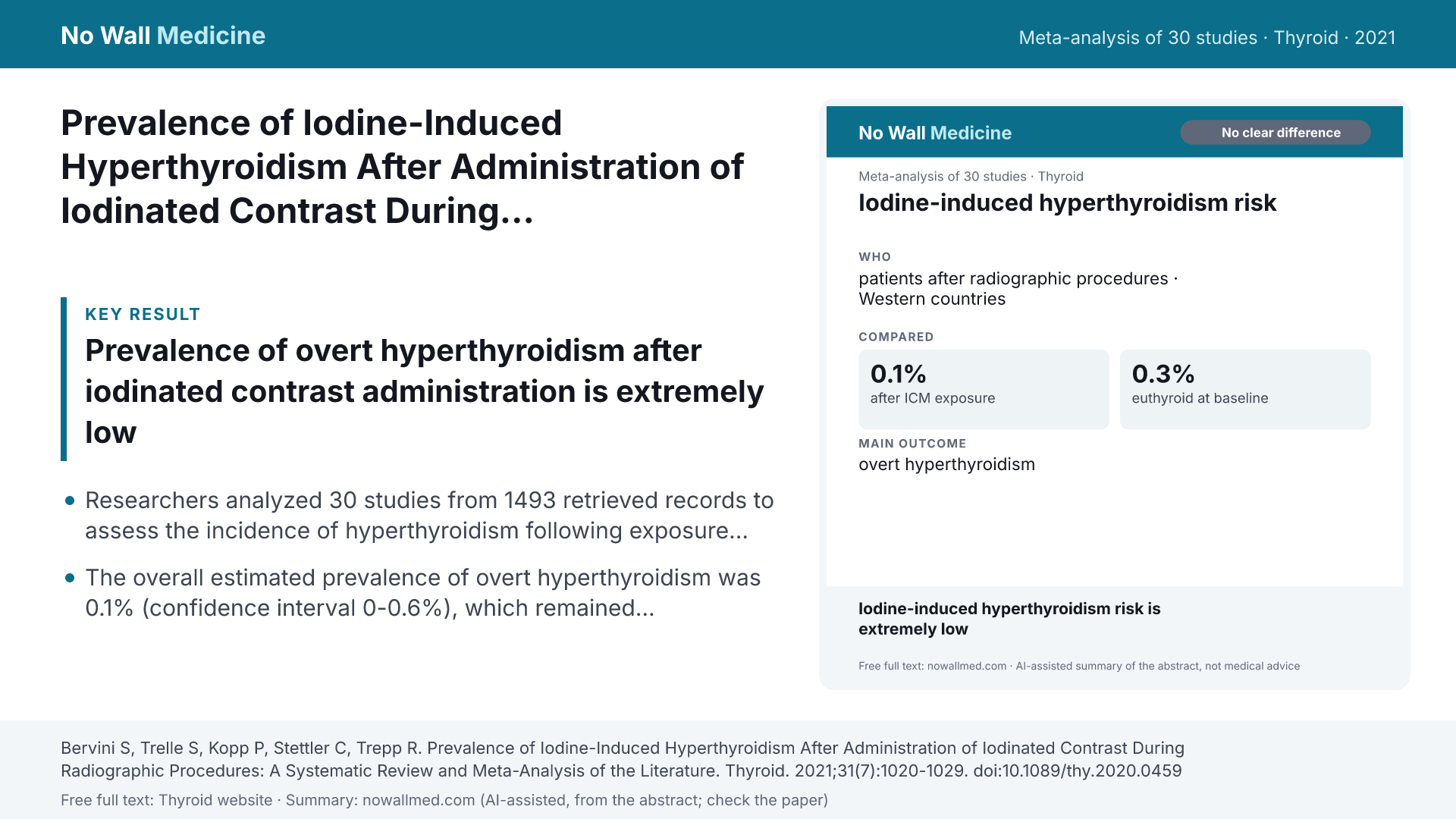
Prevalence of overt hyperthyroidism after iodinated contrast administration is extremely low
Prevalence of Iodine-Induced Hyperthyroidism After Administration of Iodinated Contrast During Radiographic Procedures: A Systematic Review and Meta-Analysis of the Literature
Meta-analysis of 30 studiesNo clear difference
Iodine-induced hyperthyroidism risk
Who
patients after radiographic procedures · Western countries
Compared
0.1%after ICM exposure (confidence interval 0-0.6%)
0.3%euthyroid at baseline (CI 0-1.7%)
Main outcome
overt hyperthyroidism
Bottom line: Iodine-induced hyperthyroidism risk is extremely low
Thyroid · 2021-03-15 · Save PNG
Key points
- Researchers analyzed 30 studies from 1493 retrieved records to assess the incidence of hyperthyroidism following exposure to iodinated contrast media.
- The overall estimated prevalence of overt hyperthyroidism was 0.1% (confidence interval 0-0.6%), which remained 0.3% (confidence interval 0-1.7%) after adjusting for baseline thyroid function.
- No cases of overt hyperthyroidism were found at 7 days after exposure, and the incidence was 0.2% (confidence interval 0-0.8%) at 30 days.
Headline and key points written with AI from the paper’s abstract, with every number checked against it. Read the paper before relying on them.
Was this summary helpful?
Subject terms
Headline, design, result, key points, caveat and citation as plain text.
Cite this article
Bervini S, Trelle S, Kopp P, Stettler C, Trepp R. Prevalence of Iodine-Induced Hyperthyroidism After Administration of Iodinated Contrast During Radiographic Procedures: A Systematic Review and Meta-Analysis of the Literature. Thyroid. 2021;31(7):1020-1029. doi:10.1089/thy.2020.0459
Spotted a mistake? Suggest a correction