Sufentanil and dexmedetomidine were associated with lower rates of postoperative cognitive dysfunction in elderly patients
Preventing postoperative cognitive dysfunction using anesthetic drugs in elderly patients undergoing noncardiac surgery: a systematic review and meta-analysis
Network meta-analysis of 34 trialsBenefit found
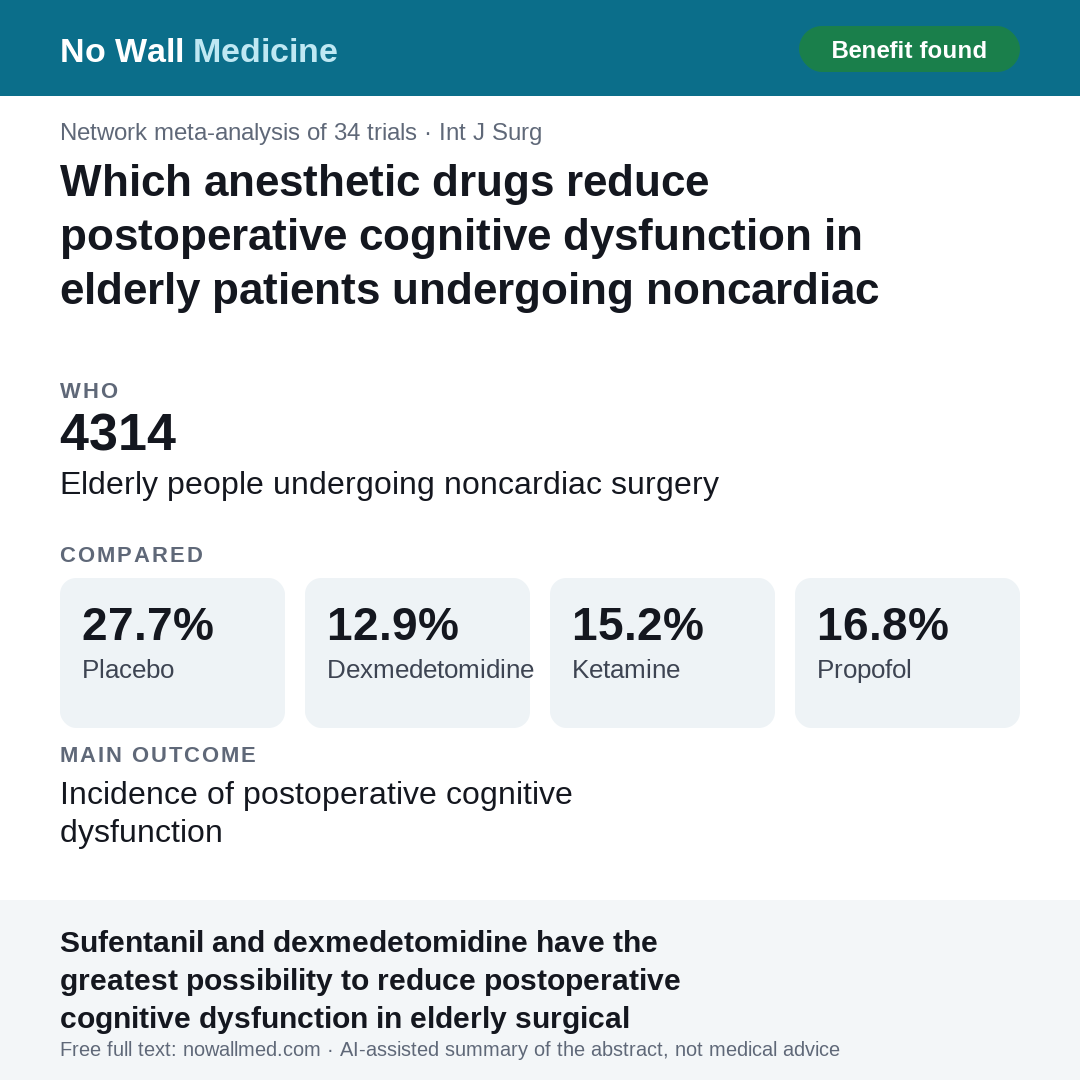
Which anesthetic drugs reduce postoperative cognitive dysfunction in elderly patients undergoing noncardiac surgery?
Who
4314
Elderly people undergoing noncardiac surgery
Compared
27.7%Placebo
12.9%Dexmedetomidine
15.2%Ketamine
16.8%Propofol
Main outcome
Incidence of postoperative cognitive dysfunction
Bottom line: Sufentanil and dexmedetomidine have the greatest possibility to reduce postoperative cognitive dysfunction in elderly surgical patients.
Int J Surg · 2023-01-01Download image
Clinical question: Which anesthetic drugs reduce postoperative cognitive dysfunction in elderly patients undergoing noncardiac surgery?
Why it matters: It is unknown which anesthetic drugs are most effective at reducing the incidence of postoperative cognitive dysfunction in elderly patients undergoing noncardiac surgery.
Key points
- Researchers analyzed 34 randomized controlled trials involving 4314 elderly patients undergoing noncardiac surgery to compare different anesthetic drugs.
- The incidence of postoperative cognitive dysfunction, a neurological disorder after surgery, was 6.3% for sufentanil and 12.9% for dexmedetomidine compared to 27.7% for placebo.
- Sufentanil and dexmedetomidine had the highest probability of reducing postoperative cognitive dysfunction with surface under the cumulative ranking curve values of 87.4 and 81.5%.
Headline and key points written with AI from the paper’s abstract, with every number checked against it. Read the paper before relying on them.
Was this summary helpful?
Subject terms
Cite this article
Zeng K, Long J, Li Y, Hu J. Preventing postoperative cognitive dysfunction using anesthetic drugs in elderly patients undergoing noncardiac surgery: a systematic review and meta-analysis. Int J Surg. 2023. doi:10.1097/JS9.0000000000000001
Spotted a mistake? Suggest a correction
Top studies every Monday
The week’s key trials and guidelines in your specialties, plus any topics you follow. By email, free.
Get the weekly digest